Ballarat Clergy Abuse Survivors and Diocese Agree on Memorials
2026-11-07 20:18
991 views
Survivors, advocates and the Ballarat Catholic Diocese have agreed to create memorials at St Patrick’s Cathedral and St Alipius by 2028.
A memorial agreement after years of setbacks
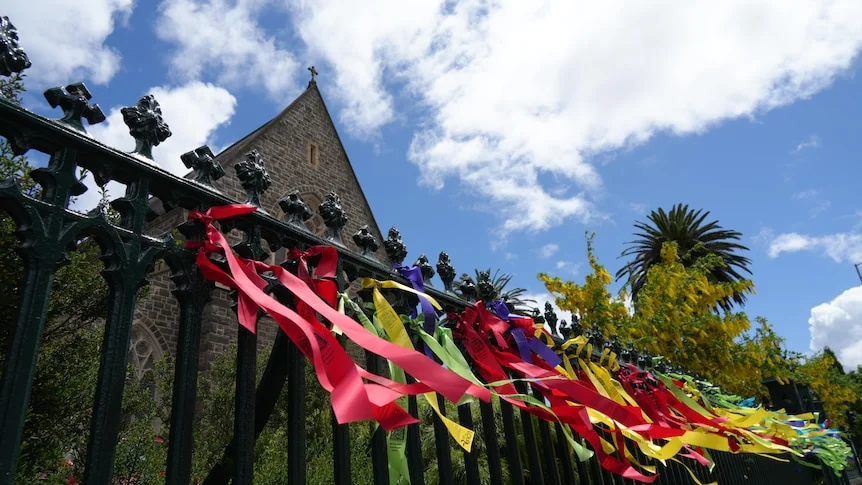
Bright ribbons have marked support for people affected by clergy abuse in Ballarat for years. Now, victim-survivors, advocates and the Ballarat Catholic Diocese have agreed to create permanent memorials at St Patrick’s Cathedral and St Alipius Primary School, with Bishop Mark Freeman saying they should be in place by 2028.
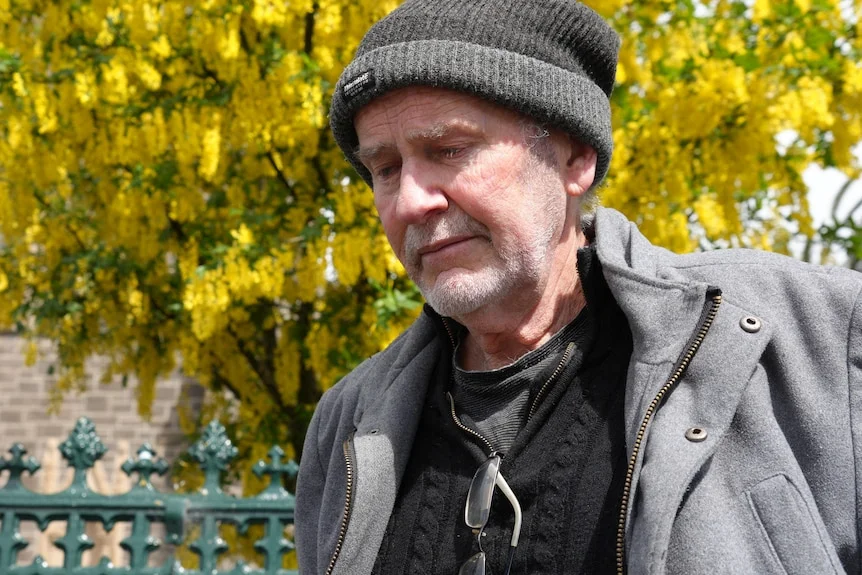
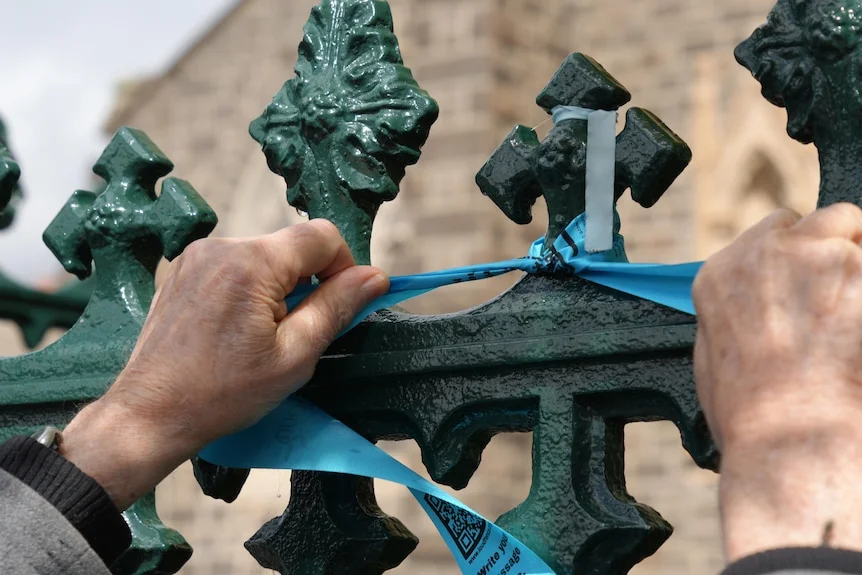
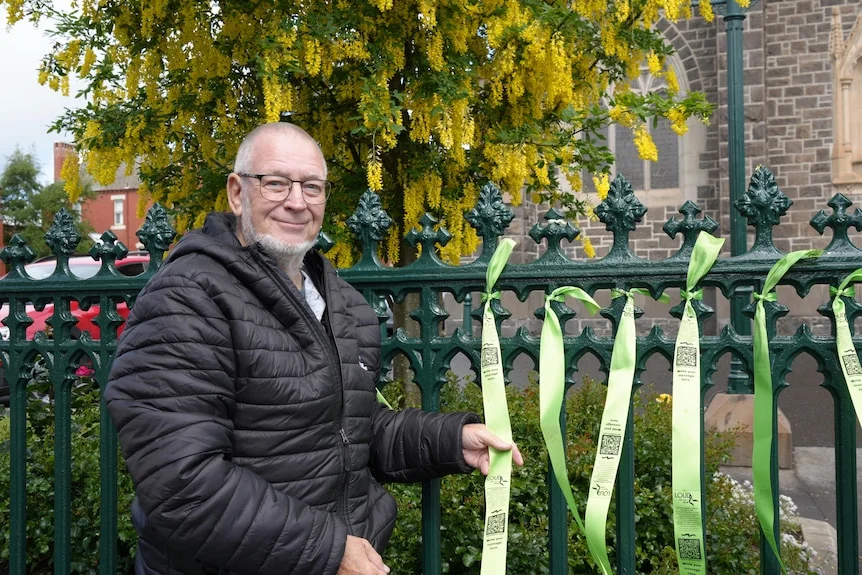
That agreement matters because the path to it has repeatedly stalled. “It’s been quite a battle,” survivor Gary Sculley said as he tied a blue ribbon to the cathedral fence. “We’ve had some great strides over the years but also some terrible setbacks.” He added: “But we’ve come together, collected our souls again, and moved forward.”
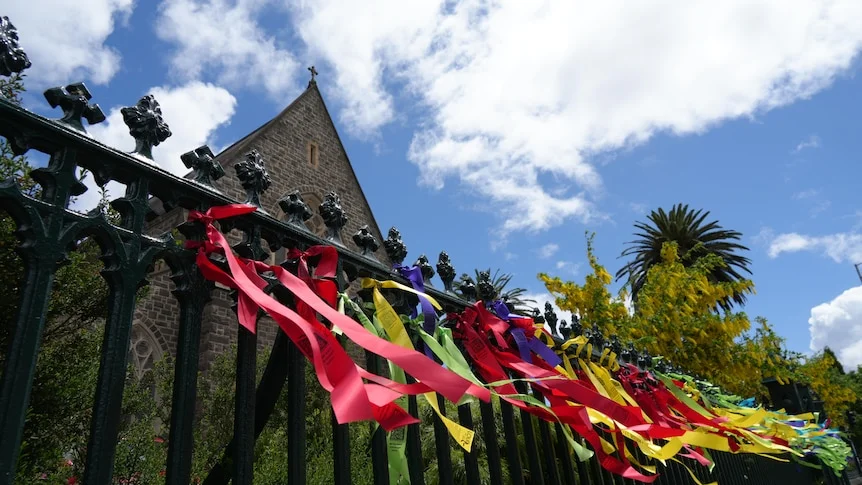
The ribbons serve as a memorial to victim-survivors and others affected by clergy abuse. (ABC Ballarat: Laura Mayers)
Sculley was assaulted by multiple teachers at the Christian Brothers’ St Alipius School in the 1960s. A call for a permanent memorial emerged from Ballarat during the 2013–2017 Royal Commission into Institutional Responses to Child Sexual Abuse. Around the same time, the Loud Fence movement began using ribbons on churches and schools to show solidarity with people affected by abuse. The gesture has since spread across Australia and overseas.
A memorandum of understanding now sets out the plan for memorials at both sites. Their design is still undecided, and Sculley says survivors must shape it. He wants something on the grounds and something visible at or near the front fences, because some survivors cannot bring themselves to enter a churchyard.
“ A lot of us victim-survivors are just hanging on to see these memorials. Sadly, some of them will pass. That’s a tragedy,” he said. The memorial, he added, must represent “the past, present, and future.”
Abuse survivor Gary Sculley says reaching this point has taken a long time. (ABC Ballarat: Laura Mayers)
Trust has to be rebuilt
The agreement follows a difficult history between survivors and the church. Ballarat survivor Peter Buchanan, a member of Loud Fence Inc., welcomed the latest step, but recalled that two years ago the diocese appealed a sexual abuse case, arguing that priests were not employees. The appeal came while memorial discussions were underway with the former bishop, Buchanan said, without the group knowing about it. “That’s when the process stalled.”
In July, the outlook darkened again when ribbons on the Dawson Street side of the cathedral fence were cut down. Buchanan said Loud Fence and the Ballarat District Survivors group promised to put them back. For him, the ribbons carry a wider message: “silence is not an answer,” and people must stay alert to protect children’s futures.
The ribbons have been removed during church works and in targeted attacks. (ABC Ballarat: Laura Mayers)Peter Buchanan says silence is no answer and has urged relevant organisations to keep children safe. (ABC Ballarat: Laura Mayers)
Survivors set the terms
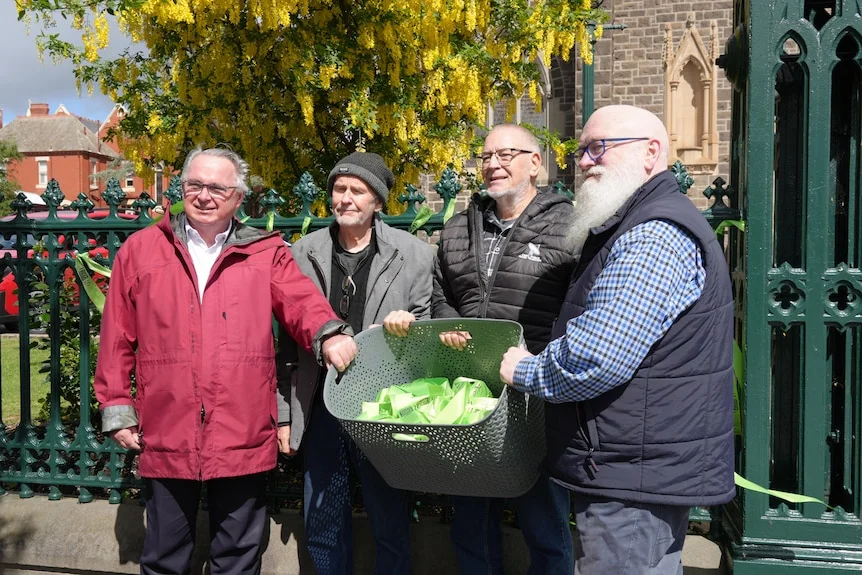
Bishop Mark Freeman, who began in the Ballarat Diocese at the start of this year, joined survivors and advocates at the cathedral to tie ribbons. He said the memorial should be shaped around what supports survivors, rather than what suits the church.
“We want to have something really worthy, that is symbolic,” Freeman said. “But perhaps most importantly it’s what enables survivors to live fully.”
That emphasis will matter in the design process. Ribbons have disappeared from the fence before, whether during maintenance or through deliberate attacks; a permanent memorial carries a different weight, and the agreement gives survivors a formal role in deciding what it becomes.
Bishop Mark Freeman, survivors Gary Sculley and Peter Buchanan, and Loud Fence chair Mark O’Brien. (ABC Ballarat: Laura Mayers)
Loud Fence chair Mark O’Brien said the process “came to a screaming halt” in 2024 after ribbons were cut from the fence. New leadership in the diocese helped restart talks, he said. For O’Brien, the agreement reflects survivors continuing to speak up—and a determination not to forget what happened.
A memorial built around healing
The agreement’s significance may lie less in its legal process than in the chance to make space for healing. Mr O’Brien praised the new Bishop’s approach, saying the focus was on healing rather than litigation. He admitted he hadn’t expected the groups to reach a memorandum of understanding, though it’s still early days.
“The message of child safety is not just for the church, or not just small groups. This is a community-wide journey for everyone.”
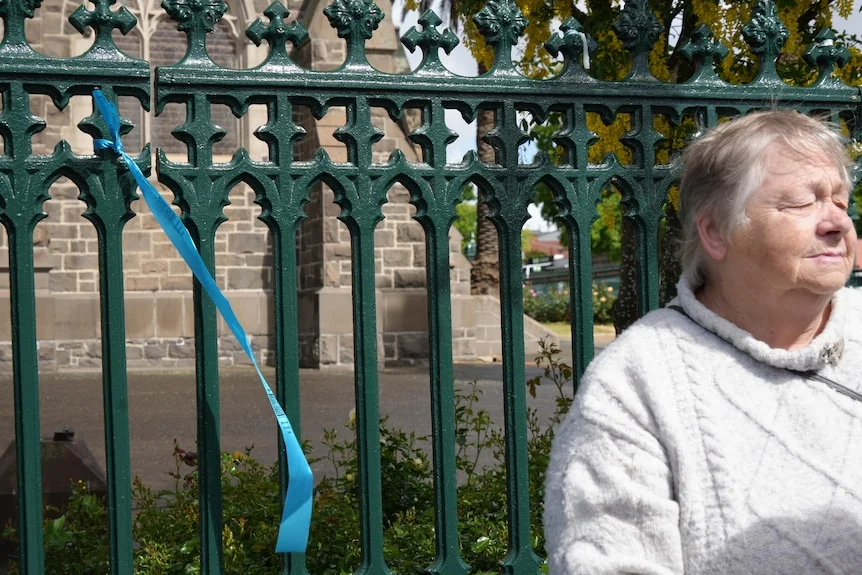
Outside St Patrick’s Cathedral, advocates and survivors embraced as the first ribbons were tied. For Loud Fence volunteer Dot Cherry, the ritual carries a decade of work: she has paid for the silk ribbons herself and says she has cut thousands.
Dot Cherry has been making the ribbons for the tying ceremonies for the past decade, and says she has made “thousands”. (ABC Ballarat: Laura Mayers)
Permanent memorials are still two years away, and the process will be difficult. Gary Sculley acknowledged that some victim-survivors may not want to take part. That makes the groups’ determination to continue especially significant: they want a memorial that honours everyone who was lost.
“But we need to have a memorial in respect of all those who have been lost.”