The claim is unverified, and it's already doing work. Pro-Russian social media channels are reporting that Jeremie Robert Munso, reportedly from Melbourne, was killed in late August while fighting for Ukraine. Australian officials are trying to confirm it with Ukrainian authorities and are providing support to his family in the meantime. That's a familiar pattern in conflicts where information is scarce and the people posting it have a stake in the outcome.
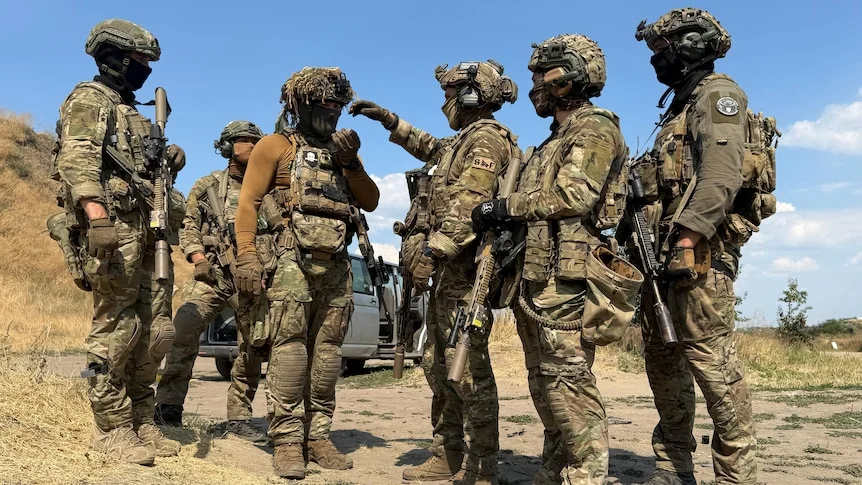
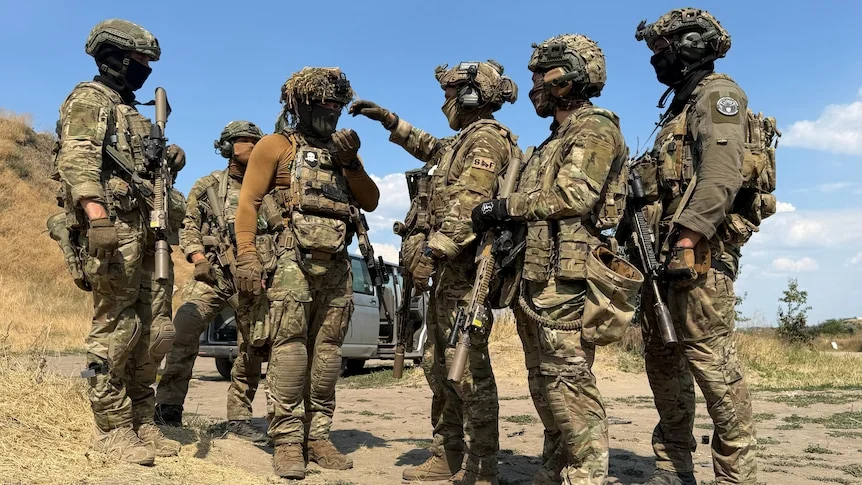
Soldiers from Ukraine's International Legion during training earlier this year. (AFP: Darya Nazarova)
A claim that travels faster than verification
The posts began circulating last week across Instagram, X and Telegram. They say Munso died in the same incident that killed Shane "Mozzie" Bagley, an Australian who fought with the Ukrainian International Legion's Med Team Alpha. That link gives the claim a specific, checkable shape, which is exactly why officials can't dismiss it outright. Here's the thing: a vague rumour is easy to ignore. A named connection to a real, previously reported death is much harder to wave away, even when the original claim has no verified source behind it.
Confirming a death on an active battlefield takes significant time, and consular help for Australians in Ukraine is limited by the ongoing war. Australia's travel advice for Ukraine still reads "do not travel," which leaves families and officials relying on slow channels for answers. That's the bind. Officials can't simply send someone to a front line to check a record, and the confirmation is being routed through Ukrainian authorities, who are working on their own timetable. For the family, the waiting is the hardest part, and it's often spent scrolling through the same unverified posts everyone else is reading.
Why the channels focus on foreign fighters
Russian-aligned accounts have been paying close attention to foreigners serving in Ukraine's legions, particularly when they're killed. Matthew Sussex, an associate professor and Russia expert at the Australian National University, reads that focus as a deliberate way to reach further than the Kremlin's own outlets can. It's a sensible choice if you're running a messaging operation. A foreign fighter's death lands with his home country's media and his family in a way a battlefield map never will. Audiences who already discount official state broadcasts are a different target altogether, and that's the gap unofficial accounts are built to fill.
Sussex put it bluntly. "Russia wants to create distance between official state media channels and unofficial ones, which are more likely to be believed than Russia Today or than things from the Kremlin," Dr Sussex said. That's the trick, and it's a shrewd one. Someone who would roll their eyes at a Kremlin press release may still believe a post from an account that looks like it belongs to an ordinary person with no obvious agenda.
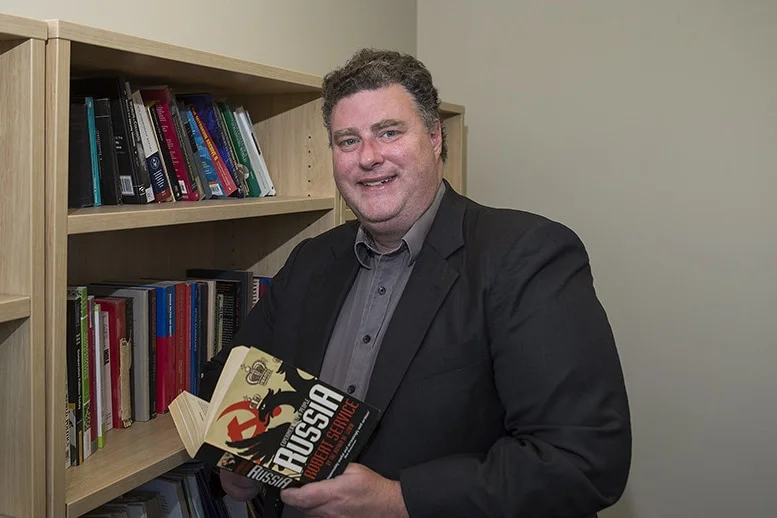
Matthew Sussex says Russia uses unofficial social media accounts to give its message a wider reach. (Supplied: ANU)
In Sussex's description, the result is a network rather than a single outlet. "So it's created a sort of social media ecosystem that it uses, and it uses a variety of platforms from Telegram all the way through to Twitter, X and Facebook." Notice the platform list. Each service has its own audience and its own moderation rules, so a claim pulled from one can keep circulating on another. (And this is the part most people overlook: no single post needs to be credible on its own. It only needs to be repeated often enough that the volume starts to look like evidence.) If you're trying to judge a story like this, that's the pattern to watch for.
A recruitment pitch and a warning
Ukraine's International Legion advertises online for foreign recruits, offering pay of up to $14,600 a month for soldiers on "assault missions". Ukrainian authorities have previously said as many as 16,000 foreigners from more than 72 countries have served. How many Australians have gone is unknown. That's the number that matters most here, and nobody can supply it. A recruitment pitch built on that kind of money and that kind of danger is an obvious target for anyone who wants to make the deal look worse than it is.
Sussex's read is that the channels aren't really in the business of reporting deaths. Their aim is to discourage recruits. "Sometimes it's speculation, but sometimes it is accurate," he said. That's a useful distinction, and it cuts against how most of us consume news. A death post doesn't need to be true to do its job. It needs to be plausible enough that the next person thinking about enlisting hesitates. Once a claim surfaces, others pick it up and reshape it into a warning: don't go and fight for Ukraine, or you'll die.
The same dynamic runs in the other direction, too. Days earlier, reporting revealed that Queensland security guard Daryl Fladung is missing and feared dead after leaving Australia to fight for Russia. Notice that this case cuts the other way. It isn't being used to scare anyone off enlisting in Ukraine, but it shows the same mechanism at work, with a person's fate turning into a talking point. When a missing person's story is this politically useful, the facts tend to get flattened into whichever version suits the audience. I'd be wary of anyone, in either direction, who reaches a conclusion faster than the evidence allows.
What this means if you're following the story
If you're following this, the honest expectation is that answers will come slowly. Ukrainian authorities and Australian officials are the only channels that can settle the Munso question, and until they do, anything on social media is a claim rather than a finding. That distinction sounds obvious. In practice, it gets blurred within hours, especially when a post carries a name, a city and a plausible connection to a documented death.
Patience. Not the satisfying kind.
For families, the stakes are personal and immediate, and the information environment makes that harder. For everyone else, the lesson is narrower but still useful: a detail that feels specific isn't the same as a detail that's been checked. The Bagley link gives the Munso claim its shape, but shape isn't substance, and the gap between the two is where unverified stories thrive.
My read is that the hard problem here isn't the individual claim. It's the gap between how fast a death post spreads and how slow verification is in a war zone. Expect more of these claims, and expect them to outrun the paperwork.


