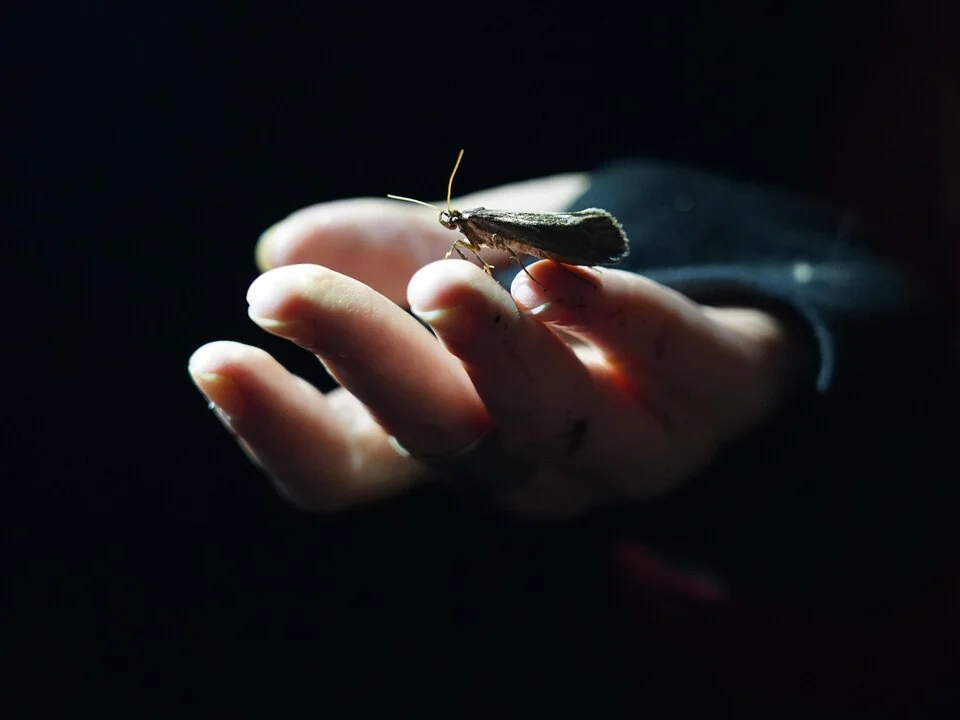
Tasmania holds onto things the rest of the world has lost. Entomologist Peter McQuillan calls it "a Noah's Ark of ancient species long since lost elsewhere", and the pandani moth may be the best case for that description.
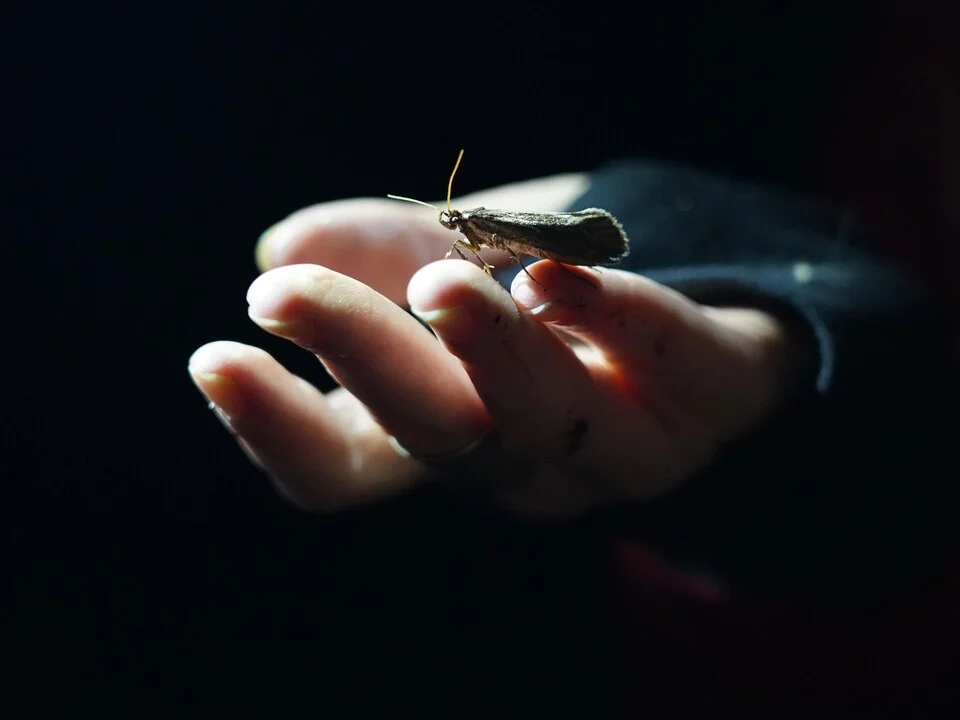
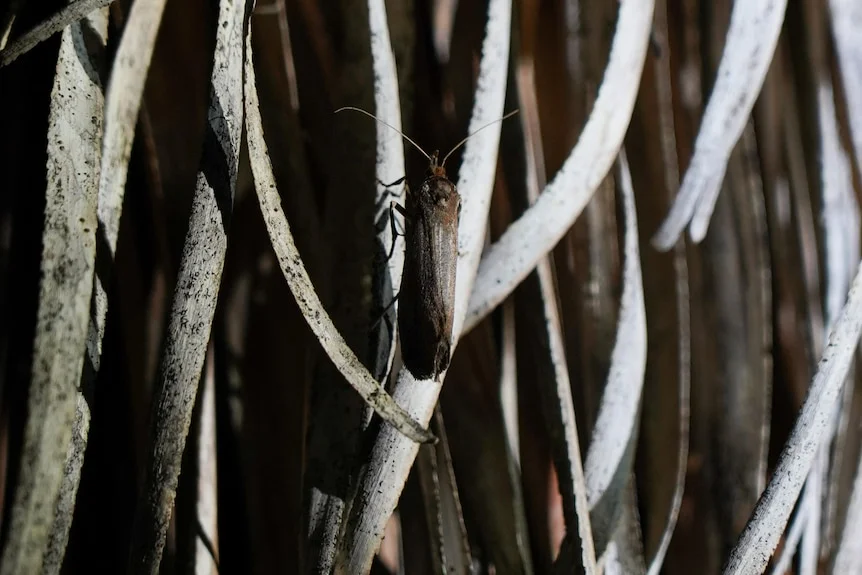
The bronze-brown insect is large for its kind, with big legs and a purplish sheen that catches the light. Its wings look impressive, and that's the problem. The pandani moth has lost the ability to fly. It mostly hops, though it can glide down from the Tasmanian pandani, a slow-growing alpine plant where it lives.
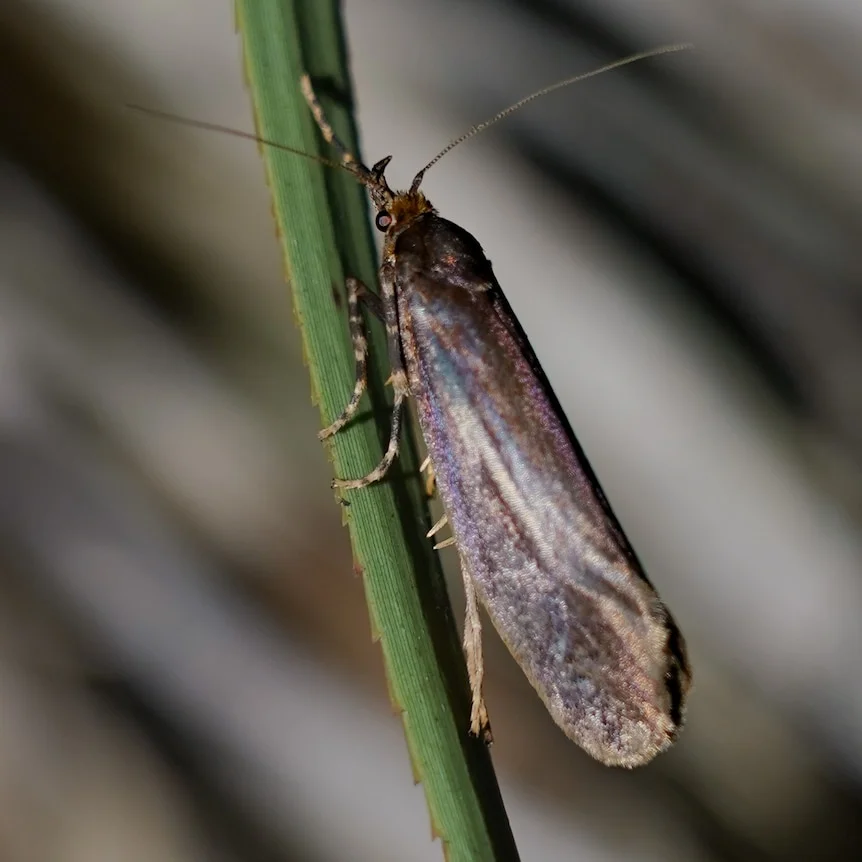
The pandani moth is only found in Tasmania's alpine region. (Supplied: Jo Schmid/Friends of the Pandani Moth)
The moth was first seen in the 1980s. McQuillan gave it a formal name in the early 2000s, and then almost nobody saw it. That changed last year, when a group of volunteers from Wildcare Tasmania surveyed the population in the state's remote south-west. They call themselves the Friends of the Pandani Moth.
Jarrah Dale, an ecologist with the Tasmanian Department of Natural Environment (NRE) and the group's president, got hooked years ago after reading McQuillan's description paper. His job as a ranger at Mount Field National Park at the time only fed the fixation.
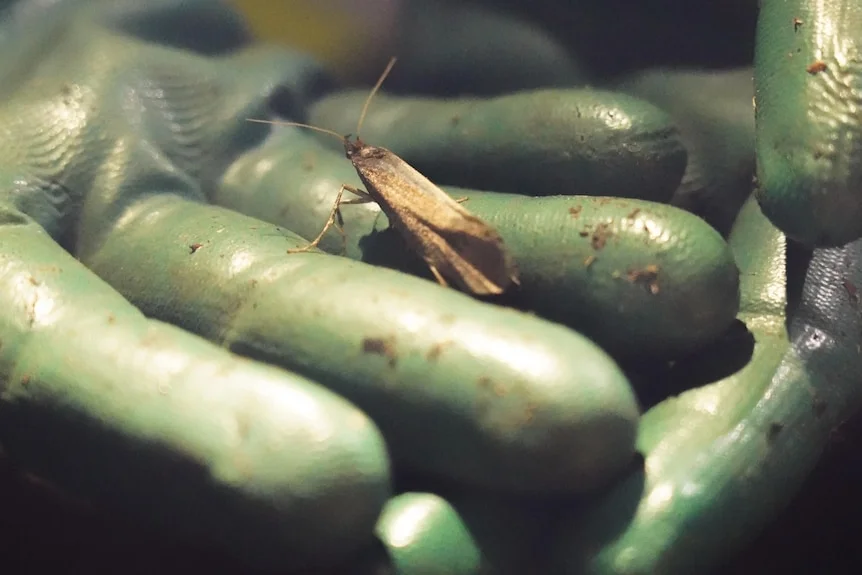
Despite having remarkably large wings, the pandani moth has lost the ability to fly. (Supplied: Jo Schmid/Friends of the Pandani Moth)
Dale's first reaction was blunt. "I thought, 'that is the weirdest thing I've ever seen in my whole life'," he said. His question, roughly: what do you mean there's a moth that lives only in the alpine zone, mostly hops, and has its closest relatives in New Zealand?
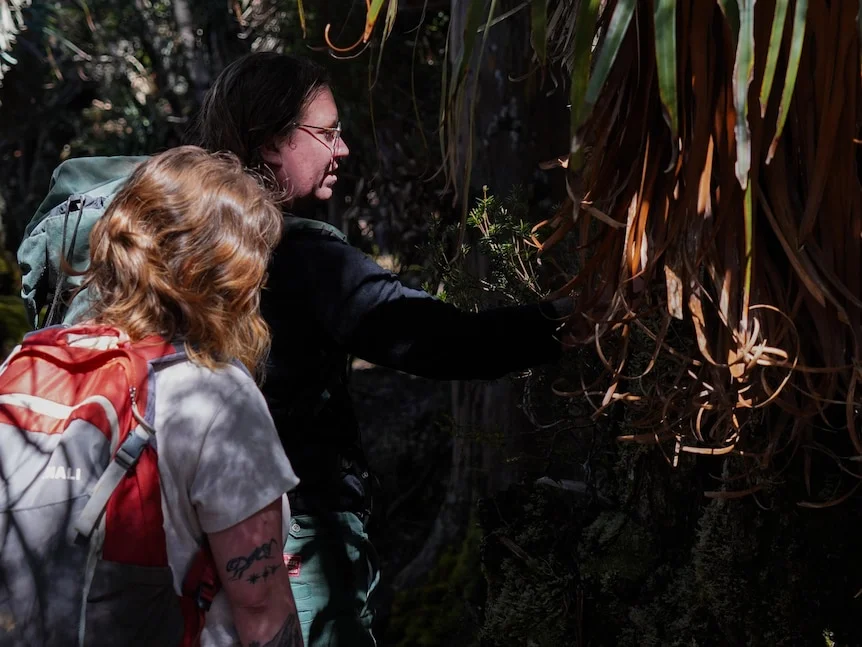
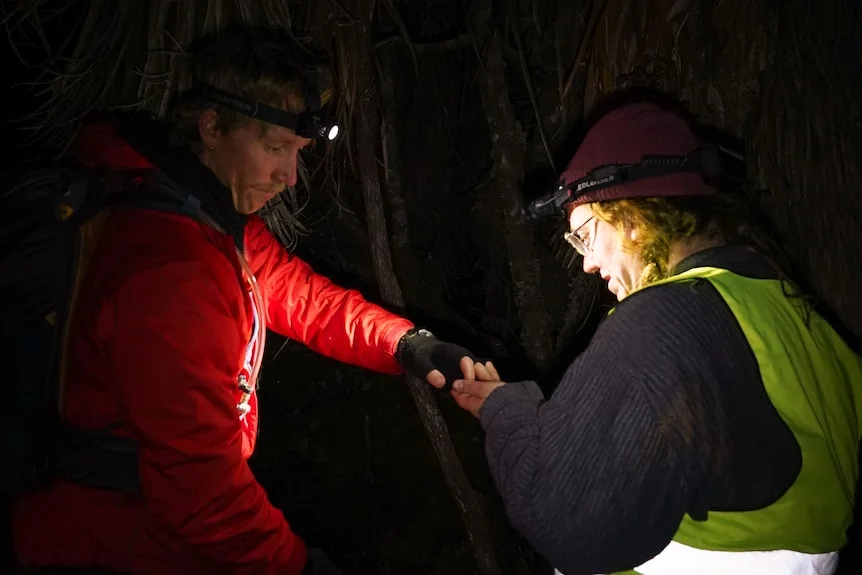
Julie Schmid (left) and Jarrah Dale survey the insect population near Lake Dobson, in Mount Field, in October. (Supplied: Jo Schmid/Friends of the Pandani Moth)
Chew marks on pandani leaves suggested the moth was around. Dale still didn't find one for years, not until he came back to Australia after finishing an overseas PhD. Once he was back, the chase got personal. "I decided, 'Bloody hell. I'm going to meet this moth because I've thought about it for so many years,'" he said.
Finding the moth
Last October, Dale recruited 30 friends, many of them scientists, to head to the Pandani Grove at Mount Field. The trip had a hitch. Unlike its relatives, the pandani moth isn't drawn to light, so the usual light-trap approach was useless.
McQuillan's advice was practical. Lay white sheets on the ground, wait for dark, then shake the pandanis to knock moths out of the fronds. It sounds almost too simple, and that's the point. After several hours of shaking and searching in the snow, the group found the first of three moths they would see that night.
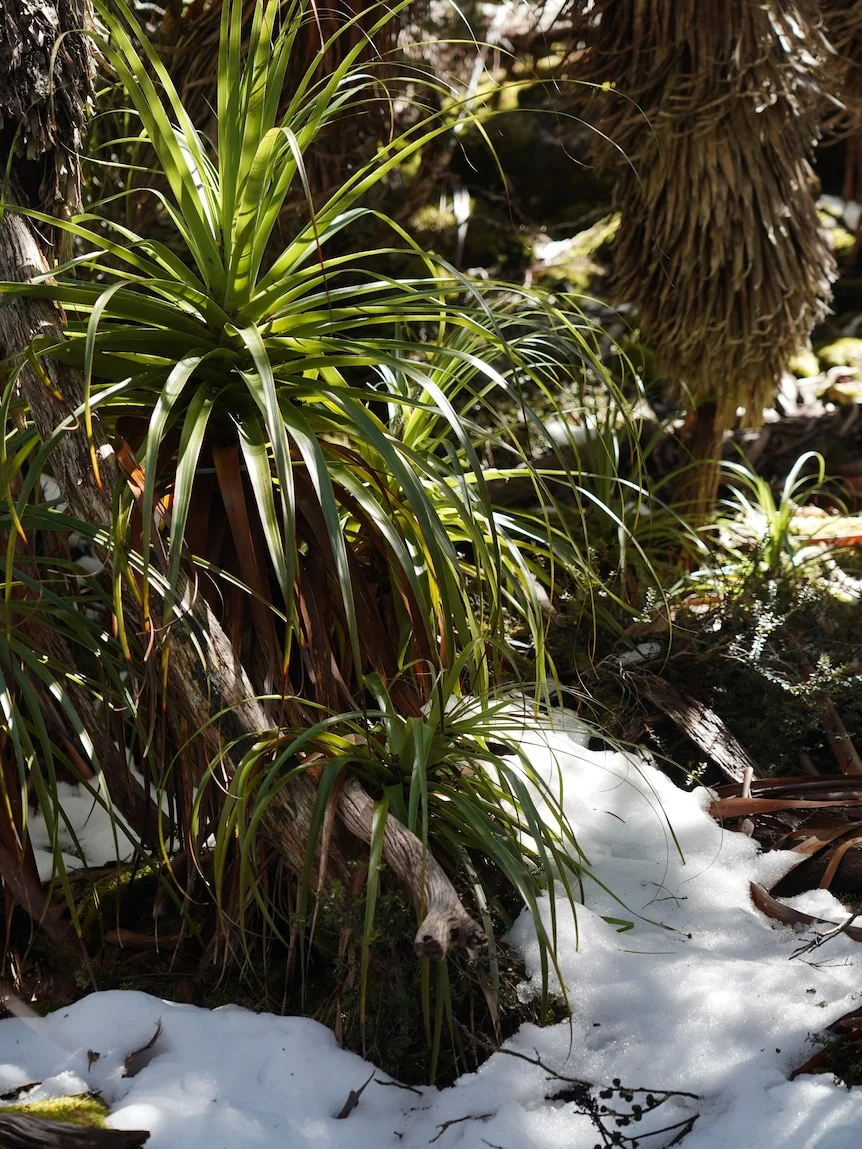
The volunteer survey group returned to Mount Field, an alpine region in the state's south-west, for a second survey this year. (Supplied: Jo Schmid/Friends of the Pandani Moth)
The moths weren't impressed. "They were pretty disgruntled about the whole thing because they probably weren't ready to be out in the snow," Dale said.
For the people doing the searching, though, the payoff was hard to shake. "It felt like something out of a fairy tale to me. There's just one moth that just plopped there on the white sheet."
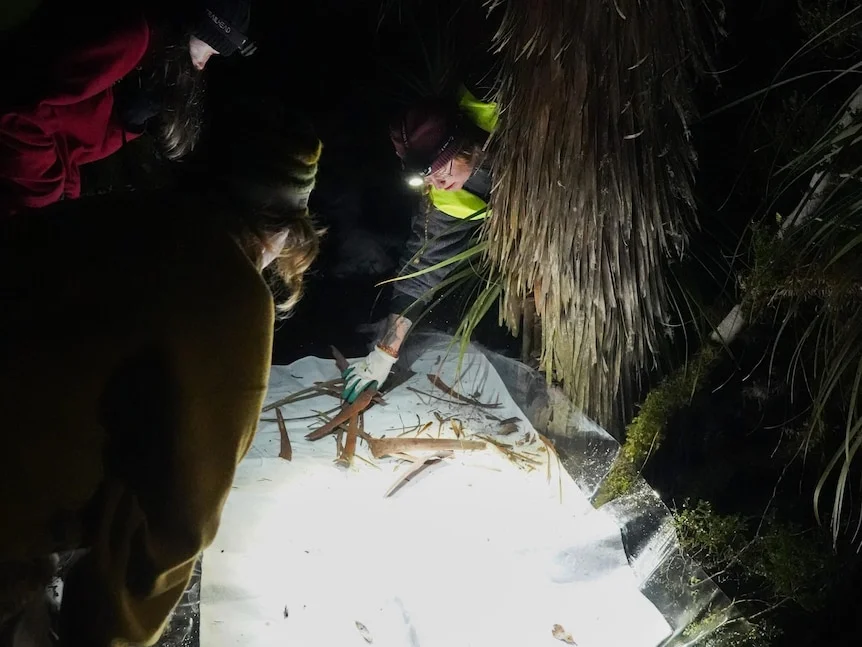
To find the moths, the group laid out sheets and shook nearby pandanis. (Supplied: Jo Schmid/Friends of the Pandani Moth)
Buoyed by that success, the group went back last month. This time the goal was less romantic and more useful: collecting genetic samples and baseline data to piece together the moth's ecology and population. One sighting proves the species exists. Only repeated fieldwork will show whether it's holding on.
Exploring Tasmania's frontier
McQuillan estimates Tasmania has roughly 2,000 native moth species, a count similar to the number of native plants on the island.
And yet hundreds of those moth species still have no name. That gap is the real story here. If you work in conservation or ecology, it means the island's invertebrate records are far less complete than its plant records, and the pandani moth is just one example of what gets missed.
Tasmania is still giving up new animals, and that should make anyone who studies insects a little envious. Entomologist Peter McQuillan, an adjunct researcher at the University of Tasmania, says the island has always been a frontier. "We, even now, are discovering new species of insects every year."

McQuillan's comparison is blunt. He thinks Tasmania's understanding of its native insects today matches where Britain stood in the 19th century. That's a long gap, and it says less about Tasmanian science than about how little of the island's invertebrate life has been catalogued.
The scale of the biodiversity makes the point more vividly. McQuillan notes that a single hectare of Kunanyi/Mount Wellington, near Hobart, holds more species and biodiversity than the whole of Antarctica. Put that next to a continent that's mostly ice, and the island's value becomes hard to dismiss.
That richness is under pressure. A changing climate and bushfires that are becoming more frequent and more destructive are pushing researchers into a race to "document these species before they're lost forever."
"The environment is changing so quickly that we're probably losing species faster than we're discovering them," he said.
That's the uncomfortable math here. Discovery is a slow, grinding process, and extinction doesn't wait for taxonomists to finish their paperwork.
What we still don't know about the pandani moth
The pandani moth is a useful case study because so much about it remains unanswered. Many aspects of its life cycle are still unknown. Without long-term population studies, McQuillan says, nobody can say whether its numbers are falling. That's not a reassuring gap for a species that may depend on a single plant.
The moth exists only in Tasmania. It lives in the pandani plant, which is endemic to the state's central, western and south-western regions. Its larvae feed on that plant and spend their entire lives inside its dense foliage, a shaggy "skirt" that can cling to the plant for decades after the insects have died.
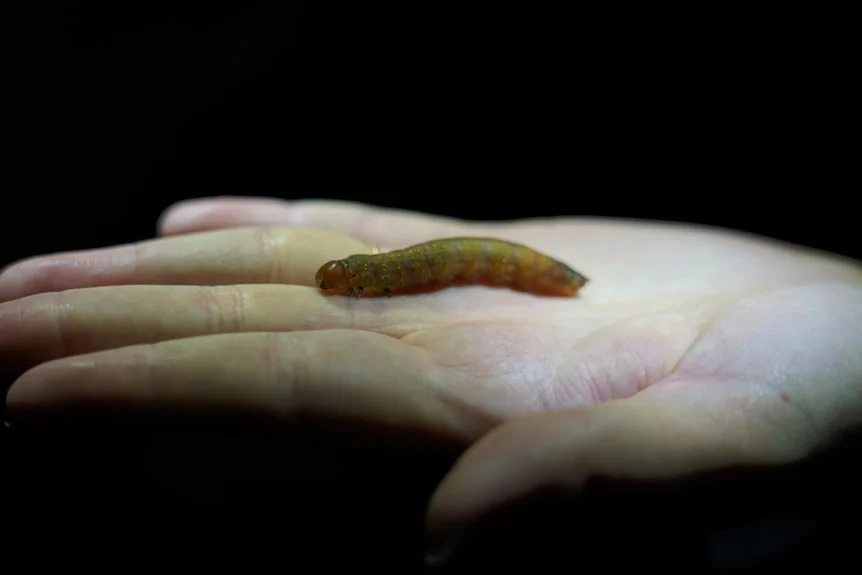
DNA technology, which advanced through the 2000s, gave researchers a way to probe the moth's relationships more closely. The result is a surprise. Its closest living relative is a species found in Aotearoa/New Zealand, and that relative feeds on a plant with no close connection to the pandani.
McQuillan says both species belong to an ancient Gondwanan lineage that has lived in the southern hemisphere for tens of millions of years. That's the real story here. A small, specialised moth on a Tasmanian alpine plant is effectively a living record of a supercontinent that broke apart long ago.
Counting on volunteers
Much of this work depends on people who aren't paid to do it. Volunteers let government bodies and conservation groups gather data and carry out ecological monitoring that would be too hard or too expensive to manage alone. The problem is that the volunteer pool has shrunk over the past five years.
Wildcare Tasmania, which coordinates a network of volunteers, donors and conservation groups, says numbers are finally recovering. Conservation projects run on long timelines, though, so the group argues it needs more people than it has now.
Enthusiasm alone won't carry a monitoring program. Wildcare Tasmania chief executive Phillip Laroche put it plainly: "Without coordination, training, equipment and funding, volunteer enthusiasm and local knowledge can't always translate into lasting outcomes." If you've ever tried to run a field survey on goodwill, you'll recognise the problem. Keen people with no kit and no training produce patchy data.
Laroche's answer is to connect people, resources and partners so communities can contribute to protecting Tasmania over the long term. That's a sensible framing, and it's also a quiet admission that the current setup leaves gaps.
Dr Dale says the pandani moth surveys have worked. The next step is to get the group's data into peer-reviewed research. Yet for the volunteers, the work has become more than an academic exercise. "As kids, we liked flipping over rocks and looking at lizards or collecting tadpoles," Dr Dale said. Then came the line that sums up the whole effort:
"The pandani moth, for us, is more like a vessel for finding joy in science again — that reason why we all became scientists in the first place."
That's the detail I'd remember. The data matters, and the moth's fate may hinge on whether anyone is still counting it in ten years. But the people doing the counting are reminding each other why they started. If Tasmania is going to document its insects before they disappear, it will need more of those people, and it will need to give them the training and funding to keep going.


