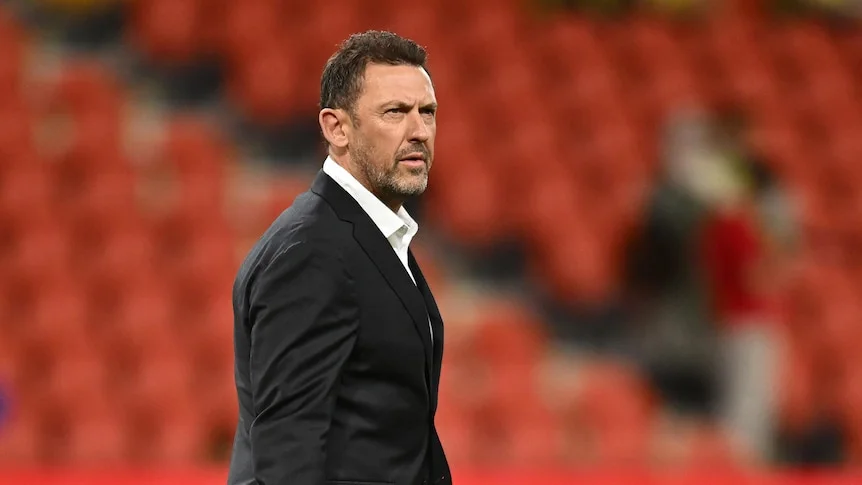
Tony Popovic says it’s hard to imagine walking away from coaching the Socceroos, but a delayed Asian Cup has left his tenure without a clear endpoint. His current deal runs only through Wednesday’s friendly against Jordan, making the match in Doha a possible final game in charge. The uncertainty is unusually immediate: the team has a match to play, while the contract that defines Popovic’s role reaches its limit at the final whistle.
“I don't expect it to be the last game, but you never know,” Popovic said. “As it stands, it is, with the Asian Cup postponement.” The distinction between what he expects and what his contract says captures the problem. A coach can feel committed to the job and still face a formal break in the relationship if the next step hasn’t been agreed.
A short-term deal meets a longer wait
Popovic rejected a four-year offer from Football Australia before this year’s World Cup, choosing instead a short-term contract that lasted until the Asian Cup. That decision gave both sides a defined point to reassess, but the tournament’s postponement has shifted the timing on which the arrangement depended. A short contract can suit a coach who wants flexibility and a federation that wants room to evaluate; it becomes less tidy when the event marking its endpoint moves.
The tournament, scheduled for January in Saudi Arabia, was postponed by 11 months amid conflict in the host country. The change leaves a substantial gap between the original end of Popovic’s deal and the competition he was hired to lead the team toward. It also complicates planning: national teams work around international windows and major tournaments, so uncertainty over the coach can affect preparation even when no immediate change is announced. That shift has left the federation and coach to settle what happens next.
The Jordan match was moved to Doha after players raised security concerns. Popovic, 53, said he and Football Australia hadn’t planned to discuss his future during this period, and expects conversations “in the next couple of months.” Chief executive Martin Kuegeler has been in the Middle East this past week but has yet to meet with him to discuss the details. For now, the public comments point to a delayed decision rather than a settled succession plan.
Early indications from Football Australia sources suggest the federation wants Popovic to continue. Other possible candidates include Kevin Muscat, who is out of contract, and John Aloisi, who is without a club after being dismissed by Chinese Super League team Chengdu Rongcheng. Their presence in the conversation doesn’t establish that either is being considered formally; it does show that the job could attract alternatives if the current arrangement isn’t extended.
A record still taking shape
Popovic took charge in 2024, succeeding Graham Arnold, without having previously coached a national team. His record with Australia stands at 12 wins, six draws and seven losses. Those results offer a basic measure of his time in charge, but they don’t by themselves settle the question of whether he should stay: the federation must also weigh the team’s direction and the value of continuity before a major tournament.
This is more significant than it looks. A decision made now could shape preparation for the rescheduled Asian Cup, while waiting leaves the coach’s status hanging over that work. Neither choice is automatically wrong, but the federation will need to turn the altered calendar into a clear plan rather than let the contract date make the decision by default.
What comes after Doha?
Popovic says the job carries a personal pull that few roles could match. “I'm coaching my country, the Socceroos, and it doesn't get better than this,” he said, while acknowledging that football careers can change regardless of contract status. That attachment helps explain why he sounds reluctant to leave, but it doesn’t answer the practical question: whether both sides want the same terms for the extended wait.
If you're following the team, the next useful signal may be less about the result against Jordan than about whether Football Australia and Popovic agree on a timetable. A friendly can offer a snapshot of the squad, but it can’t resolve who will lead the team through the postponed tournament. (And this is the part most people overlook.) A date on a contract can become a decision point even when neither side intended it to be one.
The next few months should clarify whether he remains in charge through the rescheduled Asian Cup. Until then, the situation is unresolved. A longer agreement would give the team continuity; a change would bring a new coach into a preparation period already stretched by the postponement. Either way, the federation’s next move will show whether the short-term deal was a temporary bridge or the end of Popovic’s time with Australia.


