
Plenty of would-be homeowners have stopped asking whether they can afford a new build and started asking whether they can get one at all. Industry figures point to a growing number of buyers reaching for second-hand removal homes, secondary dwellings, modular units and relocatable houses instead.
Why buyers are looking sideways
Two pressures are hitting at once. Building costs have climbed, and there aren't enough homes to go around. Australian Bureau of Statistics data shows the input cost of building a house rose 30.3 per cent over the past five years, and almost every major material has moved. Copper pipes and fittings jumped 103 per cent and electrical cables rose 65 per cent. Plywood and board costs climbed 34.3 per cent, and structural timber went up 15.3 per cent.
Housing Industry Association chief executive Simon Croft says the shift is a response to that squeeze rather than a lifestyle fad. "Be it either secondary dwelling, modular types of housing, container home and also relocatable homes," he said. "People are looking for alternate forms of housing to be able to get into the market with the affordability challenges and also the supply challenges."
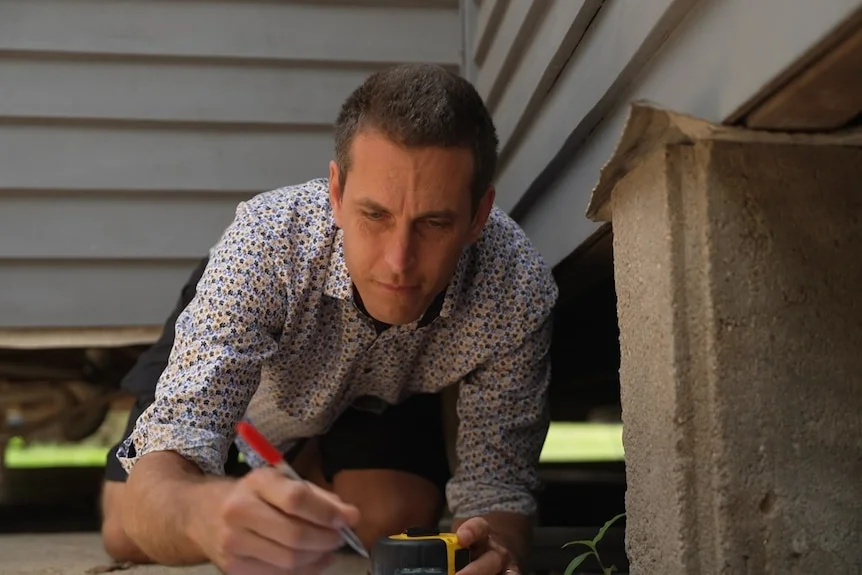
Industry experts say more people are turning to "alternative" housing solutions like removal homes. (ABC News: Elly Bradfield)
One family's sums
Sarah and Matt Transton are a useful test case. In 2024 they bought a removal house in Wavell Heights, Brisbane, and moved it to Pittsworth, near Toowoomba. The total came to about $300,000.
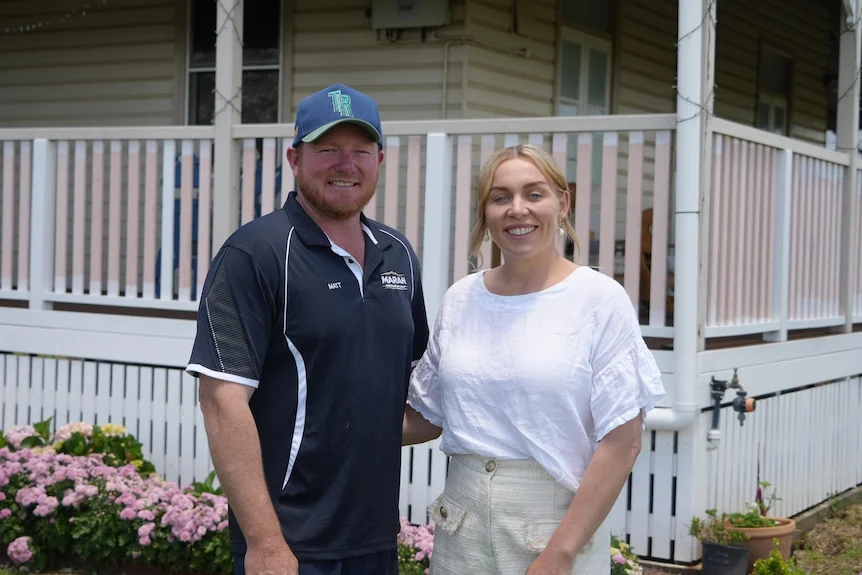
Sarah and Matt Transton said a new build would have cost more than double the price of their removal home. (ABC News: Elly Bradfield)
Mr Transton puts the comparison bluntly. "I'd say it was nearly double, if not triple the cost to do a new build instead of the removable home." The house needed work, but not a rebuild. "We got it fully painted inside, brand new flooring throughout." He's blunt about the trade-off too: "It wasn't too bad when it stacked up to a new building."
The family has since gone further. Earlier this year they added a second relocated home to their block, to be joined to the original as an extension. Ms Transton said the savings went beyond the purchase price. "The cost of the materials alone [that are] already in that house, saved us tens of thousands of dollars."
Removal homes 'far less risk'
Brisbane architect Alvin Brenner has watched the demand build. He says interest in removal homes has doubled since 2020, and his company now helps relocate about five homes a week, which adds up to more than 200 a year. The pattern he describes is families stacking housing on existing land rather than buying a whole new block. "We're seeing a lot of people taking alternative options where they're putting a house on their parents' block or they're sharing it with someone else, or they're creating a house and an opportunity from a low-cost option like this."
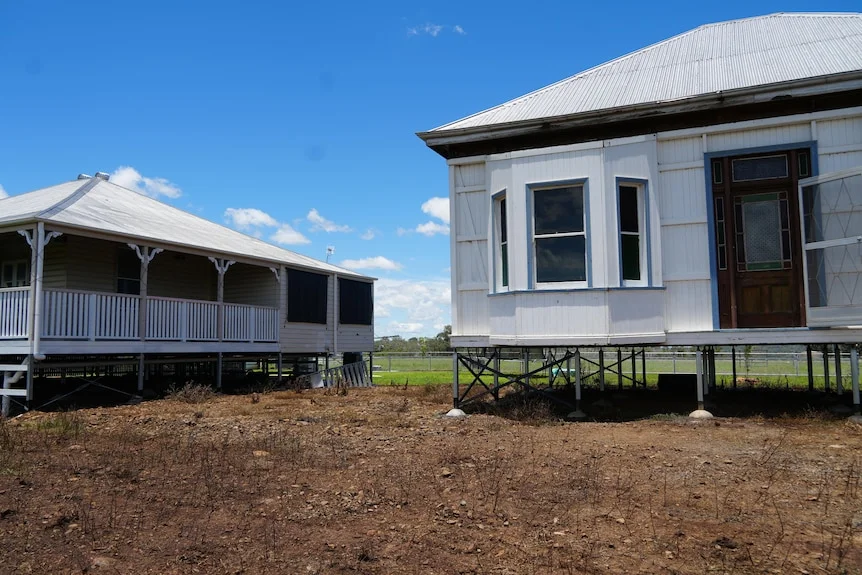
Architect Alvin Brenner said interest in removal homes has doubled since 2020. (ABC News: Glen Armstrong)
The bigger selling point, in Mr Brenner's telling, is predictability. New builds are exposed to shifting costs and timelines. A removal home is largely a known quantity. "People can really see what they get, and they can get it instantly." Once approval comes through, he says, "a couple of weeks later you have the house there and it's in sight and ready to go." That's a compelling pitch in a market where a project can drift for months. It's also a pitch that works best when the house is already built and sitting there to inspect.
Queensland House Removers operator John Wright puts numbers on the cheaper end. Removal homes can cost up to $250,000 for a four to five bedroom property. For something more modest, he says, "you would get a good house around $120,000 to $150,000 realistically," provided it has "a good kitchen, bathroom and would need very little renovation."
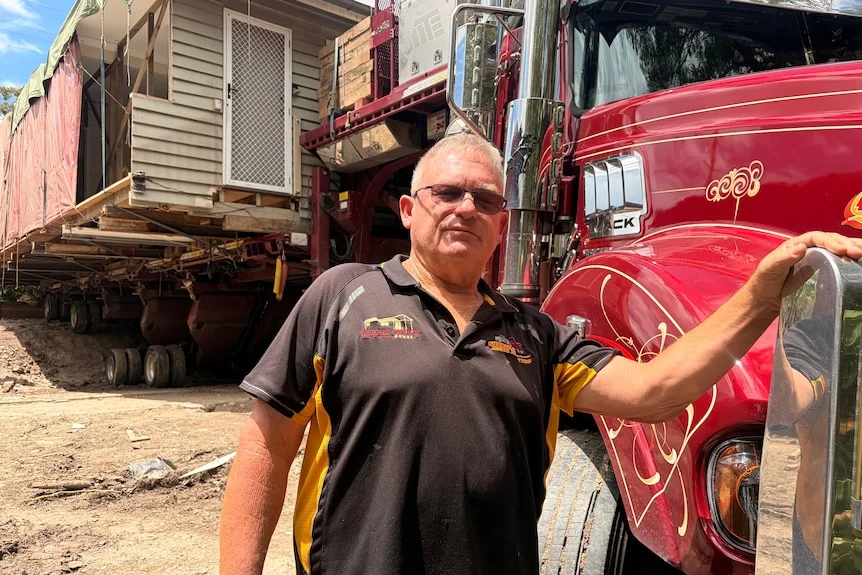
Queensland House Removers owner John Wright said removal homes can cost between $120,000 to $250,000. (ABC News: Emma Johnson)
The hidden costs
Cheaper, though, isn't the same as cheap. Mr Croft says removal homes can undercut new builds but often carry "hidden costs," and the expense tends to surface after the purchase. Older houses, he argues, are "beautiful traditional homes," but bringing them up to current standards is where the money goes. He lists building codes, energy efficiency requirements, bushfire requirements, tie-downs and cyclone rules as the usual culprits.

HIA industry and policy chief executive Simon Croft said removal homes can include "hidden costs." (ABC News: Dave Sciasci)
Don't assume the paperwork shrinks either. "You'll still need the same permits as if you're building a new home or doing a major renovation." Croft's summary is the most honest line in the piece: "Certainly, it can provide a cheaper alternative, but it is very location specific, and project specific."
Financing is the other obstacle, and it's a harder one. Some banks won't lend against these projects at all. Croft's diagnosis is that the lending system was designed around a home built piece by piece, with progress payments and staged inspections. A house that arrives on a truck doesn't fit that model. "They don't work well when you're trying to bring these different solutions to the market."
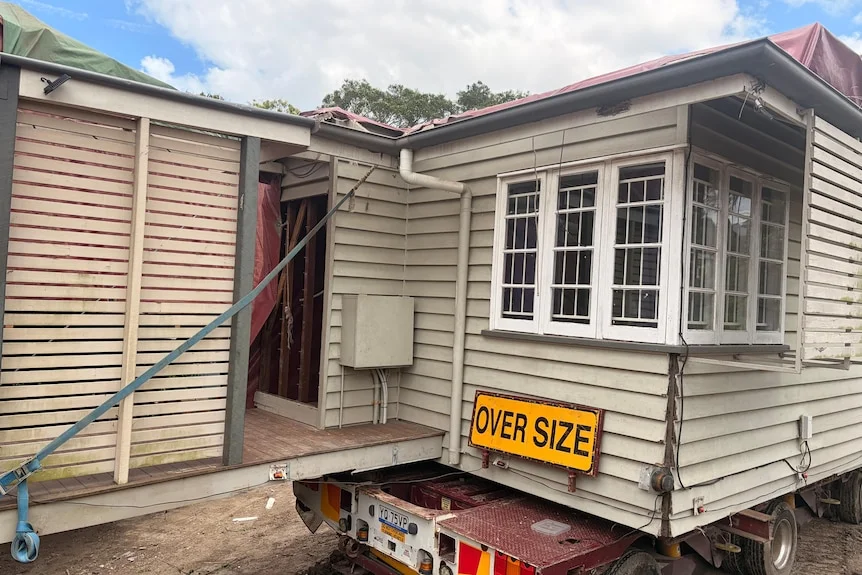
Banks are hesitant to loan money for removal homes. (ABC News: Emma Johnson)
Croft wants government to do more than tolerate these homes. "Having more tailored approaches is where we're trying to advocate for government to be able to unlock the whole range of different housing forms and housing solutions on the market." Queensland's Housing Minister, Sam O'Connor, says the state is focused on making it "easier and more affordable to build homes" through "reforms to remove unnecessary red tape."
Here's the thing: the savings are real for buyers who go in with their eyes open, and the Transtons' numbers suggest they can be substantial. But the cheapest removal home is still a renovation project with a truck attached, and lenders and regulators haven't caught up with that. If you're weighing one, budget for the upgrades and the permits before you budget for the house.


