Technology
Russian Cosmonauts Conduct 6-Hour Spacewalk to Install Solar Observation Telescope on ISS
During a six-hour spacewalk, Russian cosmonauts successfully installed the Solntse-Teragerts telescope on the International Space Station, aimed at observing and gathering data on solar activity.
Cosmonauts Make Strides in Solar Research Outside the ISS
On May 27, 2026, Russian cosmonauts Sergey Kud-Sverchkov and Sergei Mikaev embarked on a significant six-hour spacewalk to install the Solntse-Teragerts telescope on the International Space Station (ISS). This undertaking isn't just about routine maintenance; it marks a strategic step in our ability to study the sun's powerful solar flares. By capturing data on these massive bursts of energy, scientists hope to gain insights that could influence satellite operations and technology here on Earth.
The installation of the Solntse-Teragerts telescope directly ties into a growing need for improved solar observational capabilities. Strong solar flares, which can disrupt communication systems and power grids, demand enhanced monitoring to mitigate their potential hazards. In a time where solar activity is becoming increasingly unpredictable due to environmental shifts, having a dedicated observation tool aboard the ISS is not just beneficial—it's essential.
What should catch your attention is how this initiative reflects broader themes in space exploration today. If you're involved in this sector, you know that international collaboration is more critical than ever. The ISS serves as a platform where geopolitical tensions may soften in the face of shared scientific goals. This mission could symbolize a willingness to prioritize knowledge over competition, transforming how we approach not just solar research but space exploration as a whole.
As the telescope begins its operation, we can expect it to yield crucial data that could impact various sectors, from telecommunications to climate science. The implications of this research stretch far beyond the confines of the ISS. Keeping an eye on how this progresses will certainly help shape our understanding of solar phenomena for years to come.
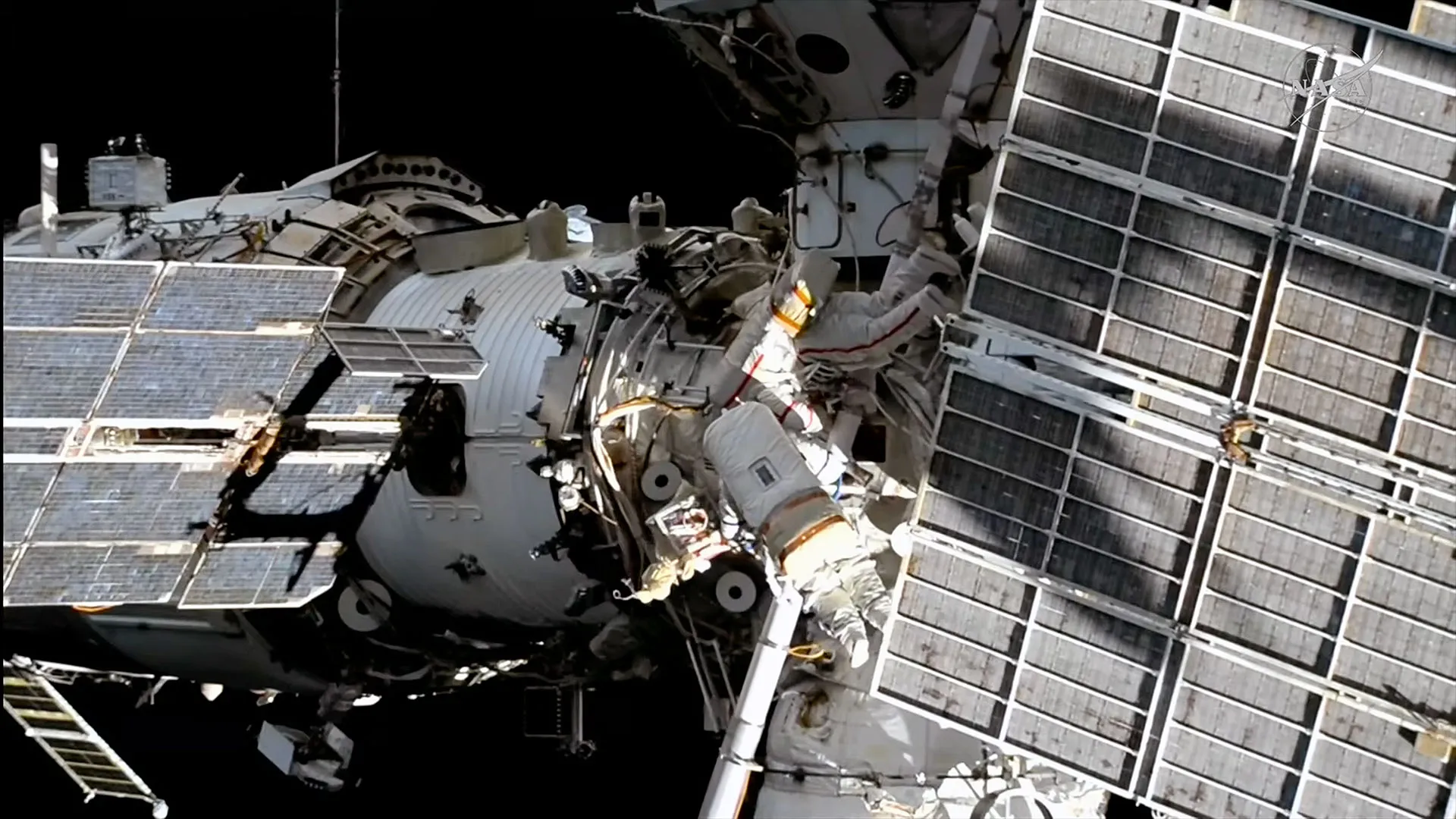
*Image credit: NASA*
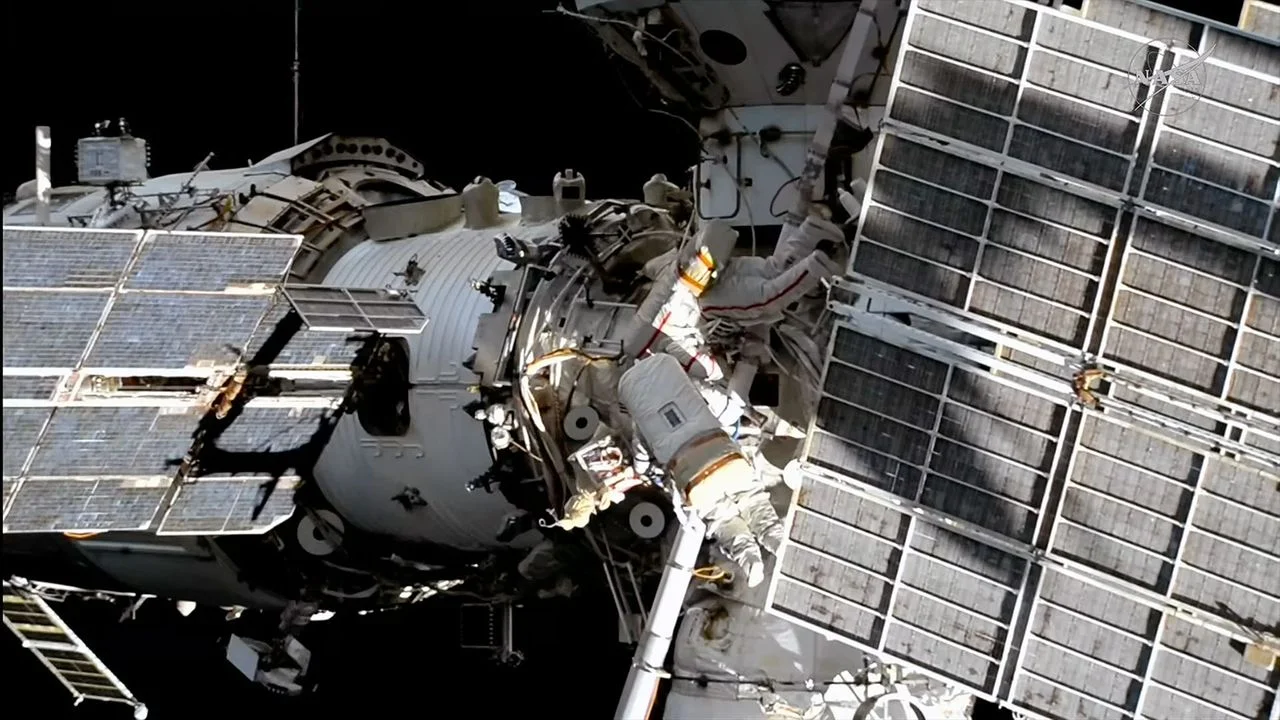
*Russian cosmonauts Sergey Kud-Sverchkov (at center top) and Sergei Mikaev conduct a spacewalk outside the International Space Station on Wednesday, May 27, 2026.*Social Sharing Insights
Social sharing features play a significant role in how content reaches broader audiences. The integration of various sharing options within articles can greatly influence their visibility and engagement metrics. Typically, platforms like Facebook, Twitter, and Reddit come equipped with easy-to-access sharing buttons that allow readers to distribute content effortlessly to their networks.
Interestingly, this setup isn't just about convenience. Analyzing the click-through rates on these buttons can provide insights into which platforms resonate most with readers. For instance, if a particular piece garners substantial shares on Facebook yet minimal interaction on Twitter, this could suggest a demographic trend worth noting.
But it’s not merely about raw numbers. The nature of the engagement also matters. Are users merely sharing, or are they sparking conversations around the content? A high share rate on Twitter, juxtaposed with low engagement on the actual tweets, may indicate that while readers find the content worth sharing, they aren't necessarily engaging with it deeply. This disconnect merits further examination, as it can inform future content strategies.
Moreover, the visibility of social sharing buttons themselves is crucial. If they're easily overlooked or not where readers expect to find them, you're optimizing your potential for shares and wider reach. Designers need to balance aesthetics with functionality—keeping sharing options accessible without cluttering the viewing experience.
Ultimately, understanding user behavior surrounding these sharing tools can drive significant insights into how articles perform across different platforms and help refine approaches for maximizing visibility. If you’re observing low engagement metrics, revisiting the positioning and design of these buttons might be a necessary step.Reflections on a Successful Spacewalk
The recent spacewalk by Russian cosmonauts Sergey Kud-Sverchkov and Sergei Mikaev offers valuable insights into the ongoing research at the International Space Station (ISS). On May 27, their efforts spanned over six hours, during which they handled crucial science experiments, enhancing our understanding of solar phenomena and the unique materials being developed in microgravity.
Consider the magnitude of what's at stake: the duo installed the Solntse-Teragerts telescope designed for tracking solar flares—an endeavor aimed at refining predictive models for solar activity. This initiative doesn't just feed scientific curiosity; it has practical implications for satellite operations and space weather predictions that can affect global communications and power systems. With the telescope set to operate until 2028, the data harvested will likely be instrumental for scientists probing the sun’s behaviors.
However, their mission was not without challenges. The retrieval of a cassette containing vital samples for a molecular beam epitaxy experiment turned into a test of resolve when they encountered equipment malfunctions. While setbacks like losing a pair of pliers might seem trivial, they underscore the unpredictability of space operations—highlighting the need for rapid problem-solving skills among astronauts. These difficulties, coupled with the successful completion of their primary objectives, paint a picture of the complexities involved in space exploration.
Kud-Sverchkov’s personal touch during the spacewalk, celebrating the 80th anniversary of the RSC Energia design bureau and acknowledging St. Petersburg's city day, brings a human element to these high-tech endeavors. Moments of cultural reflection add depth to the technical achievements, reminding us that behind every mission is a team of dedicated individuals connected to their heritage and community.
Wrapping up this EVA, which marked the 279th in support of ISS operations, reinforces a vital narrative in the space exploration saga. Each mission contributes to our technological advancements and enriches our understanding of life beyond Earth. As we look ahead, we’re reminded that every spacewalk, experiment, and even challenge shapes the future of human exploration. If you’re involved in this field, these developments signify progress that can be both scientifically and culturally enriching.