A broad footprint from an offshore quake
The reach of a magnitude-4.9 earthquake south of Adelaide was striking: residents reported shaking from Gawler to Beachport, more than 100 kilometres from the offshore epicentre. Geoscience Australia recorded the quake at about 7:50am, at a preliminary depth of roughly 10 kilometres. That combination of a shallow estimate and an offshore location helps explain why people across a wide area noticed it, though the reports alone don’t establish how strongly it was felt in each place.
The agency placed the epicentre about 100 kilometres offshore, between Kangaroo Island and South Australia’s south-east coast. Its website logged around 700 reports of shaking in the first hour. A later map showed more than 600 reports, including locations as far north as Gawler. Those figures are snapshots from a reporting system, not a complete measurement of everyone who felt the quake; people who didn’t notice it, or didn’t submit a report, won’t appear on the map.
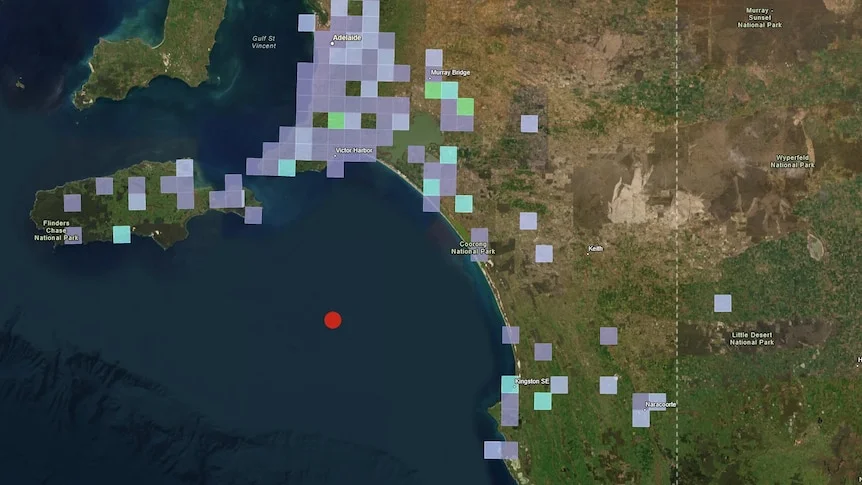
More than 600 reports have been made from areas surrounding the epicentre, from as far north as Gawler. (Supplied: Geoscience Australia)
Reports describe seconds of shaking
Reports to 891 ABC Adelaide described rattling, rumbling and movement lasting several seconds. The accounts vary in detail, but share a common feature: ordinary objects and familiar rooms became immediate points of reference for an event that began and ended quickly. Kate, from Reynella in Adelaide’s south, said the shaking moved her bed and spilled her coffee after she had returned to it with a fresh cup.
“I just made a cup of coffee and hopped back into bed and then the whole bed moved and my coffee spilt,” Kate said.
In Goolwa, Brian noticed his pot plants vibrating and heard a rumble. Josh, in Mount Barker, said windows rattled and his dog reacted; he estimated the shaking lasted about three seconds. A brief duration doesn’t mean the motion went unnoticed. In homes, small movements can be easier to identify through what they disturb than through any single sensation.
Annie, who was sitting at a table on the third floor of an apartment building in Glenside, described four side-to-side movements. She couldn’t hear the quake through the double glazing, but heard the walls flex. Residents in Willunga and Goolwa also described shaking furniture and floors, while someone on Hindmarsh Island compared the sound to several motorbikes starting at once. The different descriptions underline how the same event can register differently depending on where someone is and what they’re doing.
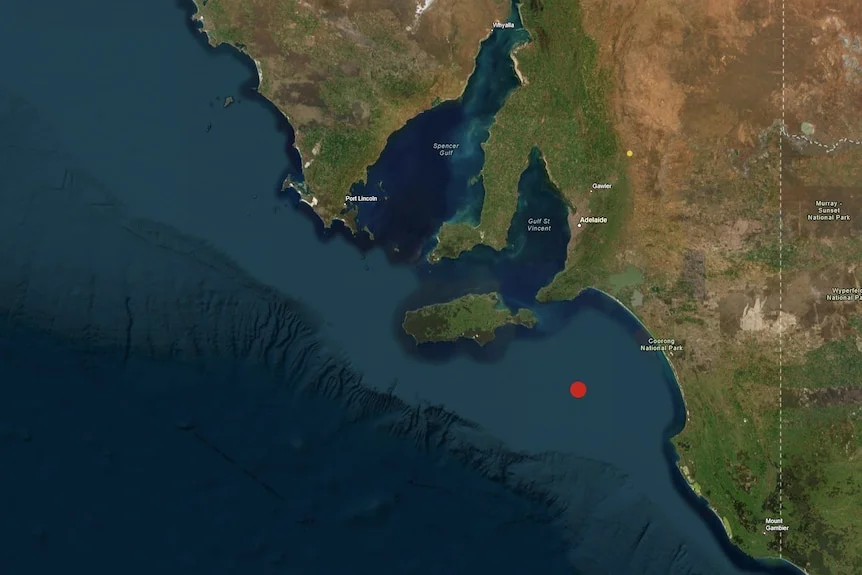
Geoscience Australia's website indicates a magnitude-4.9 earthquake. (Supplied: Geoscience Australia)
People across the south-east also reported the event, including in Cape Jaffa, Blackford, Naracoorte and Hynam. Cape Jaffa resident Mark Ireland said he first suspected heavy machinery, then saw glasses shaking on the table. He reported no damage. That initial uncertainty is familiar in accounts of sudden tremors: a rumble or vibration can have several apparent explanations until objects move or the shaking becomes unmistakable.
Jonathan Bathgate, a senior seismologist at Geoscience Australia, called the quake significant, pointing to how widely it was felt. He said the movement was associated with the Australian continent travelling north at about seven centimetres a year. The broad reach is more significant than the everyday scale of the reported damage suggests: it gives seismologists a large set of observations to compare with the instrument readings and the estimated location.
Aftershocks possible; tsunami considered unlikely
Bathgate said aftershocks could follow an earthquake of this size. He also said the offshore location raised the question of tsunami potential, but judged this quake too small to generate one; events capable of doing so are generally much larger. The distinction matters: an offshore epicentre naturally prompts questions about the sea, but location by itself doesn’t determine whether a quake can produce a tsunami.
For residents, the practical point is simpler. Aftershocks are possible, and they may be felt even if they’re smaller than the initial event. If you’re in the affected area, reports of further movement can help establish where shaking is being noticed, though they don’t predict whether or when another tremor will occur. A short jolt. A wide footprint.
The region has a history of offshore earthquakes. Bathgate cited a magnitude-5.6 event off Robe in 1948, which caused damage and occurred closer to shore. He said Australia experiences about five or six magnitude-5 earthquakes in a typical year, alongside more than 100 magnitude-3 events. Those comparisons put the latest quake in context, but they don’t make every event interchangeable: its location, depth and local effects shape what people experience.
The South Australian quake follows a magnitude-2.8 tremor that woke Barossa Valley residents just over a week earlier. Residents in the Barossa Valley were woken by the earlier quake. Noticeable earthquakes have also been reported in Victoria in recent weeks. Recent tremors have affected Gippsland. The sequence gives residents several recent reference points, but the reports don’t establish that the events share a cause.
What the reports can tell us next
The first accounts provide a picture of where the quake was noticed and how it felt indoors. Geoscience Australia’s map can help show the spread of those observations, while the agency’s seismic data underpins its assessment of magnitude, depth and location. Each answers a different question. A dense cluster of public reports can describe the human experience; it can’t, on its own, show the quake’s full physical effects.
That said, the wide distribution of reports makes this event useful to follow as assessments continue. More reports may refine the picture of where shaking was felt, and any aftershocks would add information about activity in the area. For readers, the most grounded takeaway is the one Bathgate gave: further shaking is possible, while a tsunami from this particular quake was judged unlikely.
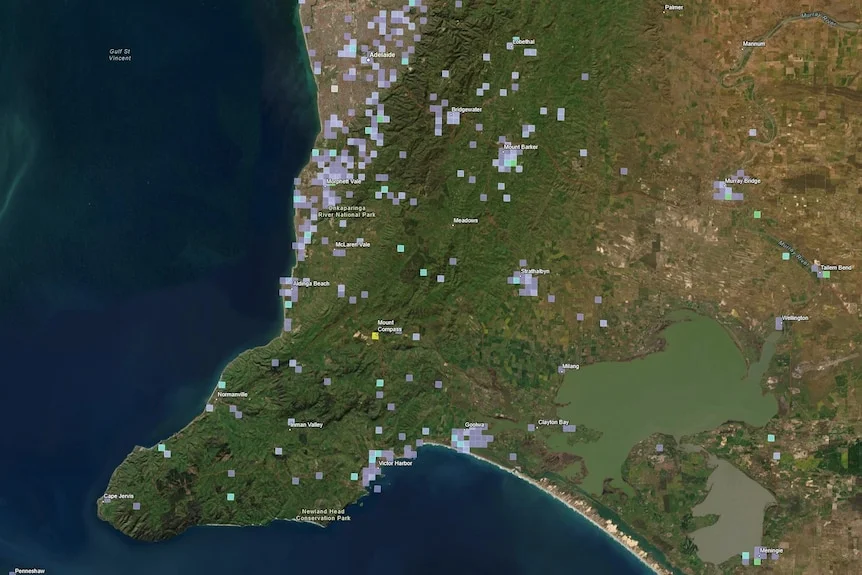
The quake happened about 7:48am, Geoscience Australia says. (Supplied: Geoscience Australia)
For residents, the immediate picture was a brief but broadly felt jolt. Geoscience Australia’s warning that aftershocks are possible is the key point to watch as reports from the region continue to be assessed. The event’s reach is a reminder that an offshore quake can be felt well beyond its epicentre, while the limits of the current reports call for care in drawing conclusions about its effects.


