
The biggest question about Gigantopithecus and early humans is whether they ever met. The giant ape could reach nearly 10 feet (3 meters) tall and weigh about 500 pounds (230 kilograms), yet the fossil record offers no direct evidence of encounters with hominins such as Homo erectus. Those dimensions make a meeting easy to imagine, but size alone can’t tell us whether the animals shared a path, much less how either would have reacted. For researchers, the gap between a plausible encounter and a documented one is the central problem.
Gigantopithecus lived in Southeast Asia from roughly 2 million to 200,000 years ago. It was a plant eater, likely feeding on vegetation such as bamboo, and is closely related to modern orangutans. Some hominins lived in the region during that broad span, but overlapping dates alone don’t establish that they shared the same places. A species can persist across a large area and a long stretch of time while remaining separated from another by local habitat, food sources or movement patterns.
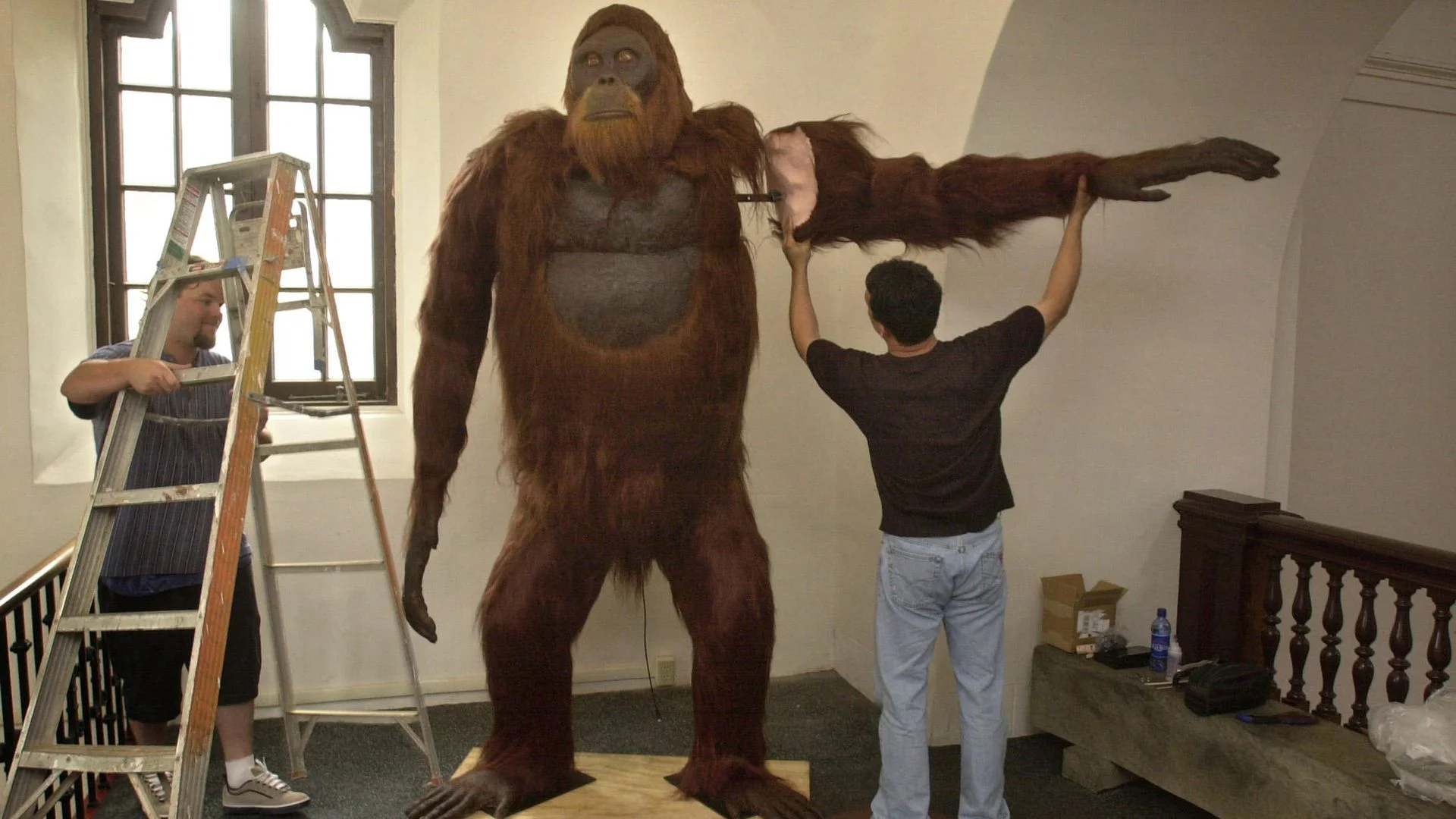
That uncertainty shapes the competing explanations. Renaud Joannes-Boyau, an archaeologist and director of higher-degree research training at Southern Cross University in Australia, told Live Science by email that researchers have “no direct evidence documenting interactions” between the ape and human ancestors, making firm conclusions difficult. Without evidence such as remains found together in a context that indicates contact, researchers can’t establish whether the species met or infer a typical response from either one.
Still, Joannes-Boyau sees reason to expect a range of responses if encounters occurred. He said the genus Homo repeatedly explored and exploited large animals, sometimes eliminating them. Depending on the circumstances, he suggested, interactions could have involved indifference, curiosity or violence. That range matters: an encounter needn’t have been a dramatic fight. Animals might have avoided one another, competed over resources or reacted differently in different settings.
Friedemann Schrenk, a paleobiology professor at Johannes Gutenberg University Mainz in Germany, considers aggression by hominins more likely in a direct confrontation. Early humans used tools and weapons and may have encroached on Gigantopithecus habitat. Homo erectus used hand axes and may also have had hafted spears. These capabilities would have shaped the balance of risk in a close encounter, though they don’t show that people hunted the ape or that the two ever came into conflict.
Schrenk compares the hypothetical relationship to modern human impacts on orangutans: people move into ape habitat, and ape populations decline. He described Gigantopithecus as “a gigantic orangutan” and said that, if conflict arose, humans would probably have initiated it. The analogy offers a way to think about pressure on large apes, but it can’t substitute for evidence about what happened in the past. This is more significant than it looks: a familiar modern pattern can suggest questions, but it doesn’t settle the history of a different species.
A question of habitat
But the two groups may have occupied different environments, limiting the chance of contact. Hervé Bocherens, a biogeology professor at the University of Tübingen in Germany, pointed to carbon stable isotope measurements from teeth. The results suggest that Gigantopithecus lived in closed forests, while Homo erectus used more open savannah habitat. Bocherens cautioned that the evidence is limited, so hominins could also have entered forested areas. The findings therefore point to a possible ecological separation, not a firm boundary that either species never crossed.
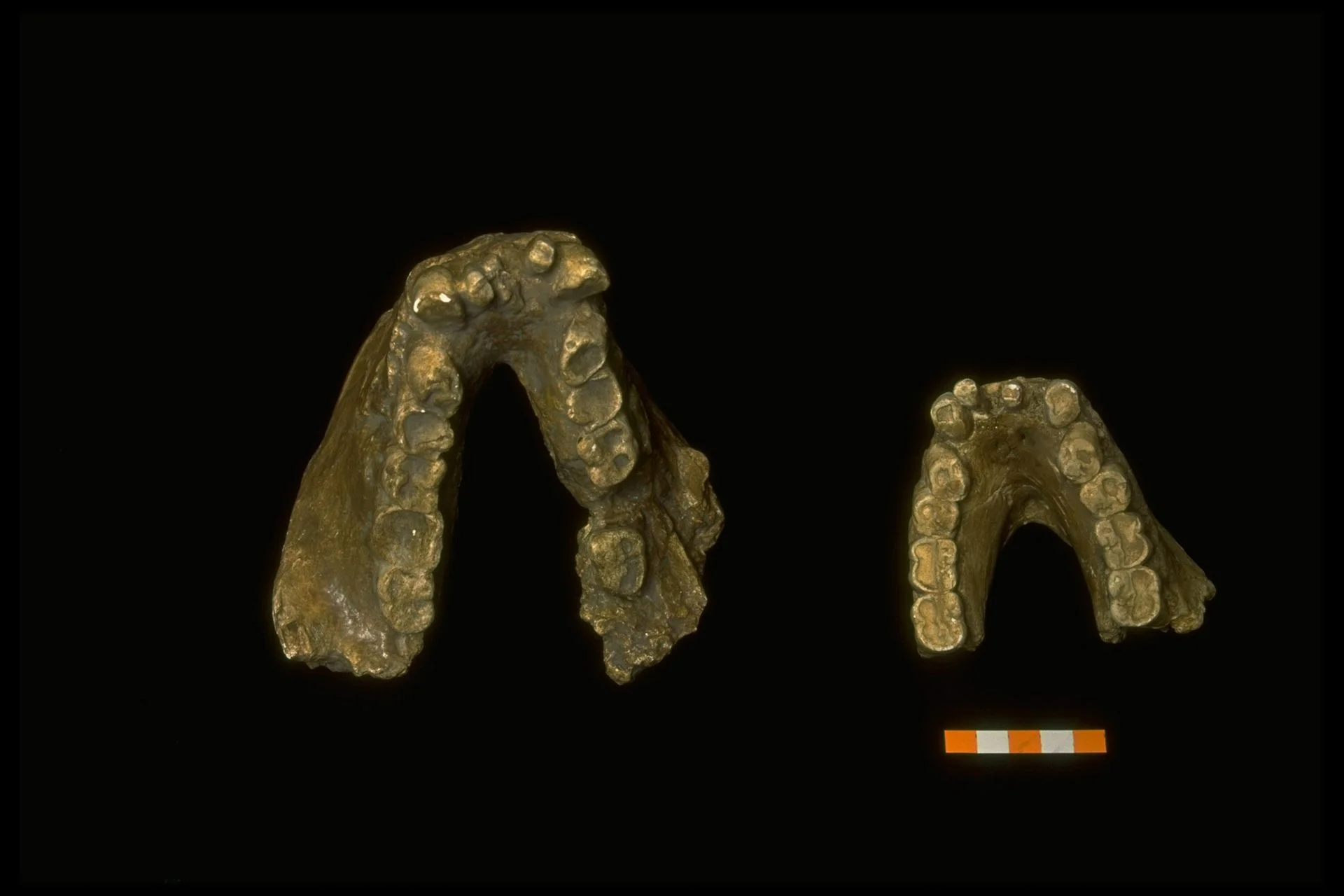
The teeth also offer clues to what the ape ate: their grinding patterns fit a diet based largely on plants, possibly including bamboo. That dependence on forest food may help explain the species’ disappearance. It also gives researchers a way to connect anatomy with habitat: teeth preserve clues about diet even when the fossil record doesn’t preserve a complete picture of an animal’s daily life. If you're working in this space, that’s the useful distinction: dietary evidence can narrow the ecological story without revealing every detail of behavior.
What the extinction evidence can tell us
A 2024 study of the extinction of Gigantopithecus found no evidence that hominins caused its decline. The researchers instead linked its disappearance to environmental change that shrank the forest habitat where it foraged. Yingqi Zhang, a researcher at the Chinese Academy of Sciences and first author of the study, told Live Science that hominins and Gigantopithecus may never have encountered one another. The study’s interpretation shifts attention toward habitat and food availability, while leaving the question of contact open. An absence of evidence for human involvement narrows the explanation; it doesn’t prove that no encounter ever occurred.
Frido Welker, a professor of biomolecular paleoanthropology at the University of Copenhagen, also emphasized how little can be inferred about any meeting. He thinks the animals may have avoided each other, though hominins could have been “in awe” if they came face to face. The strongest conclusion is narrower: habitat evidence and fossils can constrain where the species lived and why one vanished, but the scene of a possible encounter remains unknown. That said, the uncertainty isn’t a failure of the evidence; it marks the boundary between what fossils support and what remains speculation. A possible meeting. No preserved account of it.
What this means for you is that the most defensible account may be less cinematic than the question suggests. Researchers can discuss the ape’s size, diet, habitat and extinction, then compare those clues with what is known about hominins. They can’t turn those pieces into a witnessed encounter. The distinction is worth keeping in view whenever a striking prehistoric possibility starts to sound like established history.
See how much you know about early humans with our human evolution quiz!


