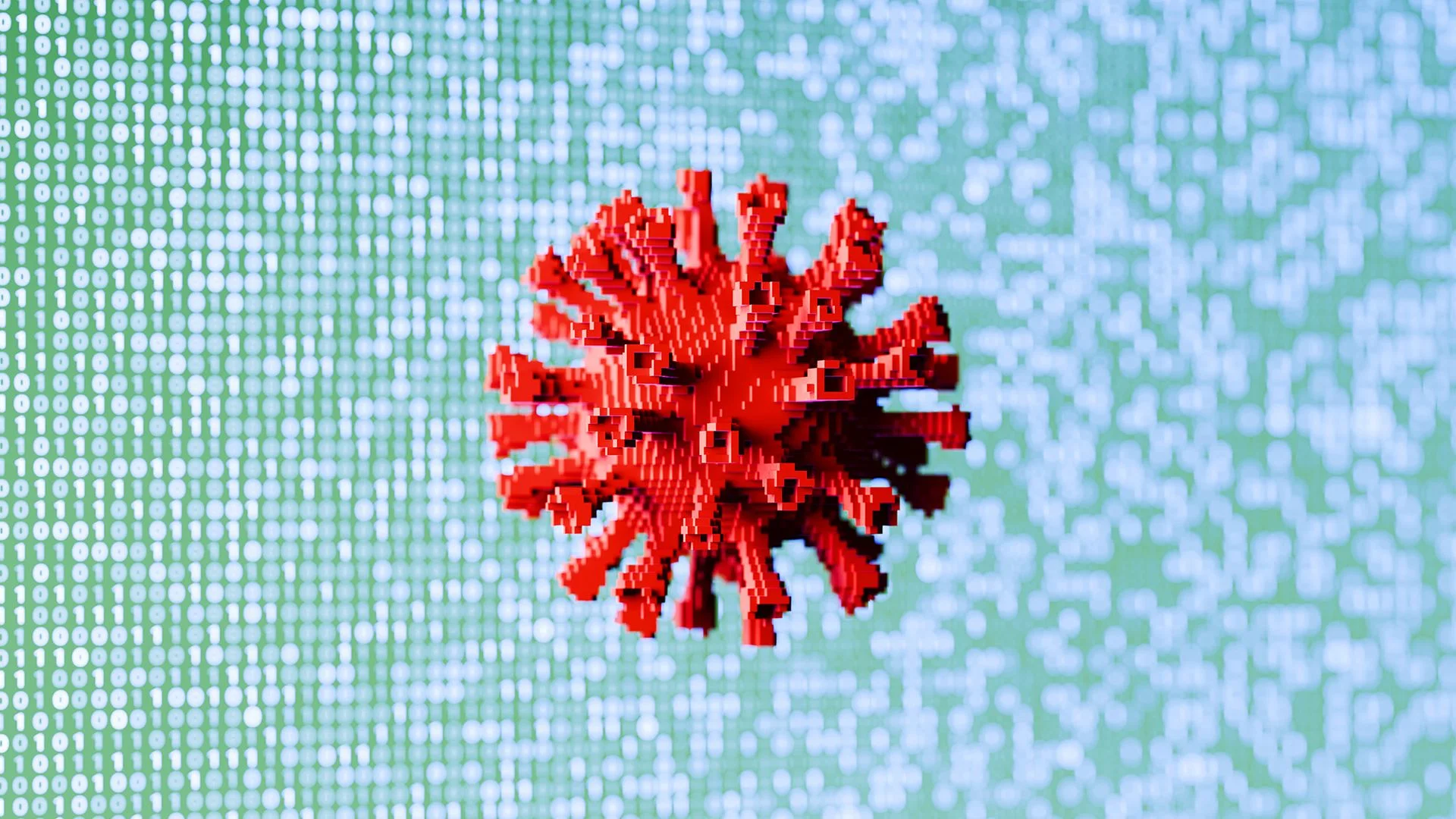
AI protein watermarks could help researchers identify where a designed molecule came from, but their current weakness is also plain: a user can remove them. Google DeepMind’s SynthIDBio methods mark AI-generated proteins while preserving their function, and tests found the marks with high accuracy. Experts say that makes the work a useful tracking tool, not a dependable barrier against misuse.
The distinction matters as protein design software gets better at producing sequences that don’t resemble known biological threats. Screening systems often compare a candidate protein’s amino acid sequence with those of recognized dangerous molecules. A novel design may evade that comparison. A watermark could offer another clue about a protein’s origin, even when its sequence looks unfamiliar.
Marking a protein without changing its job
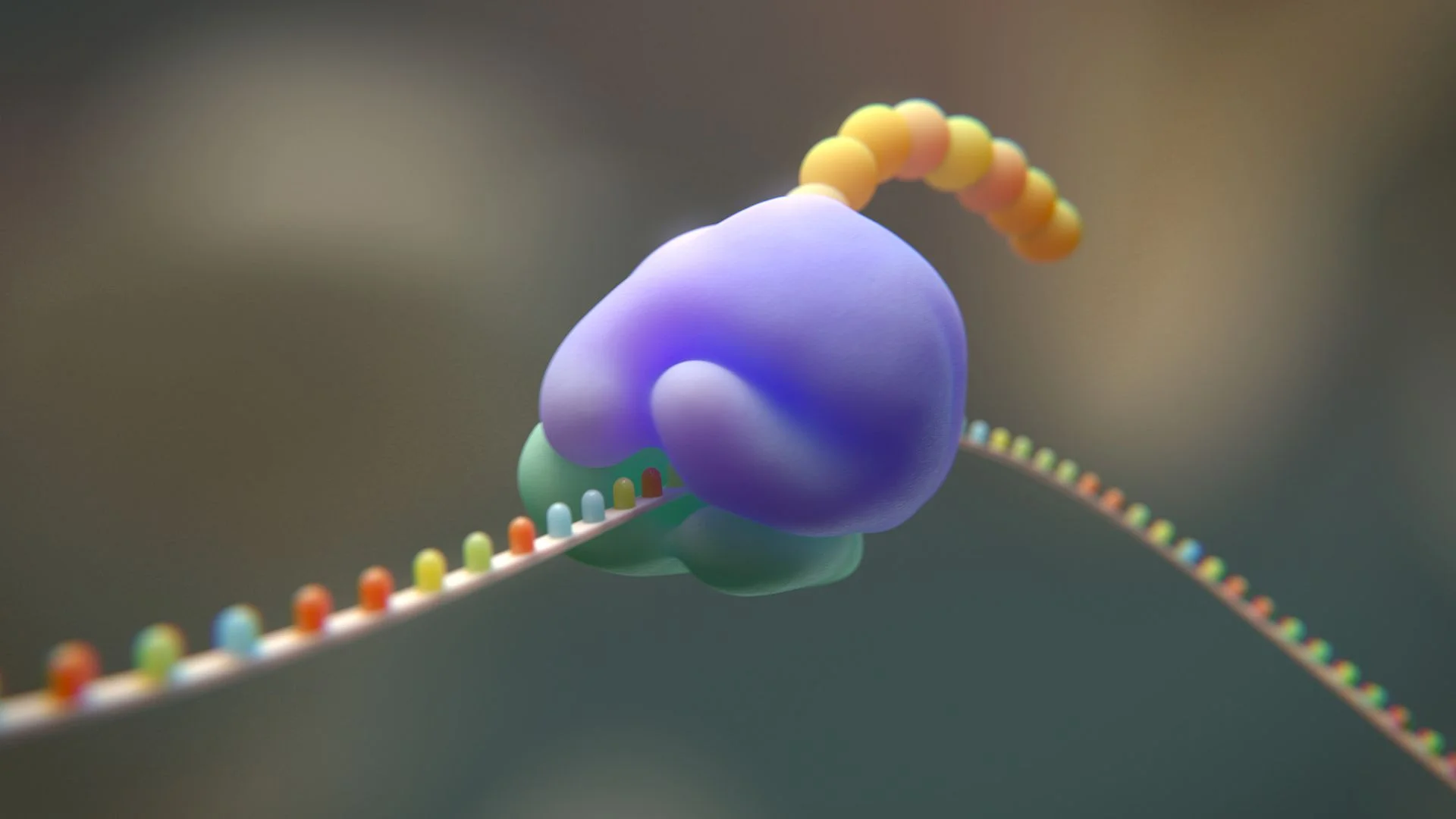
DeepMind’s SynthIDBio is a family of methods for adding hidden signals to AI-designed proteins. Its first approach, SynthIDBio-sequence, works with ProteinMPNN, a program that selects amino acids to produce a requested three-dimensional protein shape. The watermarking method subtly biases those choices using a secret key. A detector with access to the key can then estimate whether a sequence was generated under that bias.
The research team reported that marked proteins retained their ability to bind to their targets at levels comparable to unmarked proteins. That functional test is central to the approach: a watermark has little practical value if it changes the protein enough to undermine the design it is supposed to identify.
A second method, SynthIDBio-structure, places a signal in the predicted arrangement of atoms. It modifies how AlphaFold 3 predicts a protein’s structure, introducing small changes that can later be detected. The alterations are intended to remain subtle, rather than appearing as obvious distortions in the protein model.
In tests, the two systems detected more than 99% of watermarked proteins and correctly left 99.9% of unmarked proteins unflagged. Those results suggest the methods can distinguish marked designs from ordinary ones under the conditions tested. They don’t establish that the marks will survive every later edit, or that every protein-generation tool will add them.
Why provenance is becoming harder to establish
Protein engineering has shifted rapidly since AlphaFold’s 2020 debut. The system predicts a protein’s three-dimensional structure from its amino acid sequence, helping researchers understand how its shape relates to what it does. AlphaFold’s creators, Demis Hassabis and John Jumper, shared the 2024 Nobel Prize in Chemistry with David Baker, whose work helped establish computational protein design.
The same advances that support research and medicine can also be directed toward harmful ends. AI systems can generate proteins that don’t occur in nature, including designs intended to evade immune defenses. That capability complicates screening based on similarity to known molecules. As George Rose, professor emeritus of biophysics at Johns Hopkins University, put it: “Anything that can be used for good can be used for bad.”
Roy Sleator, a biology professor at Munster Technological University in Ireland who was not involved in the DeepMind research, sees possible value in using watermarks to trace a design’s origin, direct engineered proteins for extra scrutiny, and reduce false claims about how a protein was produced. He also said the method could help keep artificial designs from being misfiled in standard databases.
That would make watermarking useful for recordkeeping and screening workflows. A detected mark could give researchers or database managers a reason to ask where a sequence came from and how it was generated. But a missing mark can’t establish that a protein was made without AI: the signal may never have been added, or it may have been removed.
The removal problem
Bruce Wittmann, a principal applied scientist at Microsoft, described the techniques as “effective but brittle.” Sequence marks can be erased by changing the amino acid sequence through a process he called “resequencing.” Structure marks can be disrupted by adding noise to, or otherwise modifying, the protein’s spatial coordinates. Once a mark is gone, current screening tools may not reveal that it was there.
This puts a limit on what the reported detection rates mean. They show that the detectors performed well on the test cases; they don’t show that the watermark is durable against deliberate alteration. A mark that helps identify a cooperative user’s design may offer less protection against someone intent on concealing its origin.
Max Brackmann, a chemical, biological, radiological, and nuclear arms expert at Switzerland’s Spiez Laboratory, also questioned whether attribution would deter the most serious threats. A lasting mark might help identify who made a dangerous protein or reveal unauthorized access to a generation system. But a person pursuing a biological attack may not be deterred by the possibility of being identified afterward, he said.
A layer in a wider defense
Wider adoption presents another obstacle. Many protein prediction and generation tools are open source, with code available for users to inspect and modify. That makes it difficult to ensure that every system adds a watermark or that the mark remains in place. Wittmann said watermarks would be harder to establish as a common standard while so much of the software remains open source.
He sees watermarking as one part of a broader biosecurity approach. Making it a universal requirement would be difficult to enforce, he said: “I imagine it would be very difficult to ensure the regulations were being followed.” Rose was more skeptical, arguing that restrictions on generative protein technology would be unlikely to hold once the tools are widely available.
For now, SynthIDBio offers a way to attach provenance information to AI-designed proteins and detect it when it survives. Its value will depend on how often developers use it, whether the marks persist through routine research workflows, and how screening systems respond when a watermark is absent. The practical takeaway is narrower than a guarantee of safety: watermarks may help trace some designs, while broader monitoring still has to account for unmarked or altered proteins.
Help us improve Live Science Pro: We're always trying to make our content better. Leave us feedback about Pro here.


