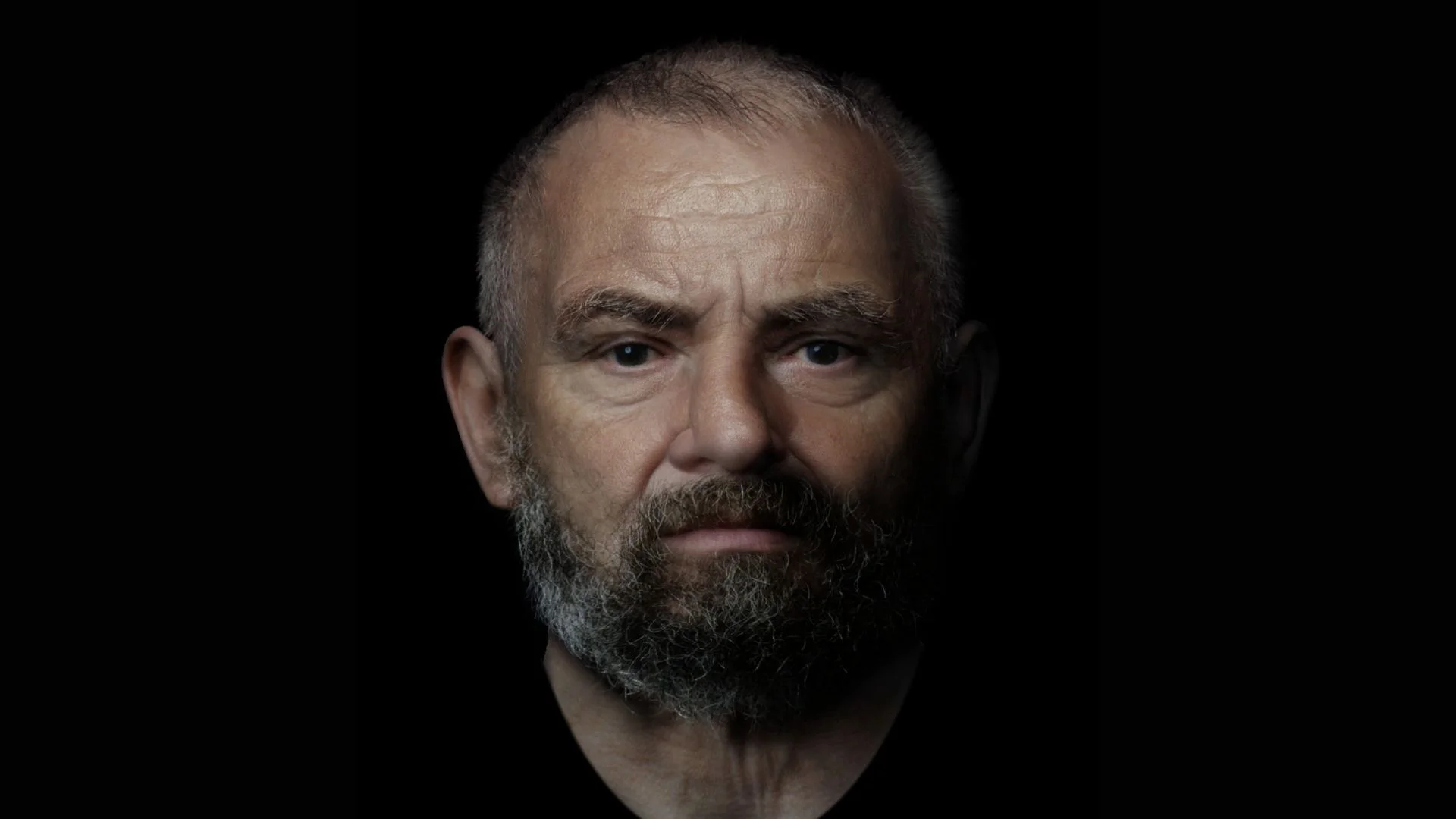
A virtual face reconstruction brings a Roman-era burial from Scotland into sharper focus, but the man’s story remains unresolved. He was about 50 when he died between A.D. 142 and 165, then was buried near the Roman fort at Inveresk, southeast of modern Edinburgh. His body was decapitated after death, and chemical evidence suggests he had grown up in southern Britain.
That combination has led researchers to consider whether his burial reflected a regional custom. John H. Reid, an archaeologist with the Trimontium Trust who wasn’t involved in the excavation, told Live Science that decapitated burials from around the same period have also been found hundreds of miles away in southern Britain. He suggested that beheading may have formed part of an obscure burial rite practiced by some communities there.
The evidence doesn’t explain why the man was in Scotland or why he was decapitated. National Museums Scotland researchers said he may have worked for the Roman army, but his remains suggest he wasn’t a conventional frontline soldier. His right arm had severely limited movement, making sword use difficult.
He might still have served in another capacity. Reid said the man could have been left-handed, or held a noncombat role such as a clerk. Non-Romans also worked with the army as servants and artisans, or served in auxiliary units and citizen-based legions. By the time of the Antonine Wall, Reid said, few Roman troops in Scotland would have come from the Italian peninsula.
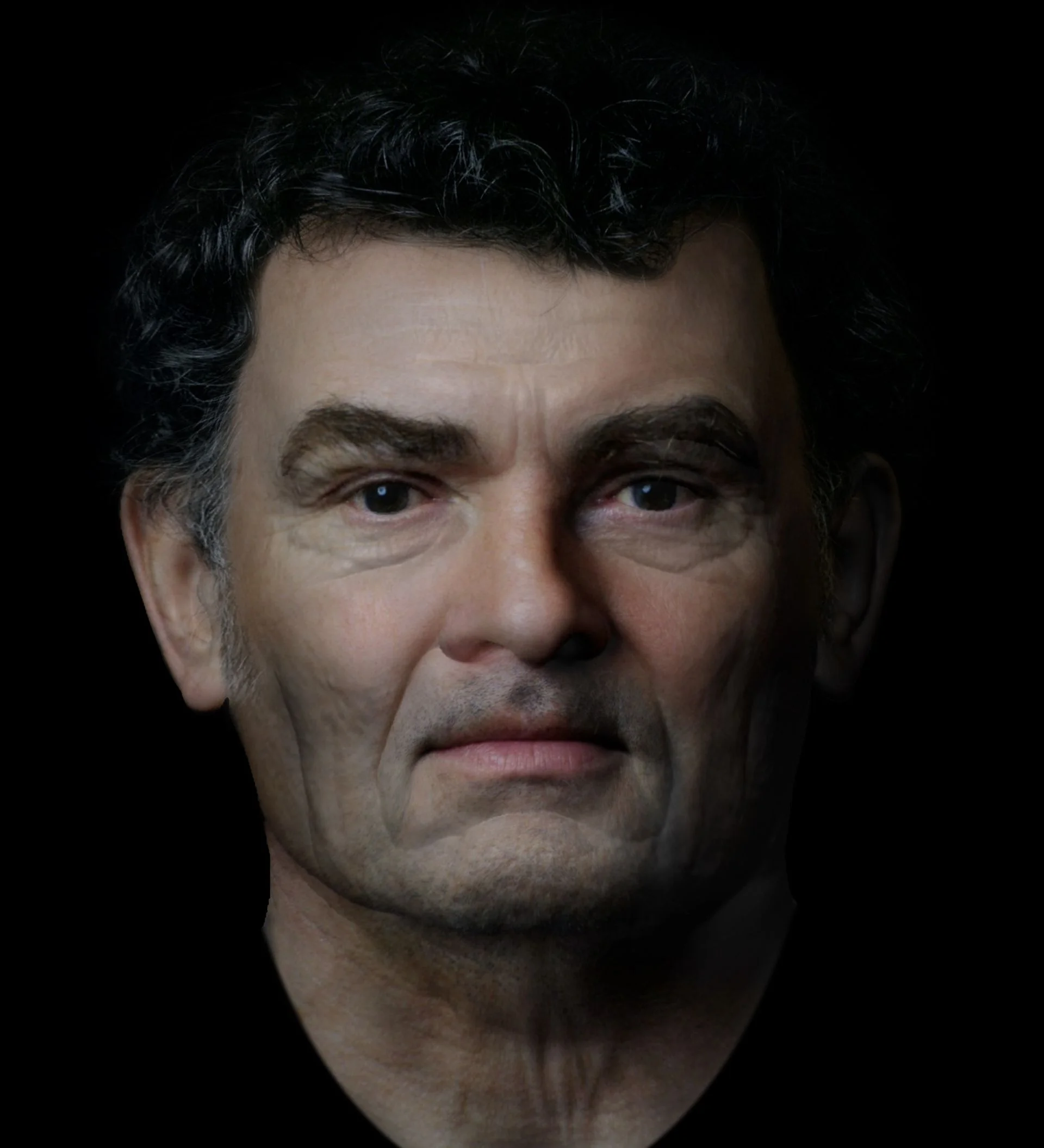
The facial reconstruction was created by National Museums Scotland and U.K.-based forensic anthropologist Christopher Rynn, using the man’s skull. A beard was omitted based on what was common at the time.
Injuries and origins
The skeleton records a physically active life. The man’s nose had been broken and healed, while extensive bone growth around his right elbow may have resulted from arthritis or an earlier injury, Reid said. The elbow condition would have further limited his ability to fight with a sword.
Researchers inferred his likely childhood home by examining isotope ratios in his remains. The results point to southern Britain, though Reid said a nearby area with a similar chemical profile—such as the coast of what is now the Netherlands—could also fit.
The reason he traveled to Inveresk remains unclear. His possible connection to the army offers one explanation, but the evidence leaves open whether he arrived as a worker, an auxiliary soldier or through another role.
Life on the Antonine frontier
Inveresk was built around A.D. 140 as a command and supply center for forts along the Antonine Wall. The wall followed a short route between Scotland’s west and east coasts, roughly between present-day Glasgow and Edinburgh, though neither city existed in Roman times.
Rome’s push into Scotland followed its invasion of Britain under Emperor Claudius in A.D. 43. After defeating a coalition of Caledonian tribes at the Battle of Mons Graupius around A.D. 83, the Romans attempted to extend their control. By about A.D. 120, however, they had withdrawn to Hadrian’s Wall, near the present England–Scotland border.
The Antonine Wall marked a renewed effort to control southern Scotland. That campaign also fell short: after A.D. 162, Roman forces retreated again to Hadrian’s Wall. Roman rule in Britain ended in the early fifth century.
A burial with unanswered questions
Human remains are uncommon in Scotland’s soil because it rarely preserves skeletons, Reid told Live Science. The Inveresk grave is notable for another reason: although the man was beheaded after death, other features suggest he received a dignified burial. Reid said that makes it unlike the graves of executed criminals, who were often decapitated in Roman-era Britain.
Six Roman-era burials have been found at Inveresk, and four of those people were also beheaded, according to National Museums Scotland. The repeated pattern could help researchers understand the burial practice, but it doesn’t yet establish why these individuals were treated this way.
Reid and colleagues are also investigating the Roman army’s presence at Burnswark in southern Scotland. Their finds include “whistling” sling bullets used against local opponents, and archaeological work at the site continues. Together with the Inveresk burials, the evidence offers a more detailed picture of Roman military life—and of the people who lived and died on its northern frontier.
- The Romans and Vikings left few genetic traces of their occupations of Britain, research suggests
- Case of mysterious medieval skeleton buried in Roman-era sarcophagus at Westminster Abbey finally solved
- 'It's a portrait of their actual ancestor': Facial reconstruction of Indigenous man who lived in Ecuador 3,000 years ago shared with his descendants
What do you know about the Empire's conquest of the British Isles? Find out with our Roman Britain quiz!


