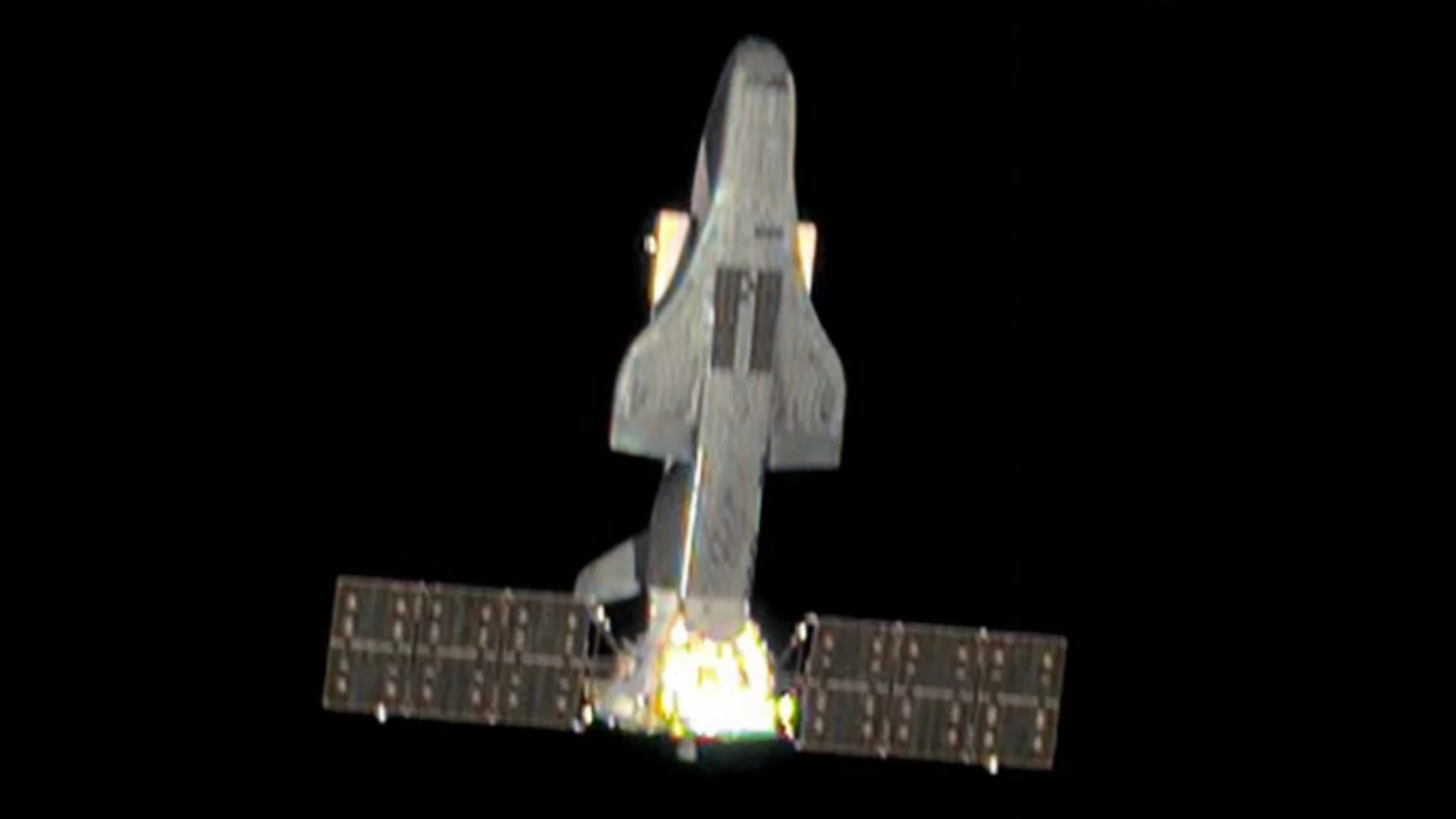
The clearest public view yet of China’s secretive space plane points to a vehicle built for repeated orbital flights and close work around other spacecraft. A satellite image taken in 2024, included in a new U.S. Defense Intelligence Agency report, shows a craft that resembles the U.S. Space Force’s X-37B. It also leaves key questions open: China hasn’t identified the vehicle, described its mission, or confirmed whether it has more than one.
The image appears on page 53 of the DIA’s 130-page “Challenges to Security in Space” report, released Monday, Oct. 26. Its caption calls the vehicle a “PRC [People’s Republic of China] Spaceplane” and says Maxar Technologies, now known as Vantor, captured the image from orbit in 2024. The report doesn’t identify the picture as a first or explain why it had not appeared publicly before.
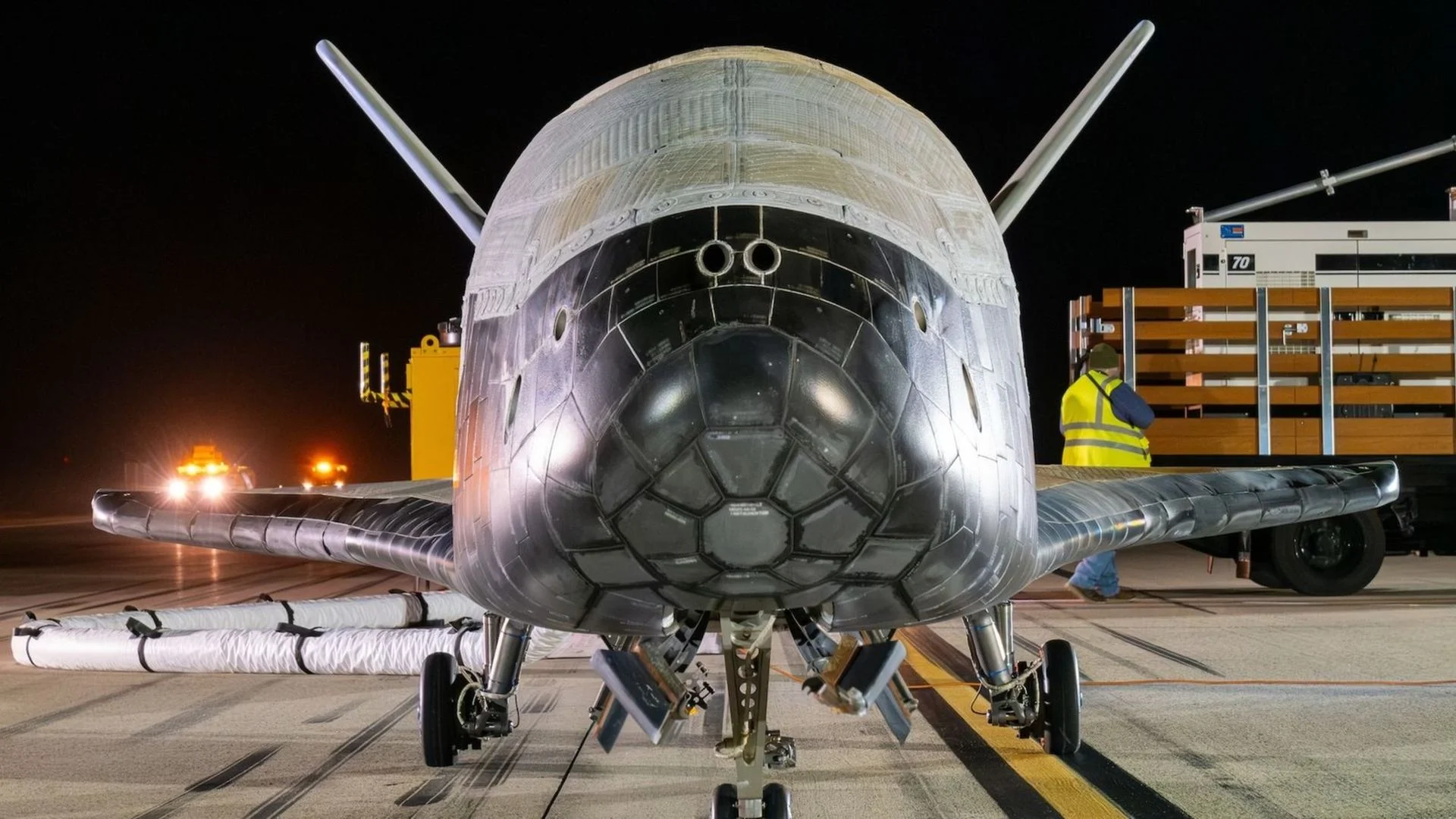
Journalist Andrew Jones, who covers China’s space program, flagged the image on X. Until its appearance, observers had relied on blurry images of light reflected from the craft and tracking methods such as ground-based radar. China has released no official photographs or detailed specifications.
A likely match, with room for doubt
The report names no specific Chinese space plane. China is believed to have two designs in development: Shenlong, or “divine dragon,” and Tengyun, translated as “cloud rider.” The image caption doesn’t say which one it depicts, a distinction noted by The Aviationist.
Still, Shenlong is the stronger candidate. No Tengyun launch has been confirmed, and images of what may be a Tengyun prototype suggest a substantially different shape, according to previous reporting. Shenlong, by contrast, has flown several times since 2020 and is known to release objects into low Earth orbit. The available evidence makes the attribution plausible, though it isn’t conclusive.
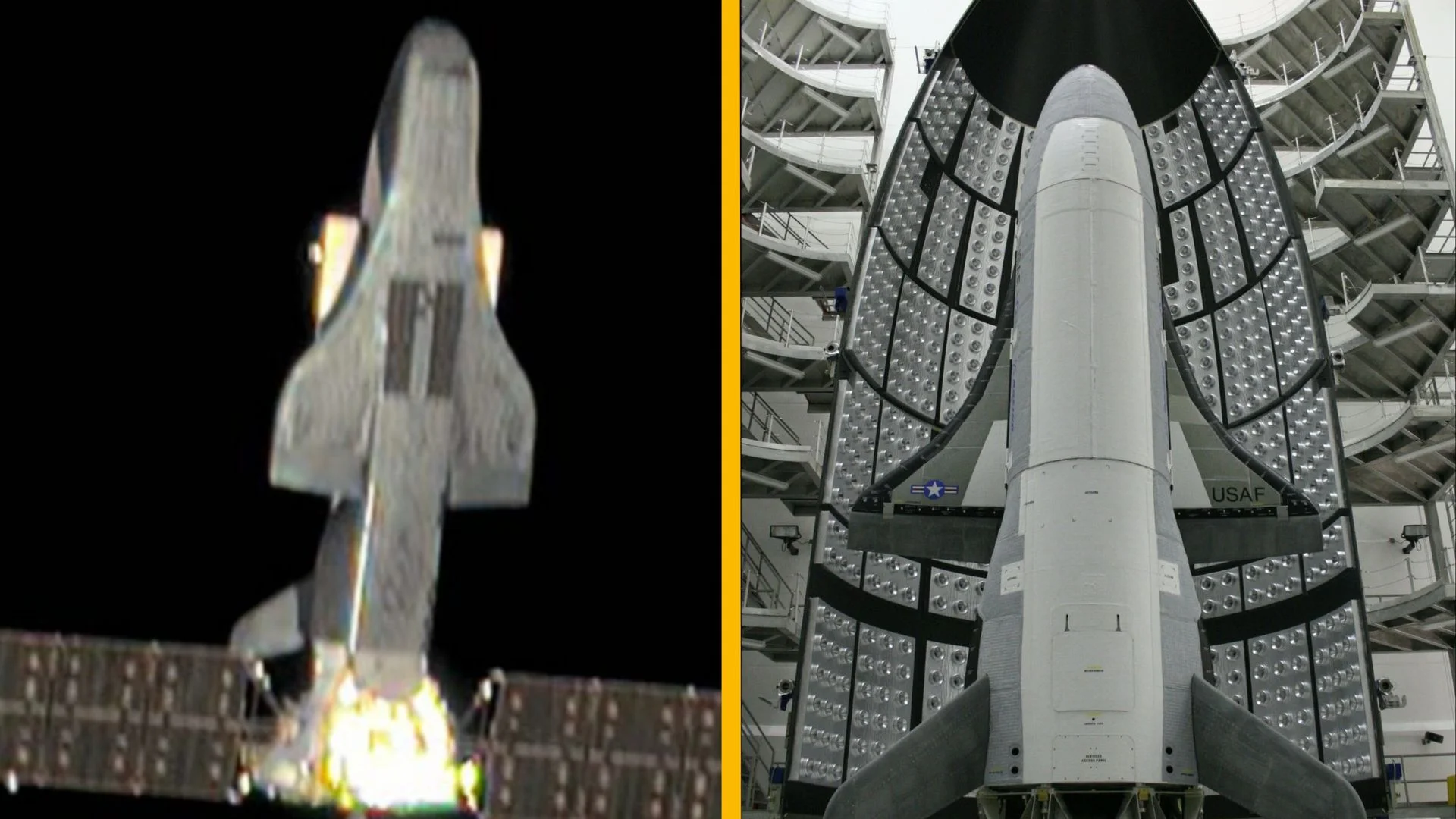
The new view suggests that Shenlong has delta wings, doors over a payload bay, a dark heat shield and a rear service module fitted with solar arrays. Ars Technica described those features as closely echoing the X-37B’s design. A separate assessment by Global Defense News points to differences in the wings, meaning the two craft look related in arrangement but aren’t identical.
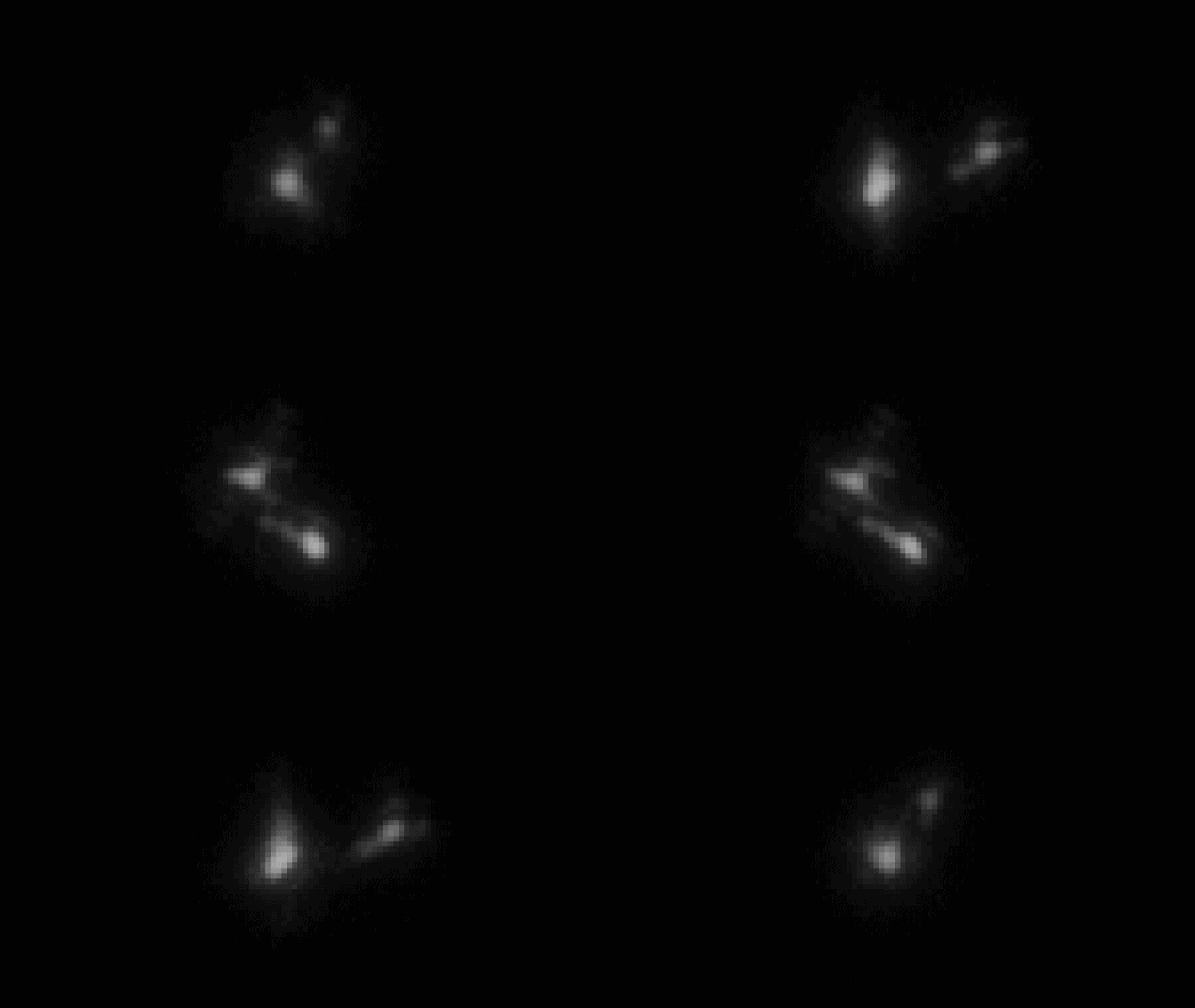
The X-37B offers a useful point of comparison, but the image doesn’t reveal Shenlong’s dimensions. The American craft measures 29 feet (8.8 meters) long, with a 15-foot (4.5-meter) wingspan, Popular Science reports. No equivalent measurements for the Chinese vehicle are available.
What its flight record shows
Shenlong operates much like a space shuttle: a rocket carries it to orbit, it circles Earth, then glides back to the surface for recovery and potential reuse. The X-37B is the closest active comparison. Since its first launch in 2010, the U.S. vehicle has completed seven orbital missions and is currently in orbit testing quantum navigation, after its seventh mission and the navigation experiment.
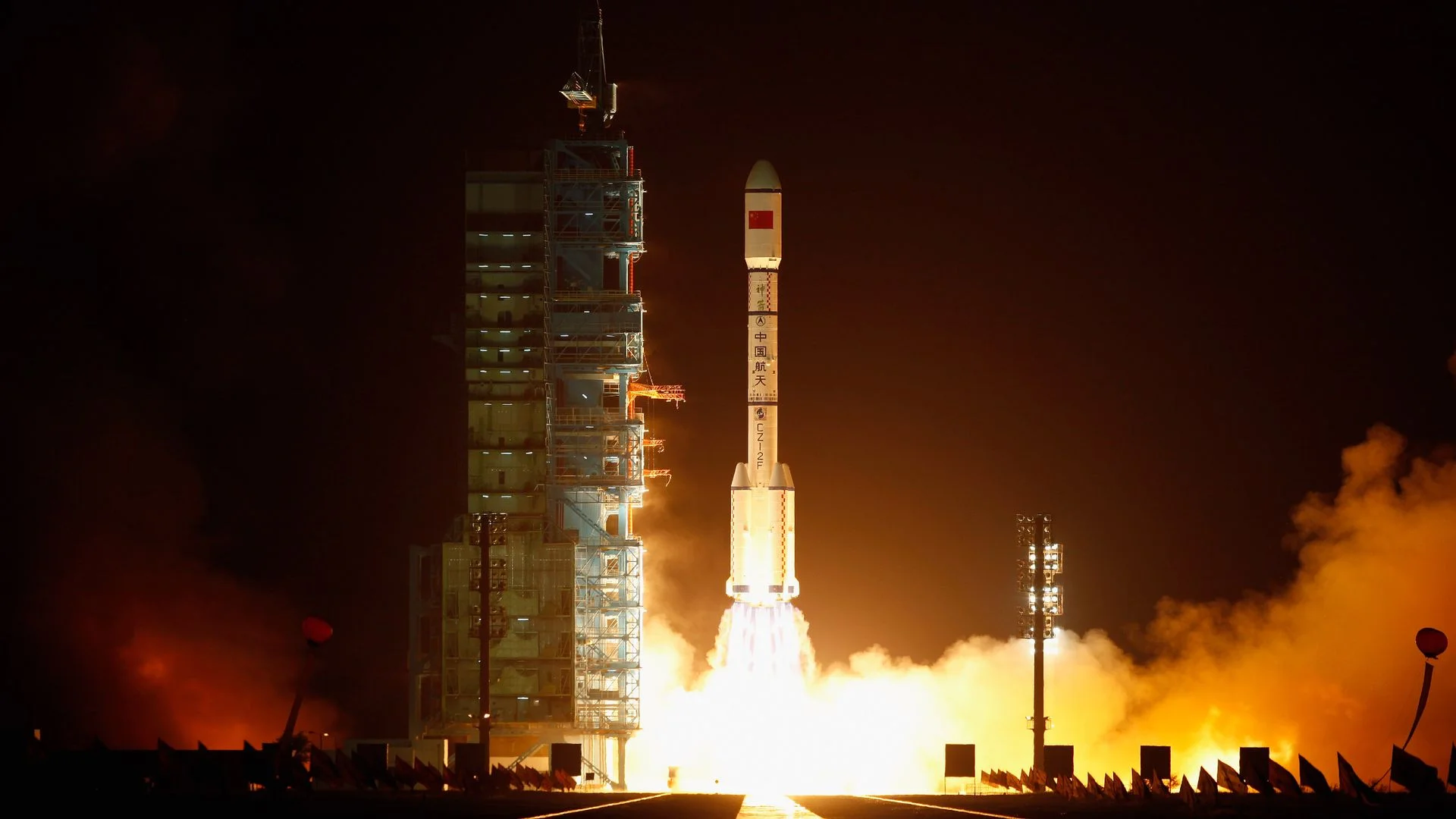
China’s craft first flew in September 2020 on a two-day mission. It then spent eight months in orbit from August 2022 to May 2023, followed by a nine-month flight from December 2023 to September 2024. The DIA image dates to that third mission. Shenlong’s fourth flight began Feb. 7, when a Long March 2F rocket launched it from the Jiuquan Satellite Launch Center, Space.com reported. Across its missions, the vehicle has spent more than 800 days in orbit. It remains unclear whether China has flown one vehicle repeatedly or operates multiple craft.
Payloads and proximity operations
Shenlong has released at least nine objects in orbit. They may be small satellites, or cubesats, but their purpose hasn’t been established. The craft has drawn attention for these deployments, including earlier episodes involving unidentified objects and objects that emitted signals.
The latest object mentioned in the reporting was deployed in June. Astronomer Jonathan McDowell, who tracks spacecraft in low Earth orbit, later suggested the craft retrieved it and put it back into orbit in late August. A robotic arm could have been involved, as explored in reporting on China’s in-orbit robotic systems, but the available information doesn’t confirm the method.
The DIA report also describes an encounter during Shenlong’s second mission in November 2022. The space plane reportedly maneuvered near a companion satellite, approaching within 330 feet (100 meters) and possibly capturing and releasing it. That episode fits a theory that the vehicle is designed to practice rendezvous and close-proximity maneuvers. Such work could help explain why it carries and repositions small objects, though the mission’s purpose remains unconfirmed.
The image itself provides no evidence that Shenlong carries weapons. Global Defense News cautioned that “the image does not establish a weapons role.” The DIA report separately says China is developing weapons intended to disrupt, damage or destroy other nations’ satellites, and states that “Beijing aims to become the preeminent leader in space.” China’s broader military space activity is a separate issue from what this photograph can show; the report has also discussed space-based weapons and U.S. officials have made claims about weapons in orbit.
For now, the photograph makes Shenlong’s broad design easier to assess while leaving its scale, payloads and operational role unresolved. Its long flights and reported encounters suggest a platform built to do more than circle Earth; the clearest evidence of what it can do will come from what it does on its current mission.
- Secretive Chinese probe snaps first photo of Earth's mysterious 'quasi-moon' — and it may pose a big problem
- China launches 'human artificial embryos' to space in bid to see whether reproduction is possible off-world
- New report warns that China could overtake the US as top nation in space — and it could happen 'in 5-10 years,' expert claims


