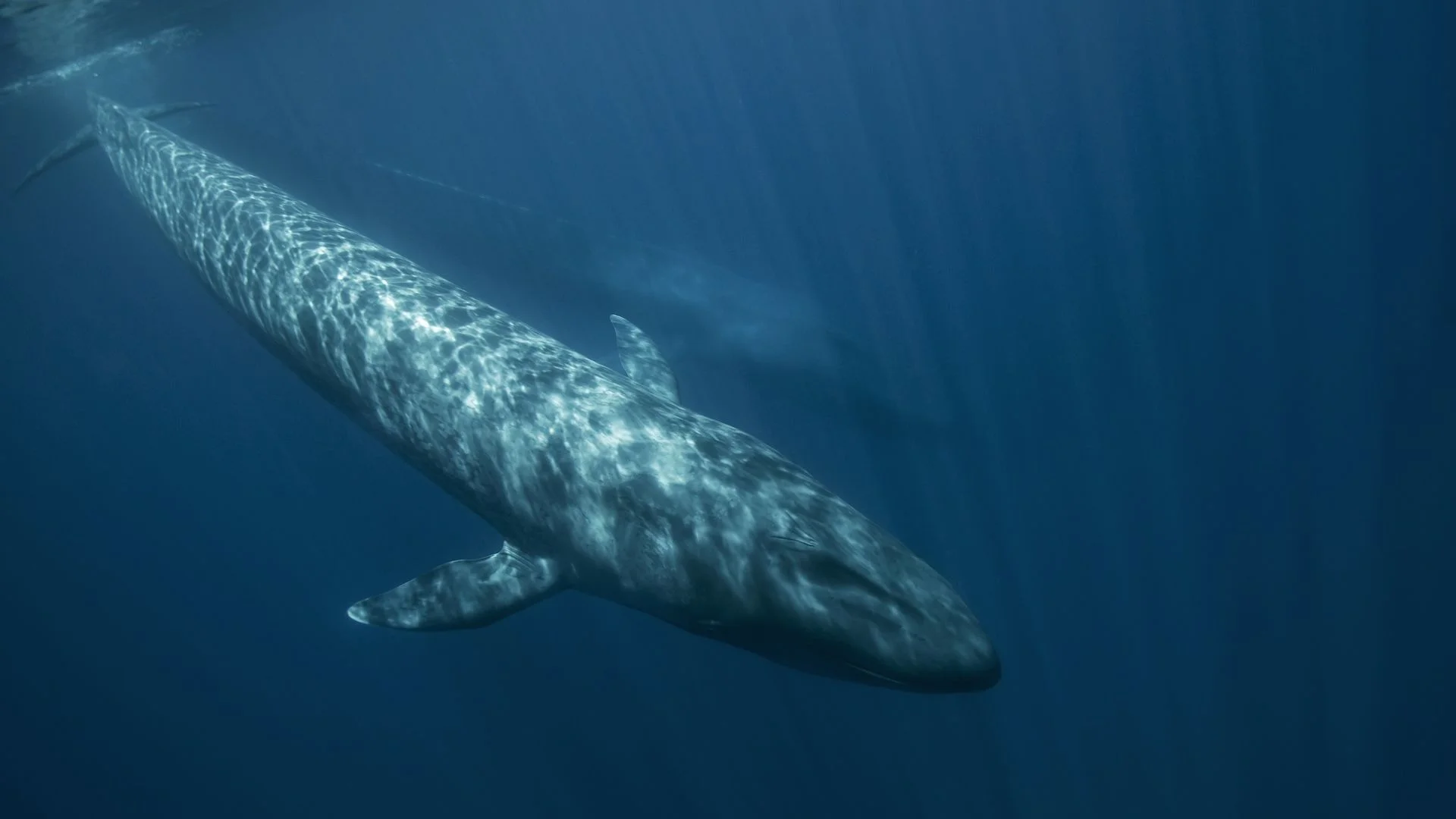
The clearest finding from a nine-month blue whale survey near the Galápagos is also its most unsettling: researchers found no whales to tag. The team’s leading explanation is that unusually warm water during an El Niño event disrupted feeding conditions and pushed the animals toward cooler, more productive waters farther south. Where they went remains unknown.
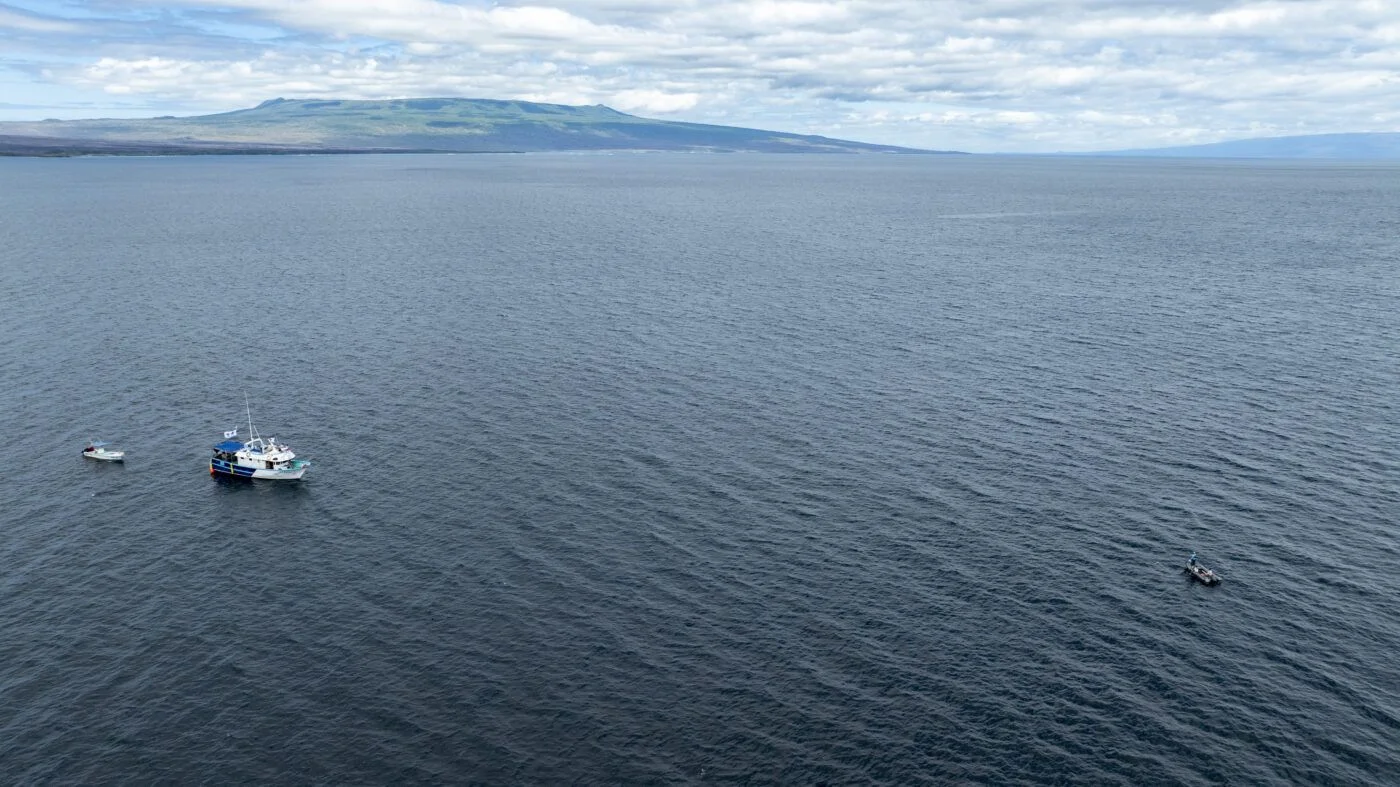
From October 2025 through July 2026, researchers searched areas of the Ecuadorian archipelago where blue whales had historically been recorded. Their goal was to attach satellite tags and learn more about the whales’ movements. They found none, despite extending the search after sightings became scarce.
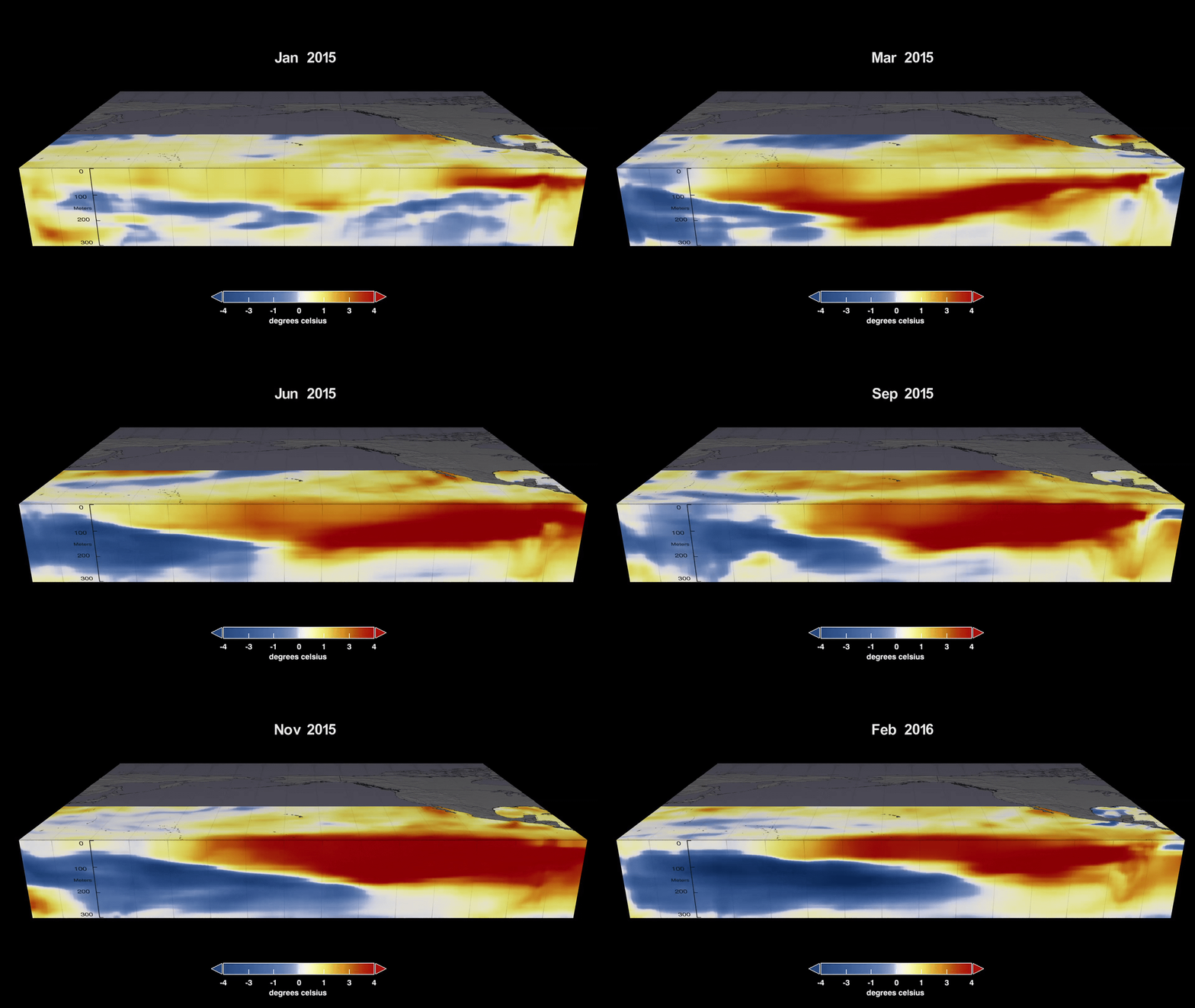
The absence coincided with pronounced ocean warming. Sea surface temperatures reached 82 degrees Fahrenheit (28 degrees Celsius). At 330 feet (100 meters), water temperatures ranged from 66 to 67 F (18.9 to 19.4 C), as much as 9 F (5 C) above the seasonal norm.
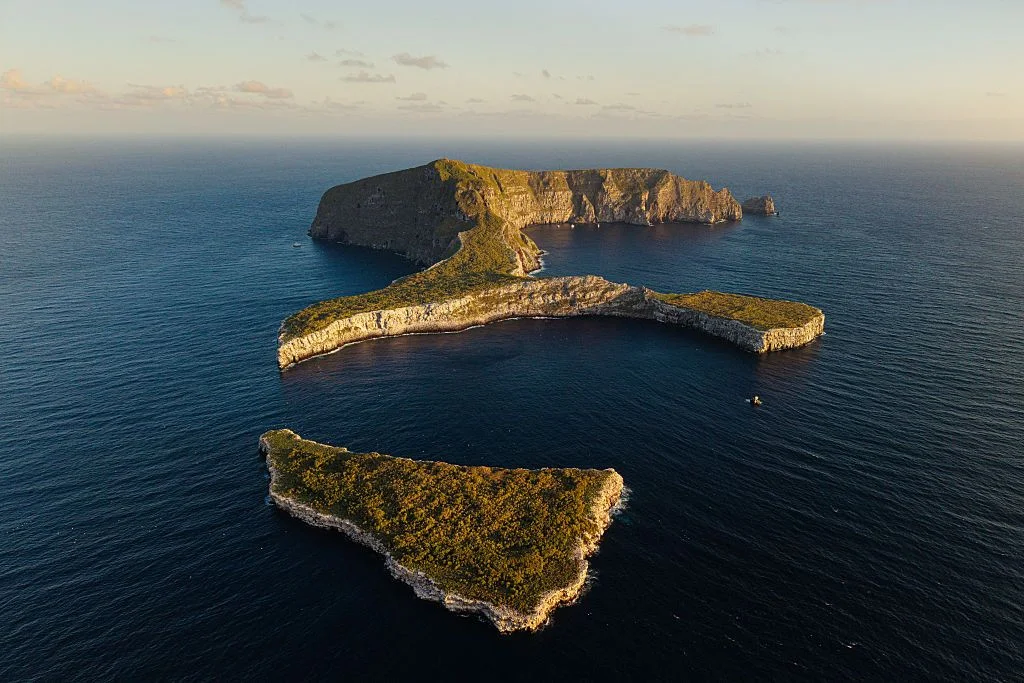
Daniela Alarcón, who led the expedition and researches at the Universidad San Francisco de Quito’s Galápagos campus and the Galápagos Science Center, said the team suspects whales stayed in waters farther south, where temperatures were slightly lower and food more plentiful. “The hypothesis is that the whales are staying in areas with greater productivity [more food] farther south, in waters with slightly cooler temperatures,” she told Live Science.
Possible destinations include waters off Peru or offshore zones where whales are difficult to detect. Alarcón said warm conditions around the islands may have formed a “temperature barrier,” discouraging whales from feeding there.
Warm water may have separated whales from their food
Blue whales (Balaenoptera musculus) need a steady supply of krill, small crustaceans that are their primary food. They can consume as much as 12,100 pounds (5,500 kilograms) in a day. Finding a productive feeding area is therefore central to their movements, Alarcón said: “These are very large animals that need to move to areas where they can keep feeding.”
Researchers don’t yet know whether El Niño reduced krill numbers near the Galápagos. Their observations offer an indirect clue, however: the depths where the whales have been reported feeding did not line up neatly with the layer where researchers found the strongest signal of phytoplankton, the food source that supports krill.
Earlier expeditions suggested blue whales often feed around water temperatures of 71 F. During this survey, that temperature was found near the islands at about 197 feet (92 meters). Peak chlorophyll concentrations, which can indicate phytoplankton abundance, were recorded higher in the water column, between 39 and 121 feet (12 and 37 meters) below the surface. The team didn’t measure krill abundance directly, so the data suggest a possible mismatch between feeding depth and food availability, rather than proving one.
“Honestly, we had never encountered such unusual conditions before,” said Juan Pablo Muñoz, a marine biologist at the Universidad San Francisco de Quito who joined the expedition.
We thought that if we put in more effort, we might be able to find some individuals. But we searched, and searched, and searched — and found nothing.
Daniela Alarcón, expedition leader
The decline began before the survey ended
The empty survey area followed a fall in reported sightings. Reports to Cetácea Galápagos, a citizen science network, started to dwindle in August and September 2025. Two isolated reports followed, in May and June 2026, but the expedition team could not verify either one, even as it intensified its search.
Alarcón said the team knew conditions had changed but hoped extra effort would turn up at least a few whales. Instead, the search continued without a confirmed sighting. Their absence is difficult to interpret partly because blue whales are harder to spot than some other species. Humpback whales (Megaptera novaeangliae) can be seen from shore in some places or after a short boat trip. Blue whales tend to remain far from populated areas in the Galápagos and rarely approach mainland Ecuador’s coast.
Fernando Félix, a marine biologist at the Pontifical Catholic University of Ecuador and researcher at the Whale Museum (Museo de Ballenas), said the result fit a pattern seen during earlier El Niño events. He wasn’t part of the expedition. “We already knew there wouldn't be any blue whales in the Galápagos,” he told Live Science.
Past El Niño events offer a precedent
During the 1982–1983 El Niño, blue whales and other species, including fin whales (Balaenoptera physalus) and Bryde’s whales (Balaenoptera brydei), were recorded shifting south in the southeastern Pacific. Félix said whales can respond to changing ocean conditions by moving toward areas where feeding is more likely to be productive.
His interpretation is that warm water can disrupt vertical mixing and reduce the food available around the Galápagos. “We might think that because they are ‘just animals,’ they lack memory or don't understand these processes — but we would be wrong,” he said. “They can clearly sense that when temperatures are unusually high as they travel north from the south, vertical mixing has been disrupted and there is no food in the Galápagos. They perceive environmental conditions and naturally direct their movements toward areas where they believe feeding conditions are better.”
Félix thinks the missing whales are more likely elsewhere than dead. “I don't think the whales have died,” he said. “They simply didn't go to the Galápagos region. They went elsewhere, where conditions were better.” He also suggested that dolphins may have shifted toward cooler waters or dispersed. The available observations don’t establish where any of these animals went.
Recovery depends on cooler water returning
The effects of El Niño may continue to shape local conditions in the coming months. Félix warned that warm water could arrive from both the north and west between January and May 2027. If conditions cool later, whales and other species may return as the food web responds.
Muñoz said krill populations can rebound one to three months after cold, nutrient-rich water rises to the surface. Whale sightings increased in the years after the 2015 and 2023 El Niño events, which led him to suggest that 2028 could bring more favorable conditions if cold water resurfaces. “The system bounces back,” he said.
Félix compared El Niño’s effects to restarting a computer: “It resets the environment, allowing ecological processes to begin again.” He expects blue whales to return and predicted large numbers in the area in 2028. That forecast rests on the pattern of recovery after earlier events; the timing will depend on how ocean conditions and food availability develop.
Blue whales aren’t the only animals whose movements may track those changes. Félix expects humpback whales, dolphins and pelagic fish—including tuna, swordfish, anchovies and sardines—to return toward the Galápagos if cooler conditions and food supplies recover. For researchers, the next useful signal will be whether those conditions reappear at the depths where whales feed, followed by sightings that can confirm the animals are back.
- Hundreds of whale calves have mysteriously died in Patagonia — and scientists are racing to find out why
- This psychologist has a new theory for why orcas keep attacking boats
- 'They would come in with a chord change': Composer Jim Nollman has collaborated with turkeys, kangaroo rats and whales. Now he's dropping 'Orcas' Greatest Hits.'
Help us improve Live Science Pro: We're always trying to make our content better. Leave us feedback about Pro here.


