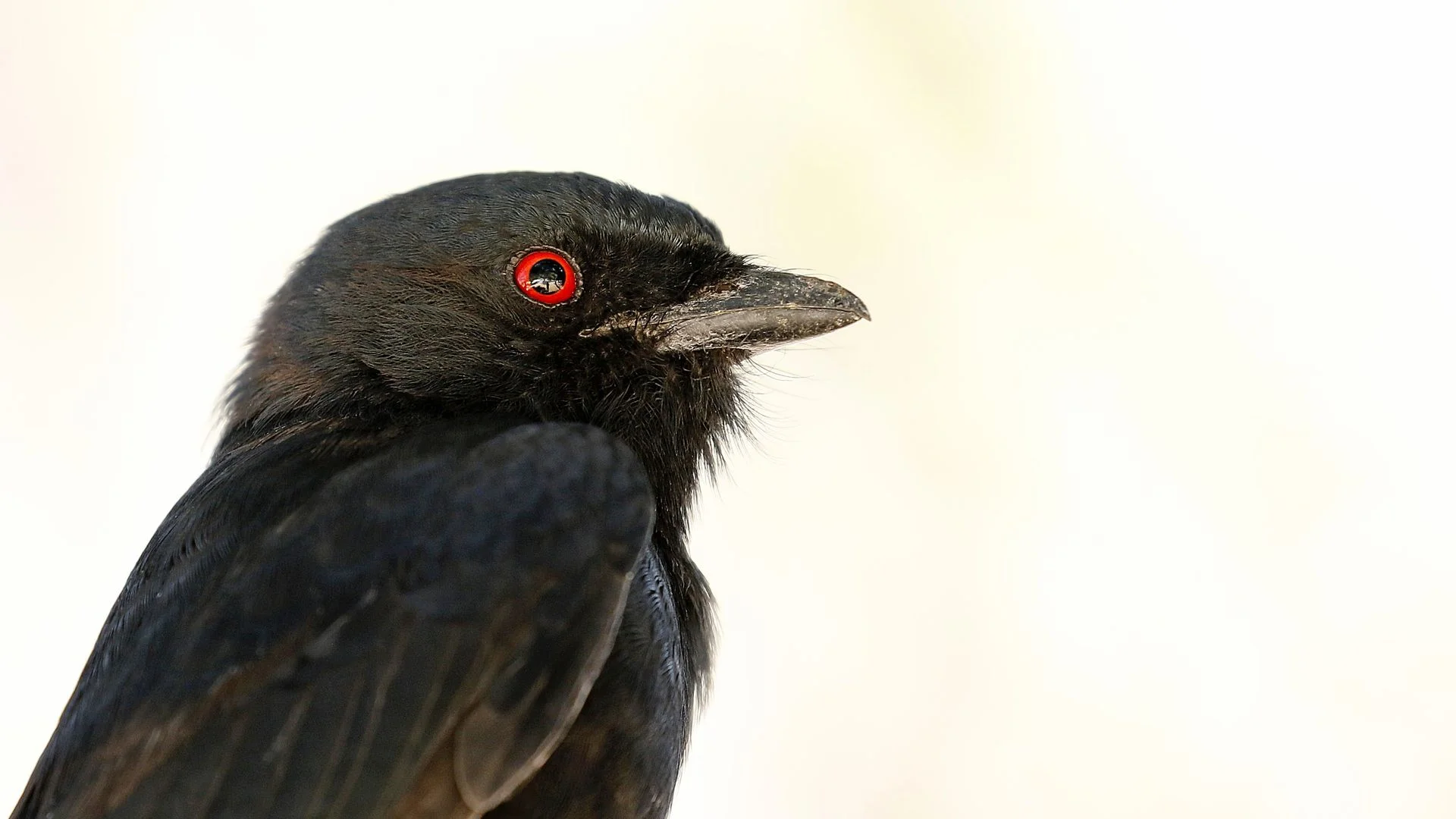
Fork-tailed drongos appear to do more than fool other animals: they adjust their warnings when familiar tricks stop working. That flexible use of false alarms makes the small African bird one of the strongest cases for deliberate deception in nature—and puts a difficult question to researchers: can an animal intend to mislead another?
A false alarm with a payoff
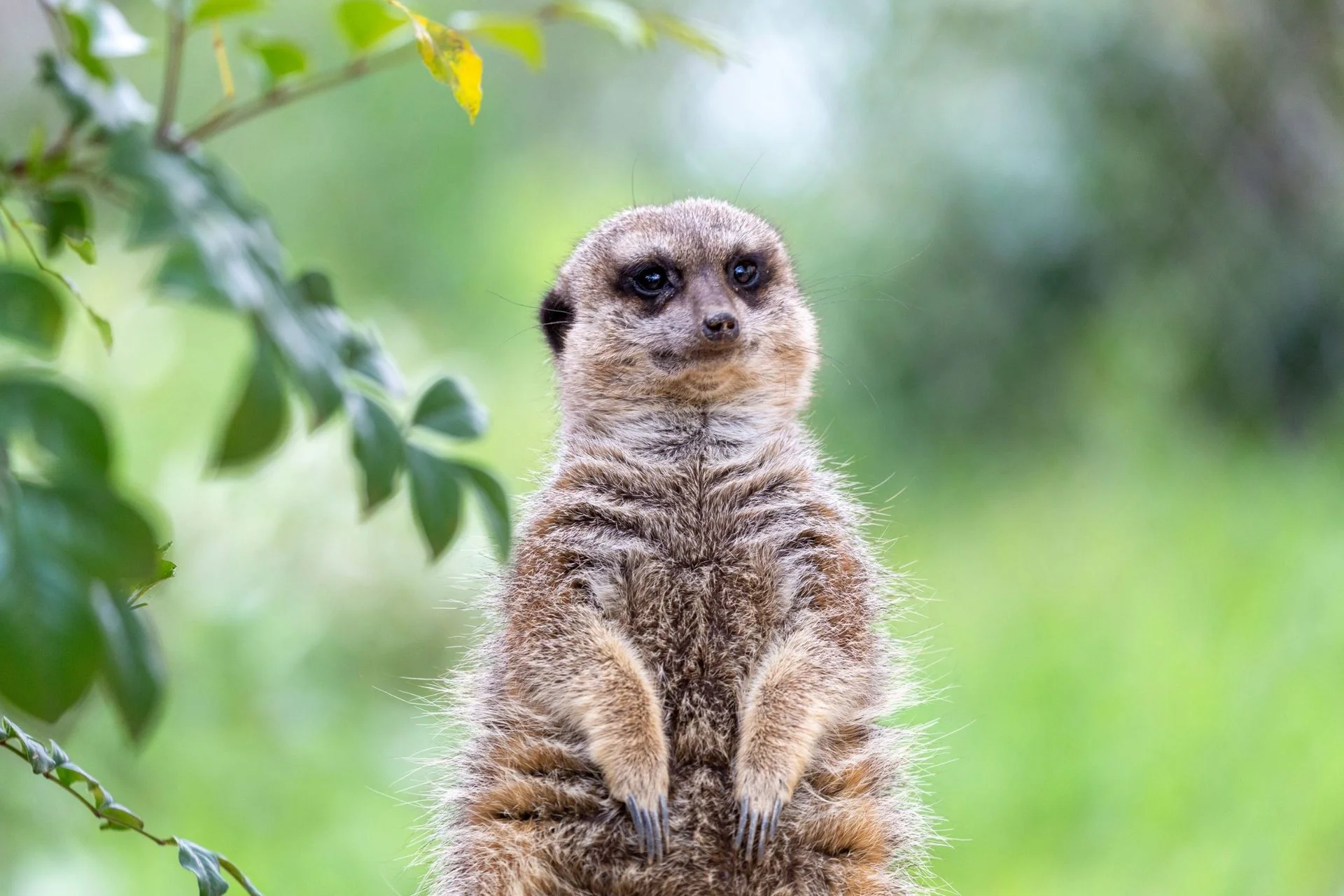
The drongo’s routine is simple. It imitates an alarm call that its listeners recognize, prompting them to flee and leave food behind. The bird then swoops in to take the meal. Meerkats respond to the drongo’s convincing imitation of their own alarm, but the bird can also mimic calls from other species, including caped glossy starlings and pied babblers.
Researchers have identified more than 50 distinct deceptive vocalizations in the drongo’s repertoire. The variety matters. An animal that repeats one false warning could lose its audience once listeners learn to ignore it. Drongos switch among calls, preserving the power of the alarm and giving their targets less reason to dismiss the next one.
The targets aren’t limited to meerkats. Pied babblers and sociable weavers, both ground-feeding birds that forage in groups, can also be driven away from food by the warnings. The drongo benefits from the confusion: its call sends competitors away, and the abandoned meal becomes available.
That pattern looks tactical. The bird’s calls elicit a predictable response, and changing the signal helps maintain that response over time. Still, observing a useful behavior doesn’t by itself reveal what the animal understands or intends. That gap between a convincing outcome and evidence of a thinking mind is where the debate begins.
When does deception count as a lie?
Many forms of animal trickery require no conscious plan. An orchid mantis resembles a flower, while a moth’s eyespots may startle predators. Those traits can arise through natural selection across generations; the animal doesn’t need to know how it looks or what effect it has.
The drongo case raises a different possibility. Its calls are signals directed at other animals, and the bird’s repeated changes in its repertoire appear to help it keep getting food. For zoologist and science communicator James O’Hanlon, whose book Liars, Cheats and Copycats: Trickery and Deception in Nature examines deception across species, the central question is whether such behavior reflects an intention to alter another animal’s beliefs.
That standard is demanding. A behavior can mislead a listener without the caller understanding that the listener has been misled. Researchers need to distinguish between a signal that happens to produce a useful response and one deployed with some grasp of its effect. The drongo’s flexibility makes it a compelling subject, but it doesn’t settle that distinction on its own.
Why scientists choose their words carefully
One reason researchers hesitate to call an animal a liar is the risk of anthropomorphism: attributing human thoughts or emotions to another species without evidence. Calling a bird’s call a lie can imply that it knows the signal is false and intends to deceive its audience. Scientists must avoid letting a familiar human label stand in for proof.
There’s also a broader feature of scientific reasoning at work. Evidence can support an explanation without ruling out every alternative. Researchers may conclude that one account is the most likely, while leaving room for other explanations of what they’ve observed. In scientific writing, phrases such as “the evidence suggests” reflect that standard rather than a reluctance to reach a conclusion.
O’Hanlon argues that caution is part of the job. Scientists consider possible explanations and assess which best fits the evidence, but eliminating every conceivable alternative would require an impossible level of certainty. A direct “yes” to the question of animal lying therefore calls for more than behavior that looks persuasive to human observers.
A wider search for animal tricksters
Group-living animals are promising places to look for deception because their members rely on signals and react to one another. The drongo shows how a false call can exploit those relationships. Yet researchers have only begun to examine the range of tactics that might operate in animal societies.
Future work could test whether comparable forms of deception appear in the songs of whales and dolphins, the chemical signals of ants and termites, or the barks and howls of wild dogs. Each case would require evidence suited to the species and its communication system; a vocal trick in a bird won’t establish how another animal uses sound or scent.
For now, the fork-tailed drongo offers a sharp test case rather than a final answer. Its rotating alarms show that animal signals can be used to divert attention and capture food with remarkable efficiency. Whether the bird understands that it is fooling its listeners remains open—and that distinction will shape how scientists interpret the next apparent trick they find.