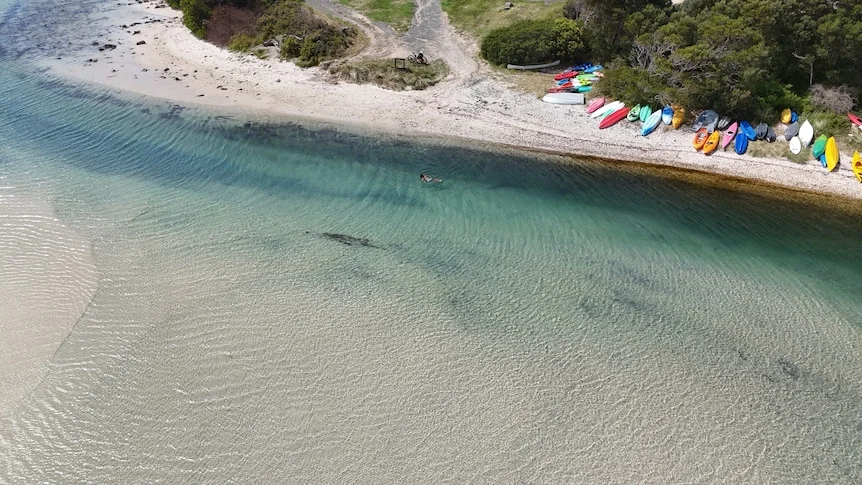
Tasmania’s disappearing lagoon puts water allocations under scrutiny
Henderson Lagoon has dwindled from a family swimming spot to a shallow trickle. Drought is part of the explanation. But residents fear the rules governing water use could make the damage harder to reverse, especially if a new upstream extraction application is approved.
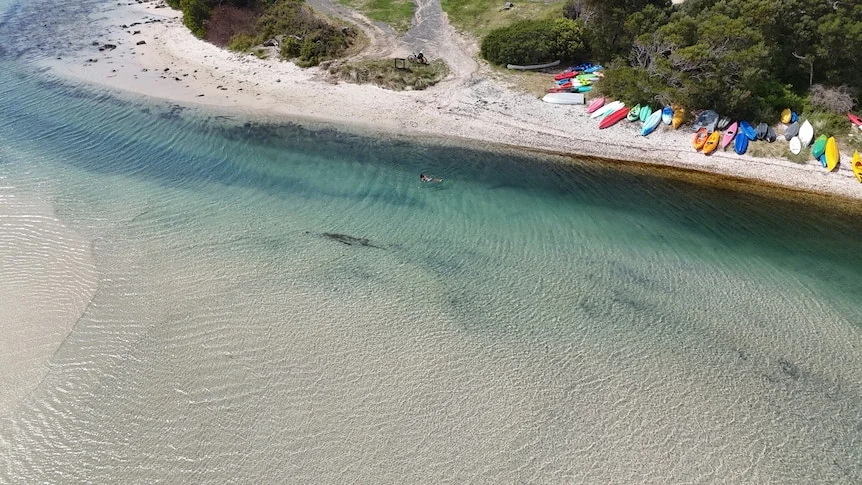
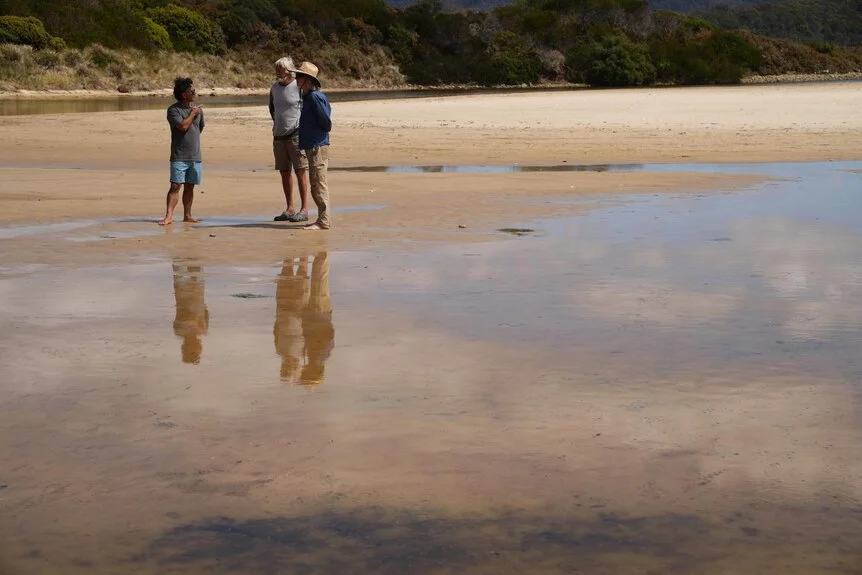
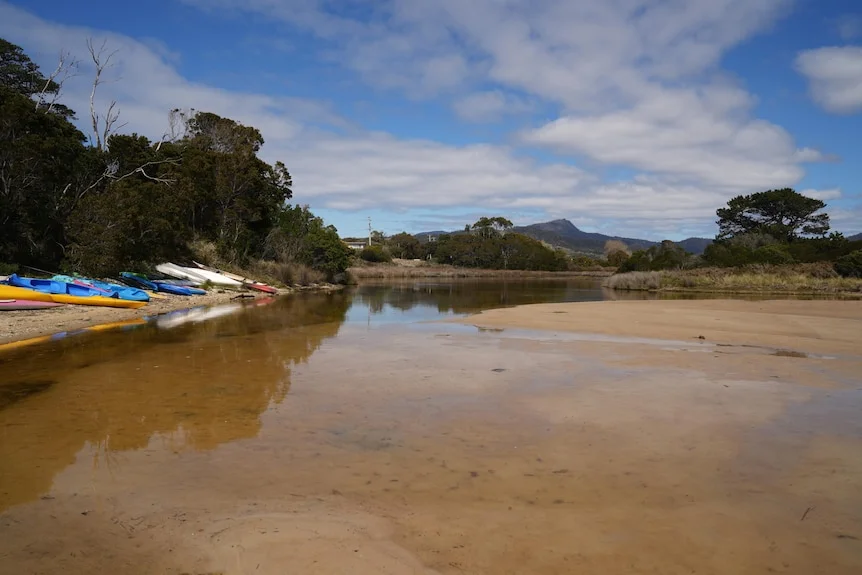
The lagoon sits at Falmouth on Tasmania’s east coast. David Godfrey-Smith remembers learning to swim in its bright blue water; now he hopes the ankle-deep pool near his home will return. He worries it may not if millions of litres are taken from a creek that feeds the lagoon.
The catchment depends on several inland streams, and the lagoon opens to the ocean only intermittently. Rainfall has been exceptionally low: the Fingal weather station recorded 18.2 millimetres in July, 10.2mm in August and 10mm in September. St Helens recorded 36.4mm, 25.2mm and 5mm over the same months, according to Bureau of Meteorology data.
Those dry figures matter. They don’t, by themselves, explain how much water use has contributed to the lagoon’s decline. Locals including Godfrey-Smith and Michael Di Giovanni suspect that regulation and extraction are also taking a toll. Di Giovanni says some people already doubt the lagoon will recover; approval of the new application, he fears, would make that outcome almost certain.
“But if this [water allocation] is approved, it almost definitely won't recover.”
The application, lodged by Cooltrans Pty Ltd, seeks to vary an existing licence and take an additional 360 million litres from Ferntree Glen Creek, upstream of the lagoon. Cooltrans is directed by a nearby farmer. LISTMap data shows the company also holds current irrigation licences for two other creeks and an unnamed tributary that feed the lagoon. Cooltrans declined to comment.
Godfrey-Smith says residents have submitted objections and hopes the Natural Resources and Environment Department’s assessment uses current information on climate, land use and environmental flows. Some locals are considering raising about $50,000 themselves for a water management plan, despite seeing that as a state responsibility.
Few catchments have formal water plans
Henderson is one of many Tasmanian catchments without a formal water management plan. These legally binding plans can set local rules for water allocation and management. The department’s website lists only 11 adopted plans across the state, and some are due for review.
Environment Tasmania freshwater campaigner Lucy Tremain argues that catchment-specific protections matter more as rural demand grows. She links that pressure in part to the government’s target of lifting the value of agriculture to $10 billion by 2050. If the state wants agricultural growth, she says, water plans are basic infrastructure that needs wider coverage.

Todd Dudley, president of the North East Bioregional Network, says low rainfall and climate change call for more caution in water allocations. In his view, the government is moving the other way.
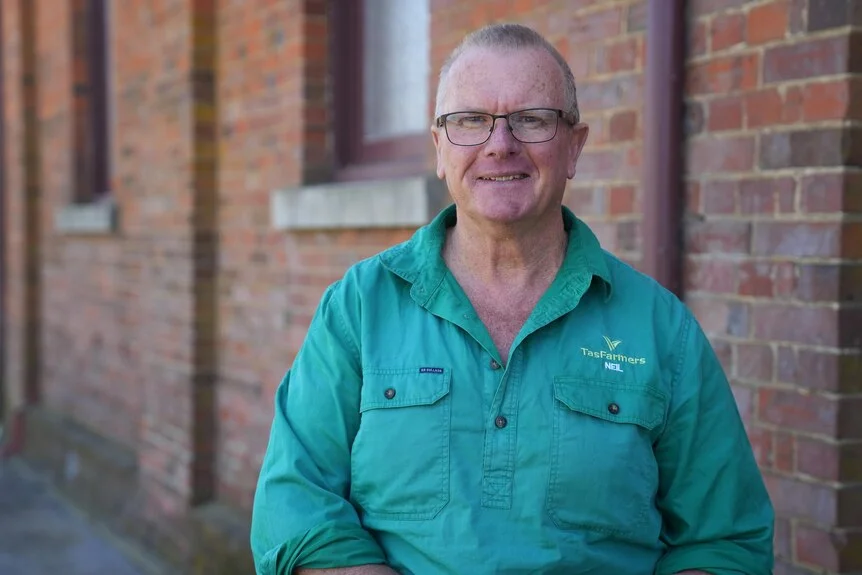
TasFarmers chief operating officer Neil Grose offers a different account. He says the department has been active in managing stressed catchments, particularly on the dry east coast, and describes recent discussions as precautionary. He rejects the idea that agriculture is being favoured over the environment, saying farmers don’t find it easy to secure extra water and that the approval process is rigorous.
The dispute now turns on what the department’s assessment counts: the dry conditions, existing licences, changing land use and the water the lagoon needs to function. Tasmania’s Water Minister Gavin Pearce was contacted for comment.
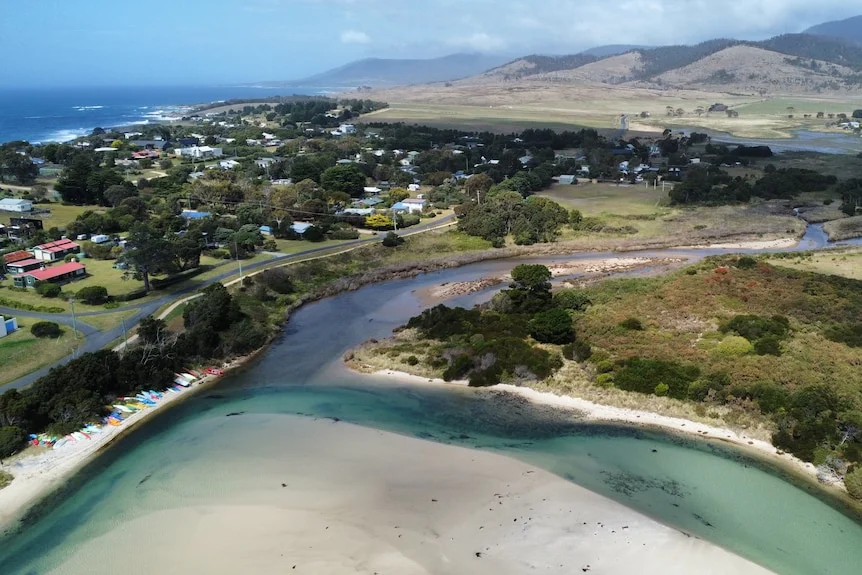
Henderson Lagoon pictured with blue water in 2024. (Supplied)
The pressures on Henderson Lagoon sit within a wider change in Tasmania: irrigated farming has expanded over recent decades, backed by private investment, new irrigation schemes and the state’s rural water strategy. A Department of Natural Resources and Environment (NRE) Tasmania spokesperson said water demand has generally risen alongside that growth, though actual use shifts from year to year with seasons, commodity prices and water availability.
The spokesperson said each water licence application is assessed under the Water Management Act 1999. The process considers available water, environmental effects, competing users and submissions from the community. Those rules set a framework, but locals argue Henderson Lagoon needs a plan specific enough to address what is happening on the ground.
Locals may pay to draw up a plan
David Godfrey-Smith says residents could commission their own water management plan if the state doesn’t produce one. He puts the cost at about $50,000 and says it would take commitments from every stakeholder.
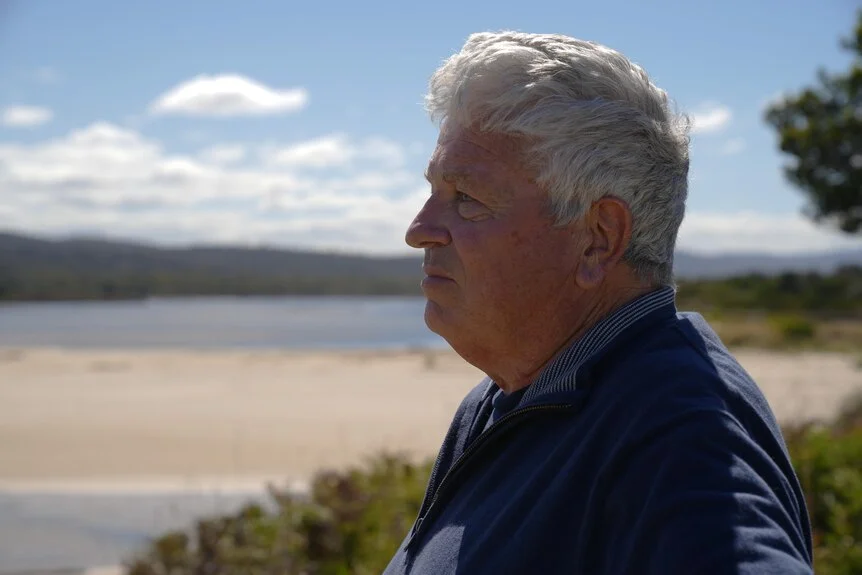
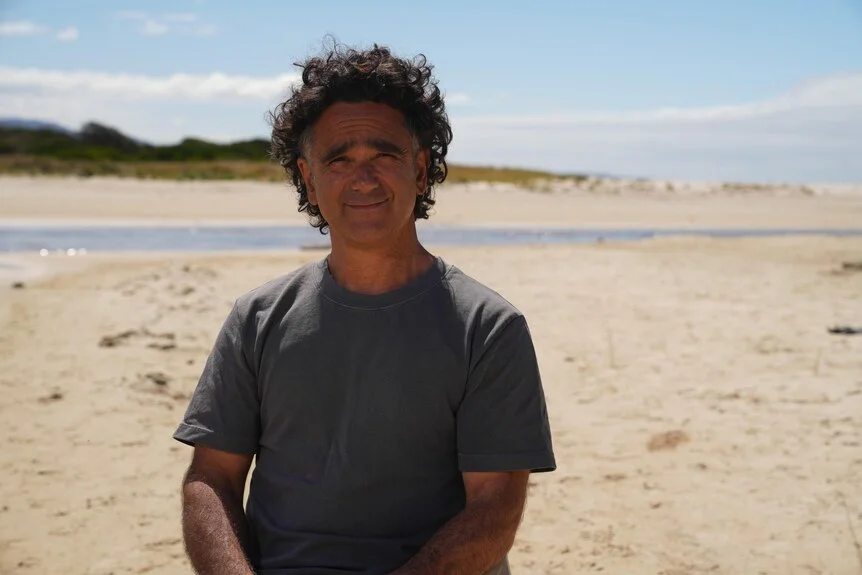
Falmouth resident David Godfrey-Smith would love to see Henderson Lagoon restored. (ABC News: Emily Smith)
"Henderson Lagoon is an environmental jewel, and the state government should be helping the community protect it,"he said.
Godfrey-Smith said residents would still undertake the study themselves if necessary. NRE, for its part, said it supports community participation in water management planning. The question is whether that support will translate into a state-backed plan—or leave locals to fund the groundwork.
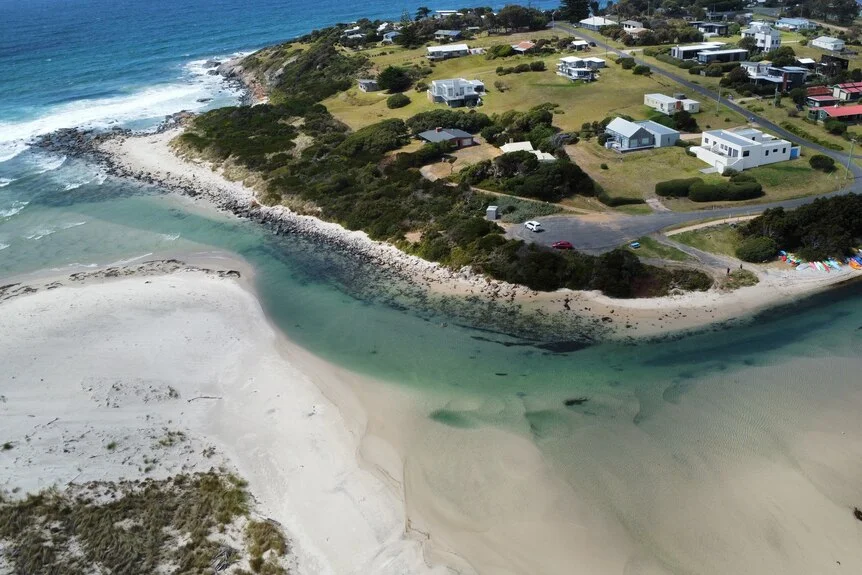
Locals say Henderson Lagoon would often link to the ocean, as it does in this picture taken in 2024. (Supplied)
A changing connection to the sea
David Cannon’s memories of the lagoon offer a stark measure of the change. The Falmouth resident has lived there for 47 years and spent decades commercial fishing; he often left his six-metre dinghy in the lagoon overnight. He says it once connected to the ocean much of the time. For the past two years, he says, it has been almost cut off.
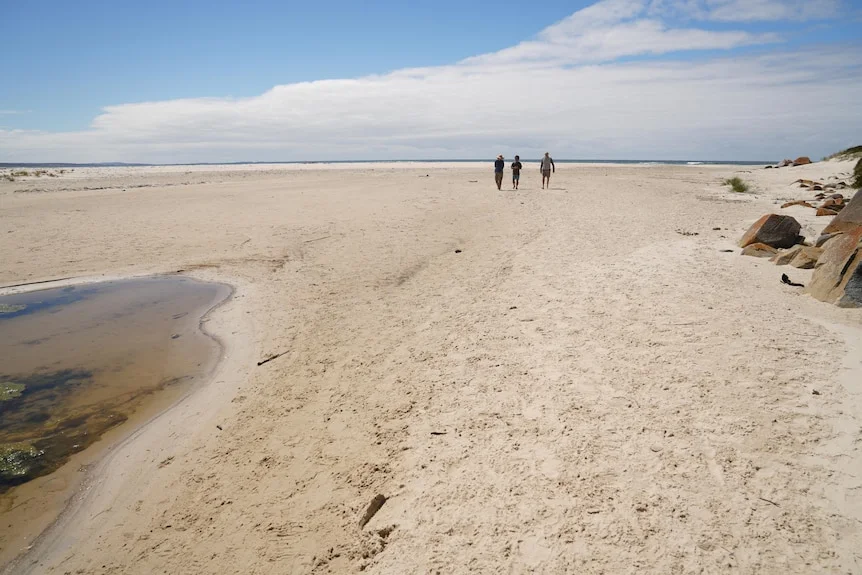
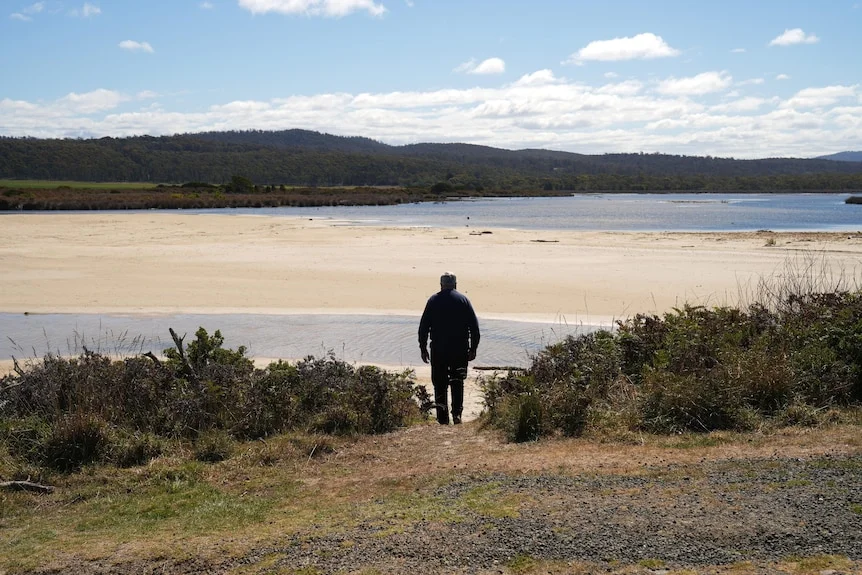
Henderson Lagoon was a long way from reaching the ocean. (ABC News: Emily Smith)
Machinery is sometimes used to cut an opening to the sea. The ABC understands this is often intended to stop saltwater reaching private land, but Cannon fears the intervention could also harm the lagoon. NRE says the work follows an established protocol with water-level triggers, balancing environmental health against public safety, infrastructure protection and flooding risks to nearby properties.
Godfrey-Smith wants that protocol reviewed as part of a new management plan. That debate gets to the heart of the problem: opening the lagoon may protect one set of interests while changing conditions for the ecosystem and the wider community. The available information doesn’t settle how those consequences compare.
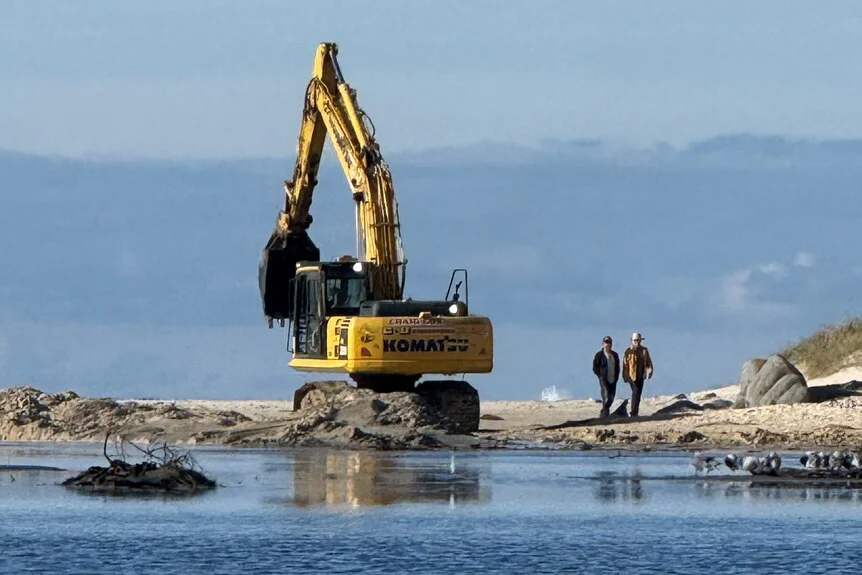
Some locals dispute the use of machinery to open Henderson Lagoon to the ocean. (Supplied)
What the next generation inherits
For Cannon, this is about more than a fishing spot. He learned to swim at Henderson Lagoon, as did his children, and he hopes his grandchildren will have the same chance. He worries that weak management could mean they won’t experience the place as he remembers it.
"I learned to swim here, my kids learned to swim here," he said.
"It'd be really nice if their kids, our grandchildren, could learn to swim here too."
"But it's kind of looking doubtful at the moment."
That uncertainty is the point. A formal plan could give residents, water users and the state a shared way to weigh lagoon health against safety and property concerns. Without one, the choices will keep being made one intervention at a time, while the people who know the lagoon best fear it may not recover for the next generation.


