How LGBTQIA+ Football Clubs Create Belonging and Support
2026-11-07 18:55
667 views
Melbourne Rovers president Stuart Bonner says an inclusive football club gave him friendship, support and room to be himself.
When football stops requiring a disguise
For Stuart Bonner, the point of a queer football club is bigger than finding teammates. The 31-year-old Glaswegian says Melbourne Rovers gave him a community he may not have survived without. Now the club’s president, he speaks about that support with tears in his eyes.
“I don't think I would still be here if it wasn't for football,” Bonner tells ABC Sport. He has experienced suicidal thoughts, self-harm thoughts and suicide attempts. “Without the support and the friends that I've made at Melbourne Rovers specifically, God knows what could be different.”
Bonner grew up loving a sport that felt difficult to enter as a gay person. After a friend outed him at school, he says, relentless bullying made childhood and school painful. Football seemed intensely masculine, and fitting in became a form of self-protection.
He still catches himself changing his voice around new people. At the Rovers, he says, that instinct can disappear: a flamboyant or effeminate teammate is a reminder that he doesn’t have to perform masculinity to belong. “It takes so much effort to mask who you are,” he says.
Bonner grew up in Glasgow, where he says playing football is tough as a queer person. (ABC: Danielle Bonica)
The numbers suggest his experience isn’t isolated. In Scotland, LGBTQ+ people report feeling more than twice as excluded from football as from other sports. In Australia, 53 per cent of young LGBTQIA+ people have witnessed discrimination in community sport, and 40 per cent say they’ve experienced it themselves.
Ryan Storr, an adjunct fellow at Victoria University and cofounder of Proud2Play, says homophobia and discrimination, sometimes physical, keep many queer men away from mainstream clubs. Football’s history and culture matter, he argues: sexism and homophobia have become embedded in a sport associated with aggression, physicality and, especially, its fan culture.
Melbourne Rovers is an LGBTQIA+ all-inclusive soccer club. (ABC: Danielle Bonica)
That culture has had visible consequences. The Football Association has fined Tottenham Hotspur, West Ham, Luton Town and Leeds United in recent years over homophobic chanting. LGBT+ supporter groups have also been advised against attending World Cup matches in Russia and Qatar because of safety concerns.
Women’s sport has often offered a different history, with roots in queer communities and many openly LGBTQ+ players at community, elite and national levels. Storr says queer women have generally found safer spaces within women’s sport and therefore may not have needed separate clubs. But that doesn’t erase the barriers: queerphobia, and transphobia in particular, can still keep people out.
Ryan Storr says many queer men avoid mainstream sporting clubs. (ABC Sport: Amanda Shalala)
The obvious read is that inclusive clubs offer a place to play. Bonner’s account points to something more consequential: they can make sport a place where people stop hiding, and where belonging has stakes far beyond the score.
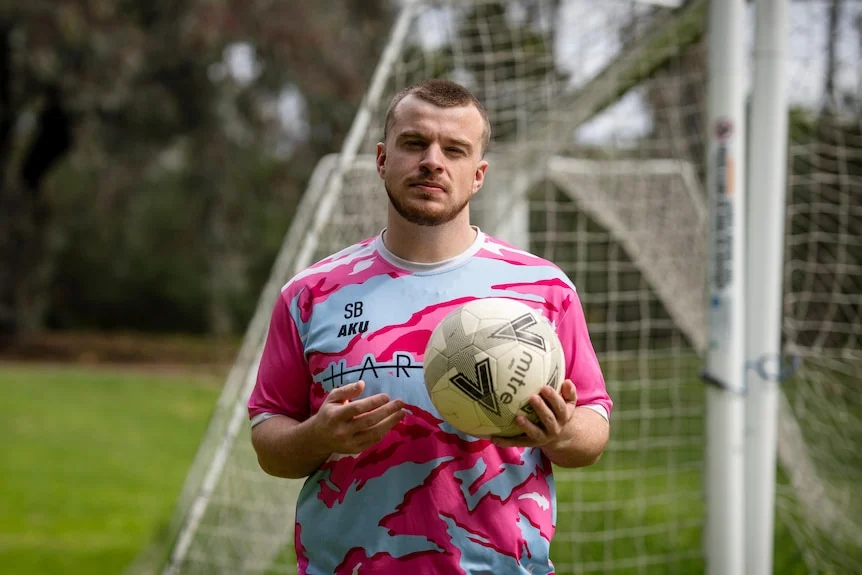
Bonner says the community he found at the Rovers helped save his life. (ABC: Danielle Bonica)
“I get to be free and physical”
The Melbourne Rovers’ story turns on a simple point: belonging and serious competition can exist in the same club. The team has men’s sides in Football Victoria’s Metro 7 and Metro 9 leagues, and plans to add a women’s team in 2027 after hearing that [women’s teams around the state feel unsupported by mainstream clubs](/news/2026-02-19/kyneton-womens-football-story-widespread-issue/106338680).
For Aisling Haugh, joining the Rovers began with a practical hope. She’d moved from Auckland to Melbourne and wanted a community. As a trans woman, though, deciding whether a sports team would be safe felt like another risk to weigh.
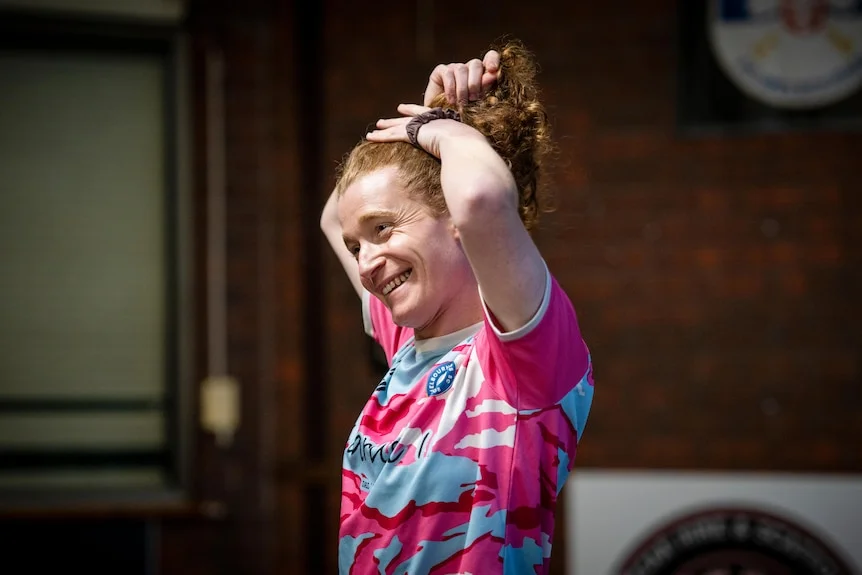
Aisling Haugh was daunted to join a women's team but wanted to find a community through sport. (ABC: Danielle Bonica)
“I'd obviously figured out a few things about myself that I hadn't figured out in high school … that poses some interesting problems and invites a bit of risk regarding what teams I want to join,” she says. “Plus, there's also the whole sort of thing about transwomen and women's sports.”
Haugh began seeing a doctor and transitioning at 26. She describes herself plainly: “I consider myself a woman, and transgender is just a part of that identity.”
With no women’s side available this year, she joined the men’s team after being reassured that it was trans-inclusive. Joining a women’s team felt like too much at the time; she was already nervous about returning to sport as a queer person.
The change she describes is physical as much as social. Queer people without a community, she says, can “minimise themselves” and make themselves small. Playing gave her room to relax, run and focus on her friends and the ball. “I was training with a big smile on my face.”
Even on a men’s team, she says, she doesn’t feel dysphoria when she plays. “It's just me and my body.” That’s a striking measure of what a welcoming club can make possible: for a while, she can stop monitoring her face, voice and posture and simply play.
Community is the point
Stuart Bonner knows the contradiction in the club’s story firsthand. Football made him feel disconnected as a queer person growing up; now it’s where he and his teammates have found community.
He saw that idea reflected in the Immigration Museum’s *Home is Football: Belonging in Australian Soccer* exhibition, where he appears alongside Ange Postecoglou, Lydia Williams and players from diverse teams, including refugees and asylum seekers. A line at the entrance stayed with him: “Football is the reason we came, the friendships we make is the reason that we stay.”
Research shows young LGBTQIA+ Australians are turning away from community sport due to discrimination. (Getty: Morgan Hancock)
The Rovers’ welcome doesn’t mean they take the football lightly. Bonner says people sometimes underestimate the club as a competitive side. “We want to win. We train to win,” he says. “We do accept everyone … but that doesn't mean there's no competitive spirit because there absolutely is.”
The Metro 7 team finished third this season, with 11 wins from 18 games and 87 goals. A recent trip to Perth for a Pride Football Australia tournament ended in defeat, and Bonner says it hurt: “It was heartbreaking. It was crushing … and that's a purely sporting thing.”
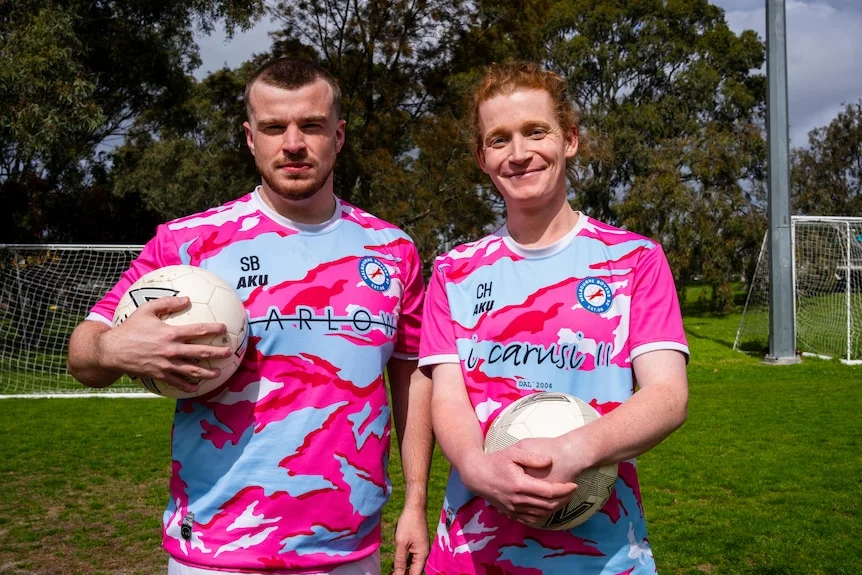
Stuart Bonner and Aisling Haugh say the Melbourne Rovers allow them to feel a sense of belonging in community sport. (ABC: Danielle Bonica)
That competitive pride sits alongside the club’s larger measure of success. The Rovers had 68 members this year, and Bonner says their surveys ranked belonging highest among the measures they track. “We genuinely change people's lives,” he says. He knows his determination to make the club succeed can give newcomers a tough first impression. Get to know him, though, and, as he puts it, “People know I'm quite soft and quite squidgy.”
For clubs considering who belongs on the pitch, the Rovers offer a grounded answer: inclusion doesn’t dilute ambition. A club can make people feel safe and seen while still caring deeply about the score.
**The ABC of SPORT**
Sports content to make you think... or allow you not to. A newsletter delivered each Saturday. [ABC Privacy Collection Statement](https://help.abc.net.au/hc/en-us/articles/360001511015).
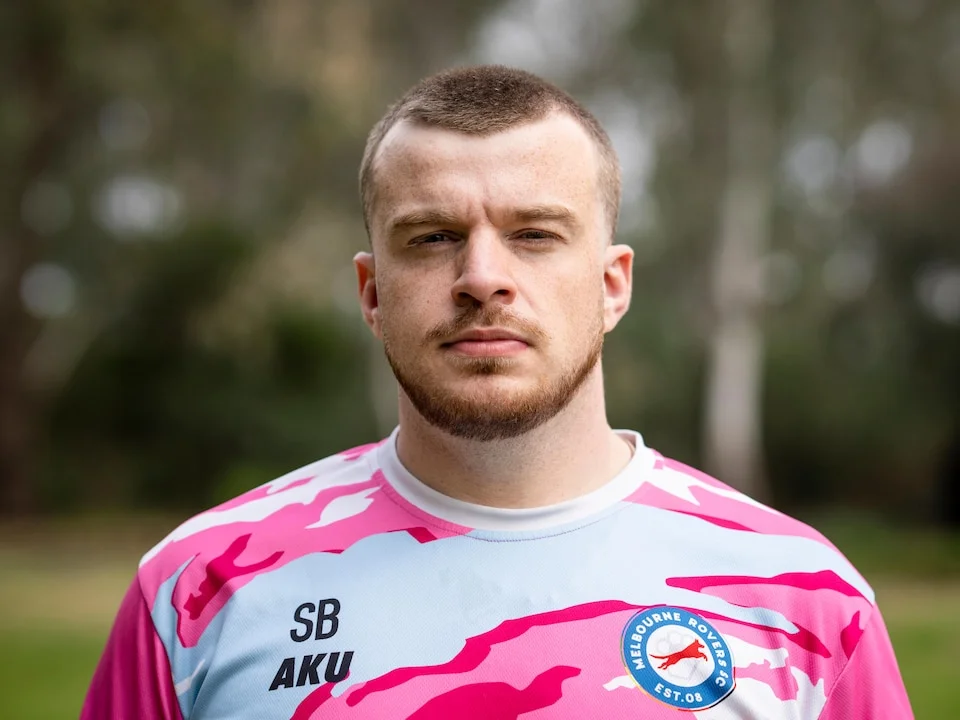
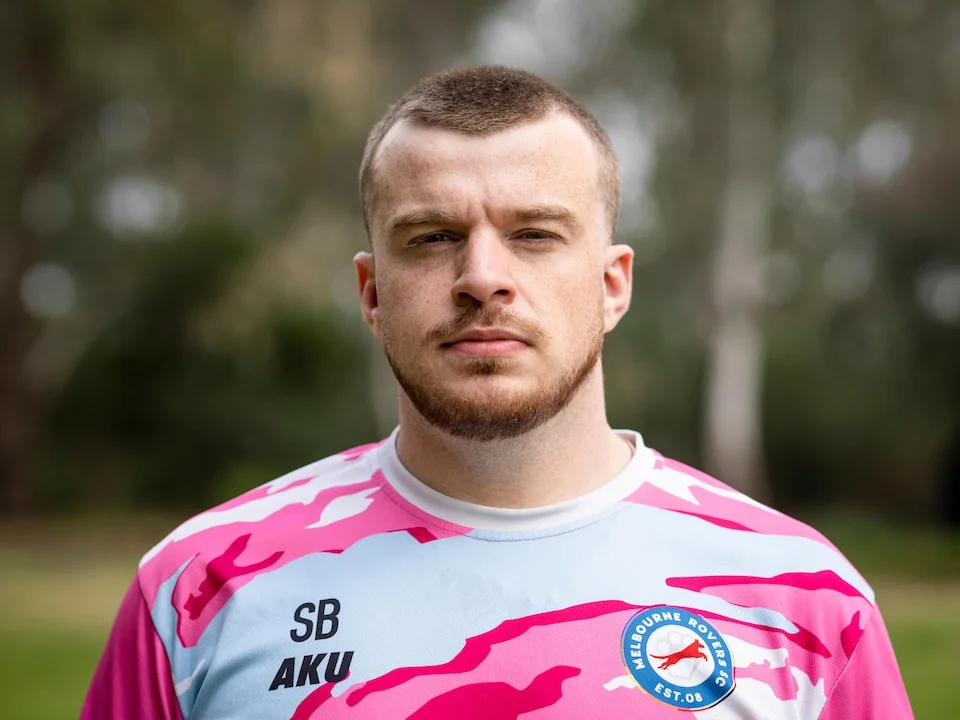
 Bonner grew up in Glasgow, where he says playing football is tough as a queer person. (ABC: Danielle Bonica)
The numbers suggest his experience isn’t isolated. In Scotland, LGBTQ+ people report feeling more than twice as excluded from football as from other sports. In Australia, 53 per cent of young LGBTQIA+ people have witnessed discrimination in community sport, and 40 per cent say they’ve experienced it themselves.
Ryan Storr, an adjunct fellow at Victoria University and cofounder of Proud2Play, says homophobia and discrimination, sometimes physical, keep many queer men away from mainstream clubs. Football’s history and culture matter, he argues: sexism and homophobia have become embedded in a sport associated with aggression, physicality and, especially, its fan culture.
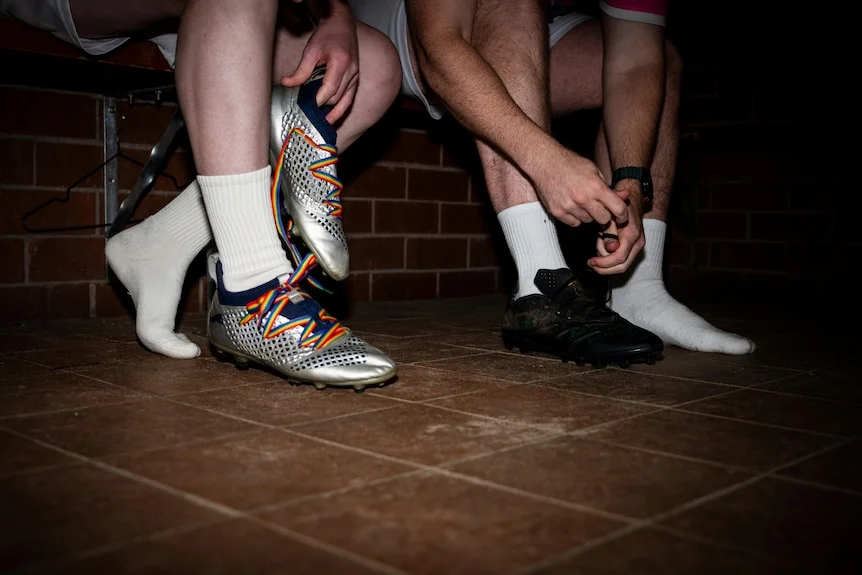 Melbourne Rovers is an LGBTQIA+ all-inclusive soccer club. (ABC: Danielle Bonica)
That culture has had visible consequences. The Football Association has fined Tottenham Hotspur, West Ham, Luton Town and Leeds United in recent years over homophobic chanting. LGBT+ supporter groups have also been advised against attending World Cup matches in Russia and Qatar because of safety concerns.
Women’s sport has often offered a different history, with roots in queer communities and many openly LGBTQ+ players at community, elite and national levels. Storr says queer women have generally found safer spaces within women’s sport and therefore may not have needed separate clubs. But that doesn’t erase the barriers: queerphobia, and transphobia in particular, can still keep people out.
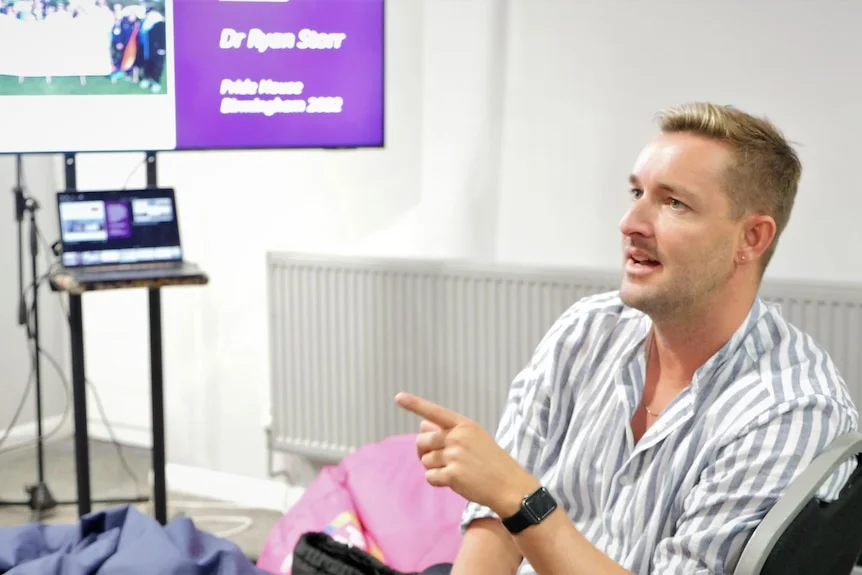 Ryan Storr says many queer men avoid mainstream sporting clubs. (ABC Sport: Amanda Shalala)
The obvious read is that inclusive clubs offer a place to play. Bonner’s account points to something more consequential: they can make sport a place where people stop hiding, and where belonging has stakes far beyond the score.
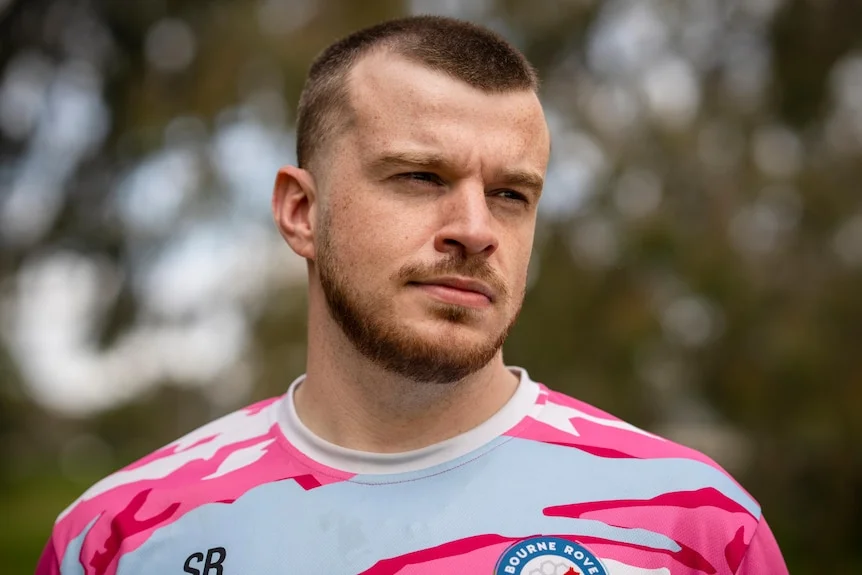 Bonner says the community he found at the Rovers helped save his life. (ABC: Danielle Bonica)