Tasmania's Clean and Green Image Faces Scrutiny Over Salmon Farming Antibiotics
2026-11-13 21:12
874 views
Antibiotic requests and delayed disclosure of farmed salmon deaths in Tasmania's public waterways test the state's "clean and green" image.
The clean and green pitch
Tasmania has spent years selling itself as "clean and green," a state built around purity and sustainability. Its government website leans on the idea of "better, not more." Those aren't my words. They're the state's own, in black and white.
So the obvious question: are they true? And if they are, how does a government let one major producer put the state's reputation at risk, at the expense of other industries and the public?
Antibiotics in public waterways
Once again, Salmon Tasmania, the peak body for the state's major farmed salmon producers, wants permission to use large quantities of antibiotics to fight bacterial outbreaks in its fish.
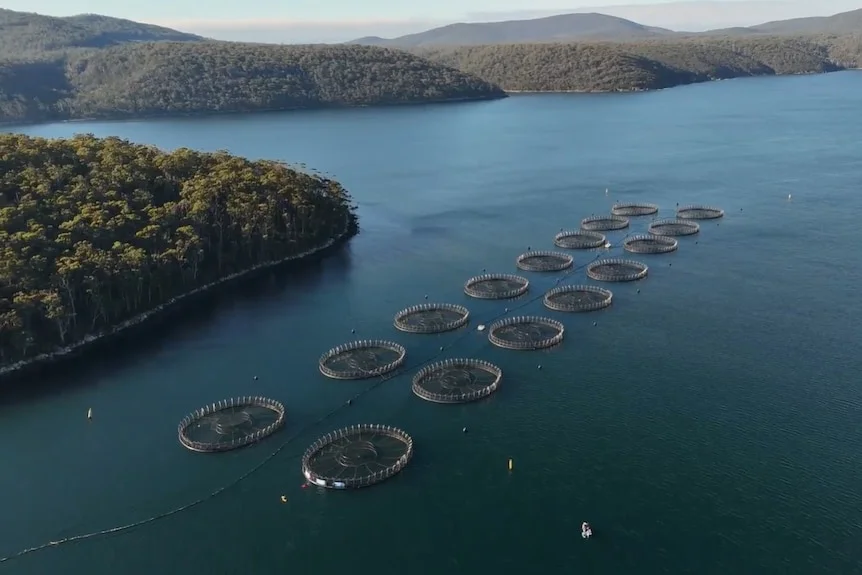
The fish aren't kept in contained, on-land tanks. They're in dozens of large pens sitting in public waterways that commercial and recreational fishers also use. People swim and sail in those same waters, which is the detail that tends to get lost in the industry's technical framing.
A salmon farm near Port Arthur in Tasmania's south-east. (Supplied: Bob Brown Foundation)
The state's health department is quick to reassure. It reports "no reports of adverse human health effects" from eating seafood carrying florfenicol residue, and says there is "no evidence of harm to human health" from exposure to the antibiotic during recreational swimming.
Those statements may well be accurate. But reassurance from the regulator and a sense of public trust are two different things, and the second is what's wearing thin.
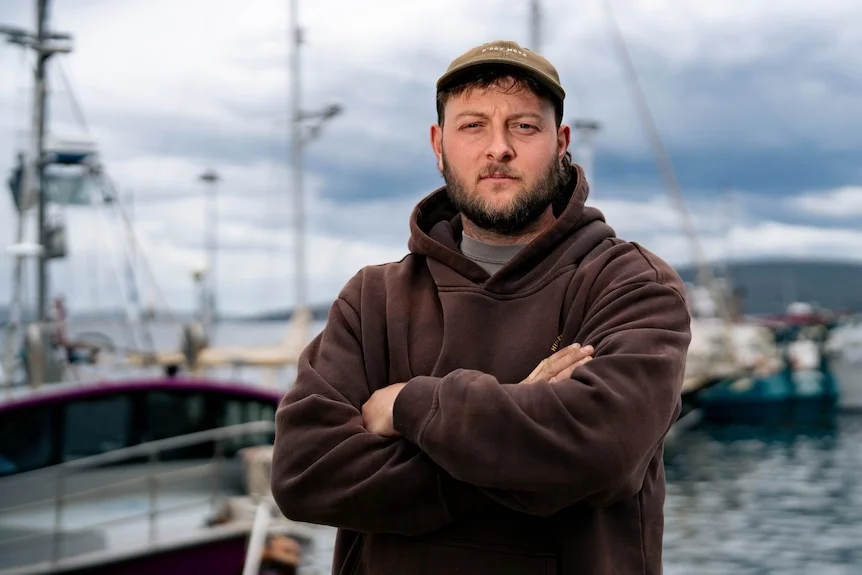
One commercial fisherman asks "why is one business worth it, more than others?" (Sally Dakis)
The die-off nobody wants to repeat
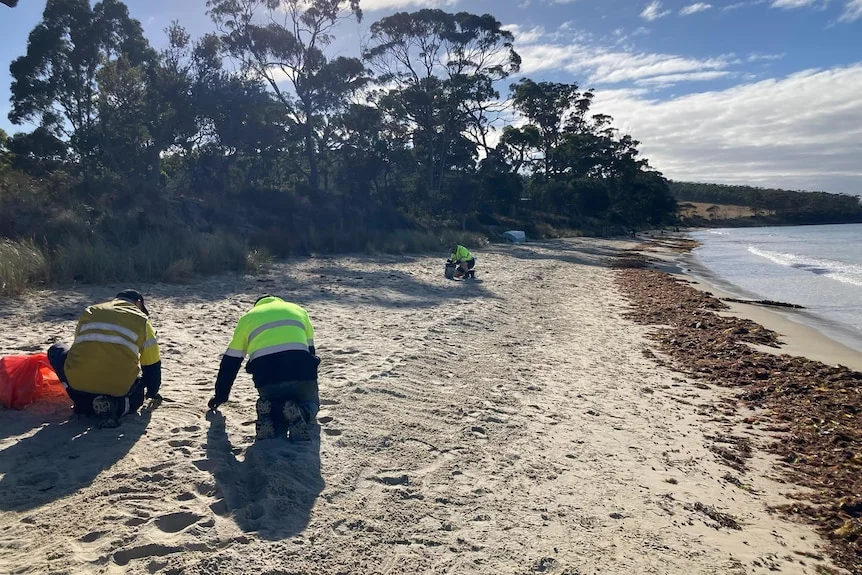
The industry's justification is straightforward. It says it needs the antibiotics to avoid a repeat of the 2024-25 summer, when thousands of tonnes of dead fish and fatty globules washed up on shore.
That's a reasonable thing to want to prevent. Dead fish on the coastline is a mess for everyone. But the timing of the disclosure is where this gets uncomfortable.
This week, right to information (RTI) documents showed that 1,907 tonnes of farmed salmon died in Macquarie Harbour between October 2024 and December 2025. That information surfaced nearly a year after the deaths, and only because an RTI request lodged almost 12 months ago finally got released.
Staff from Huon Aquaculture collecting salmon debris from the foreshore at Verona Sands in February 2025. (Supplied: Huon)
Here's the gap: the documents don't say what killed the fish. We simply don't know. Which makes it hard to argue the public has been kept well informed, and harder still to call that "clean and sustainable." Would an everyday Australian read it that way? I doubt it. Put plainly, this hasn't been transparent, and it hasn't been timely.
Who pays when one sector gets priority
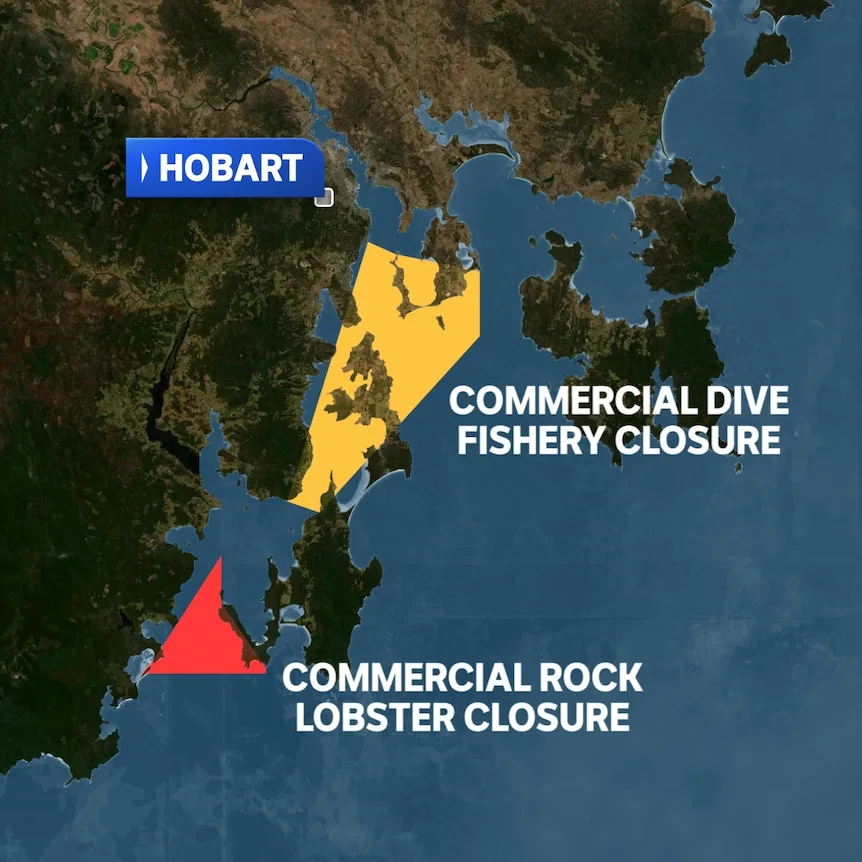
The timing gets sharper. The same week the RTI material landed, the environment department moved to ban commercial rock lobster harvesting and the setting of rock lobster pots in parts of the Southern Channel.
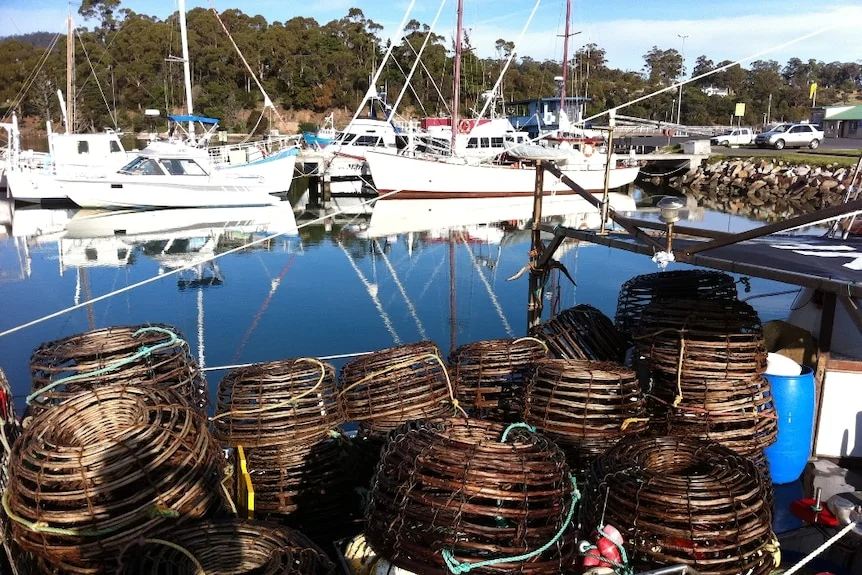
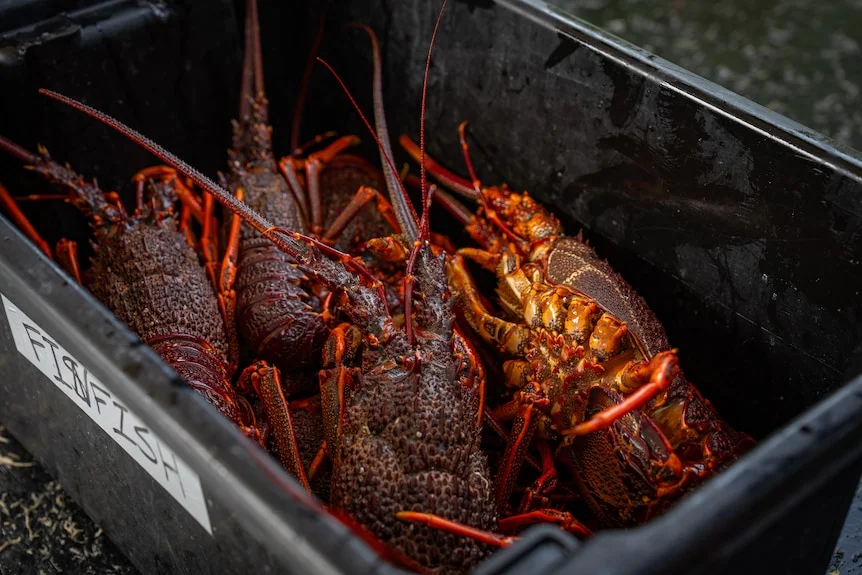
The department calls the closure "part of the arrangements to mitigate trade risks associated with aquaculture therapeutant use" in southern Tasmanian waters. Translated: the risk here isn't just ecological. It's commercial. If antibiotic residue turns up in rock lobster and urchins, which are exported, overseas buyers could refuse the product the moment they find trace amounts.
Salmon Tasmania is seeking an emergency permit to treat its farmed fish with florfenicol to head off an outbreak like last year's mass mortality. It has also said it will pre-emptively compensate other sectors that might suffer as a result.
That offer sounds generous until you look at what it actually asks of the people being compensated. Being paid to accept a closure on your own fishing grounds is a hard sell.
Bryce Way is unhappy at the idea that rock lobster fishers would accept money in exchange for their fishery being shut off. (ABC News: Ebony ten Broeke)
Bryce Way, a lobster fisherman, didn't mince words when he spoke to 936 ABC Hobart this week. "If you're accepting money, you're selling your soul, that's all you're doing."
He added: "If you care about the industry, you shouldn't be accepting any dollar value to have an area closed."
That's the core tension. Strip away the compensation language and one commercial sector is being asked to absorb the cost of protecting another.
A map showing the areas of the rock lobster fishery that will close from Sunday. (ABC News: Hamed Akrami)
The perception problem is serious. Many people read the situation as the state government deciding that the $1 billion farmed salmon sector matters more than other jobs and businesses in aquaculture. Is that fair? Premier Jeremy Rockliff was asked exactly that on Friday.
"It's important that all sea industries coexist, and coexist amongst the best-balanced approach, which we're trying to achieve here," he said.
That's a fine sentiment. It doesn't answer the question about why one sector's needs keep landing at the top of the pile.
Some in the lobster industry have warned of protests over the fishery closures. (ABC News: Bec Pridham)
Coexistence, on the water's edge
Not everyone in the lobster sector is hostile. Early this month, Tasmanian Rock Lobster Council president Danny Fox told the ABC his members were happy for the salmon industry to be there. His condition was specific.
"It's just got to play by the rules, and they've got to stay in their own lane a little bit more."
Cray fisherman Kodey Rolston put the broader frustration more bluntly. Plenty of people in his industry, he said, were asking: "Why is one business worth it more than others?"
"Just because it's larger? Maybe they pay more tax, maybe they pay more donations?" he said.
Rolston was careful not to make it a blanket objection. "I am there for salmon farming; I do like it, it's great for industry, and it keeps jobs.
"But small businesses suffer, and large business gets away with it."
That last line is the one the government will have to answer. Coexistence is easy to promise on paper. It gets harder when the cost of one industry's risk falls on the smaller operators who had no say in it.