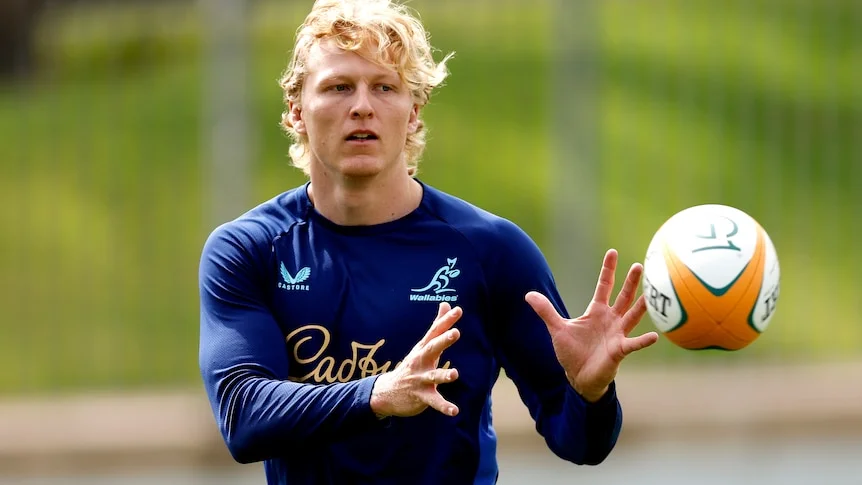
Gordon's return and a midfield rethink
The 45-22 loss to England at Twickenham was bad enough on the scoreboard. What worried Kiss more was the lack of control across the afternoon, and that's a harder problem to fix than a missed tackle or a dropped pass. Declan Meredith is the most visible casualty, dropped after a poor outing. Gordon comes back just two months after breaking his leg against Argentina, and Ben Donaldson keeps the cover role on the bench. When a coach changes this many names after a run of losses, it usually means the earlier answers didn't hold. That's the reading I'd take here.
The bigger change is in the midfield. Joseph-Aukuso Suaalii moves from the left wing to inside centre, partnering Len Ikitau. It's the sixth successive Test in which Kiss has altered the midfield pairing, and that's a sign he hasn't settled on an answer. Here's the thing: a midfield that keeps changing rarely builds the timing and communication that defence depends on. Suaalii is covering for the injured Isaac Henry, so this is partly a necessity and partly an experiment. He and Ikitau will have shared the field 18 times at Test level once the whistle goes, which is a reasonable base for trust but not a settled partnership.
Winger Harry Potter returns to the ground where he made his Test debut. That's a sentimental detail, and sentiment alone won't win a Test. Still, a side that's been on the wrong end of heavy scorelines needs players who remember what it feels like to win at a venue like this one. If you're following the Wallabies closely, you'll want to watch whether the wing's confidence shows up in his first few involvements, because those early touches tend to set the tone for a winger's afternoon.
Pack changes and the back row
Rob Valetini is restored at No. 6 after starting from the bench last time out. He'll form a familiar back row with skipper Harry Wilson and Fraser McReight, the current player of the year. Tom Hooper and Brandan Paenga-Amosa come back from injury and take places on the bench, and Hooper should add real value in the back row after a recent shoulder problem. Returning players from injury often need a few minutes to find their rhythm at Test pace, so the bench role could be as important as the starting spot for managing the final quarter.
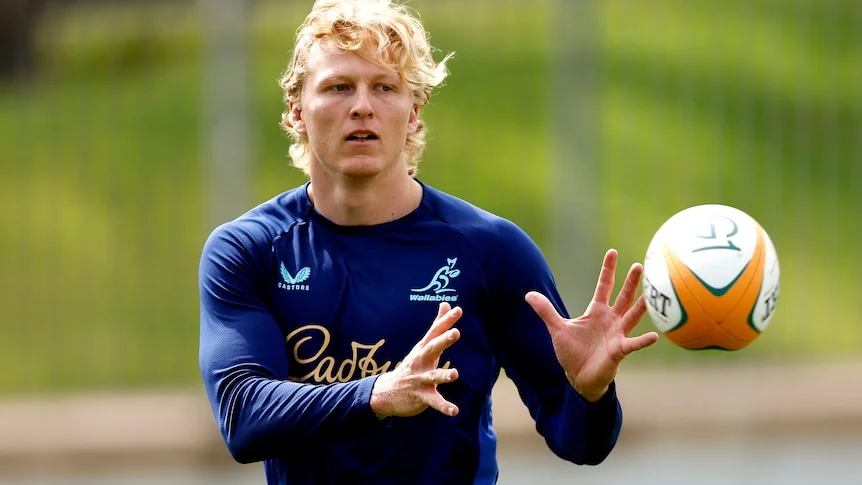
Carter Gordon returns to the starting line-up two months after fracturing his fibula. (Getty Images: Brendon Thorne)
Western Force skipper Jeremy Williams goes back to lock alongside Josh Canham. Playing him in the back row against England didn't work, so Kiss has moved him on. That's a practical admission, and I respect it more than a coach who stubbornly sticks with a square peg. Lachlan Shaw is the lock cover and will play his first Test in Europe. For a young forward, that's a significant step, because European conditions, travel and crowd pressure add layers that domestic football doesn't fully prepare you for.
Scotland's counter-punch
Scotland have made two changes from the side that faded badly against New Zealand, a 43-21 loss. That fade is the detail Australia should study most closely. Blair Kinghorn and record try-scorer Darcy Graham come into the back three, which gives the home side more firepower in space. Teams that struggle to hold a lead against strong opposition often respond by targeting the wings and the space behind the defensive line, so expect Scotland to look for early chances there.
Two Australia-born players will be central to the Scottish effort. Sione Tuipulotu captains the side from inside centre, and Jack Dempsey starts at number 8. Tuipulotu was a big figure in Scotland's win over the Wallabies at Murrayfield two years ago, and he knows what this fixture demands. Dempsey, a former Waratah, played 14 times for Australia, most recently in 2019. That history adds a layer of familiarity to this match. Both players know the Wallabies' habits, and both will be looking to exploit any hesitation in the first 20 minutes.
Kiss has been clear about what he needs. "We've had a good week of training but after falling short of our own expectations last week it's vital we transfer our hard work onto the field for the 80 minutes on Sunday," he said. "Playing Scotland on their home turf is a massive Test and we're all determined to make our supporters proud by elevating our game to the level it needs to be." Those are the right words, and they're also the words every coach says before a difficult Test. What matters is whether the Wallabies' discipline and structure hold when the pressure rises.
What this means from here
The selection changes tell you what Kiss thinks went wrong. They won't fix a team that's conceded heavily three weeks running. A new five-eighth, a reshuffled midfield and a restored back row can improve the picture, but they don't address the deeper question of why the side keeps losing control of games. This is more significant than it looks. A coach who has changed the midfield six times in a row is searching for a combination, and searching is expensive when the next Test is only days away.
And yet there's a reason for cautious optimism. Gordon's control at ten and a steadier midfield would be a sensible start, and the return of experienced players from injury gives Kiss more options than he had a few weeks ago. The bench looks deliberately built for impact rather than cover, which suggests the coach is planning for a contest that could swing in the final quarter. That said, planning and delivering are different things, and the Wallabies have given supporters plenty of reasons to wait for proof.
Whether the Wallabies can keep their discipline for 80 minutes on Scotland's ground will say far more about where this side is heading than any team sheet. If the answer is yes, the changes will look smart in hindsight. If it's no, the questions about selection will get louder, and they'll be harder to answer with another reshuffle.


