Still no sign of bird flu in the count
Every year, ecologist Richard Kingsford gets in a plane and counts birds. This year's eastern Australian waterbird survey has found no evidence of an impact from H5 bird flu. That's the headline, but the more useful story is about what the count can and can't tell us next.
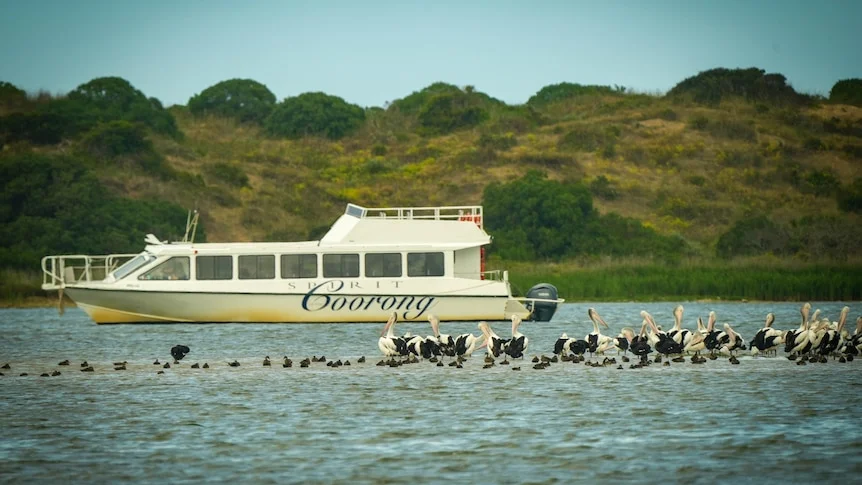 Pelicans spotted in the Coorong during the annual eastern waterbird survey. (ABC News: Brant Cumming)
The flights covered 38,000 kilometres, about a third of the continent, and took in more than 1,000 wetlands. Researchers fly low over wetlands and rivers, and they call what they see into a dictaphone. Kingsford compares the work to a race call.
How the count works
"We're flat out identifying little birds," Kingsford said. "We count them in packages of tens, fifties, hundreds, sometimes even thousands, and as you can imagine there's more than 50 different water bird species that we're identifying, so it's pretty taxing, particularly where you've got a lot of birds on a wetland."
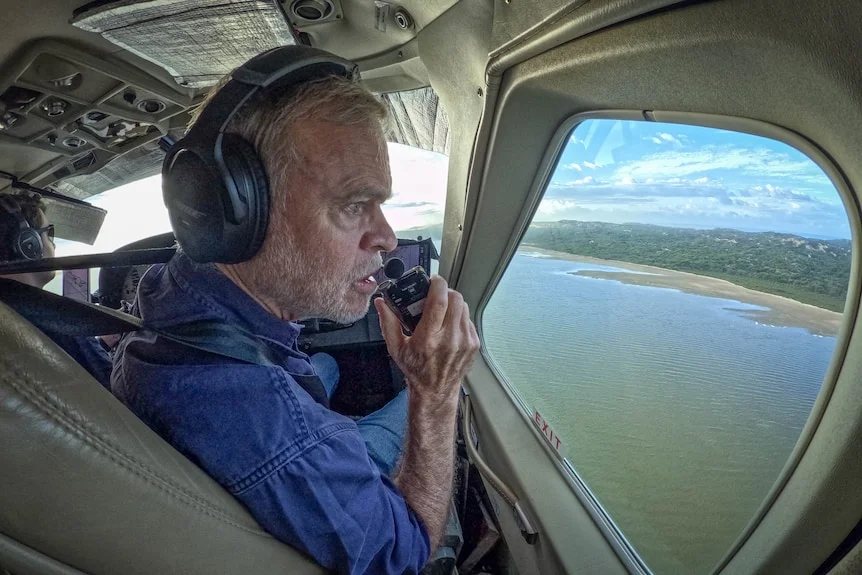 Ecologist Richard Kingsford has been taking part in the annual bird count survey for decades. (ABC News: Brant Cumming)
The study is run by the University of New South Wales and backed by the Queensland, New South Wales, Victorian and South Australian governments. It has now run for 44 years, and Kingsford has been on board for almost every one of those counts.
A long decline, and what drove it
Across those decades, Kingsford has watched bird populations fall by 60 to 70 per cent. He traces much of that to the Murray-Darling system. Water diversions meant the wetlands where birds breed stopped getting the floods they once relied on.
Numbers have steadied in recent years, he says, thanks to higher rainfall linked to La Niña and to environmental flows returning to river systems. That's a welcome reprieve, but it's a fragile one, and it's about to be tested by something the wetlands haven't faced before.
The threat of bird flu
H5 bird flu has now reached Australia, and Kingsford says the survey is uniquely placed to track it. "This is really probably the largest surveillance program at the moment for bird flu," he said. "Because we're surveying something between a thousand and two thousand wetlands, more than 50 water bird species, and we know bird flu is going to impact them more than anything else."
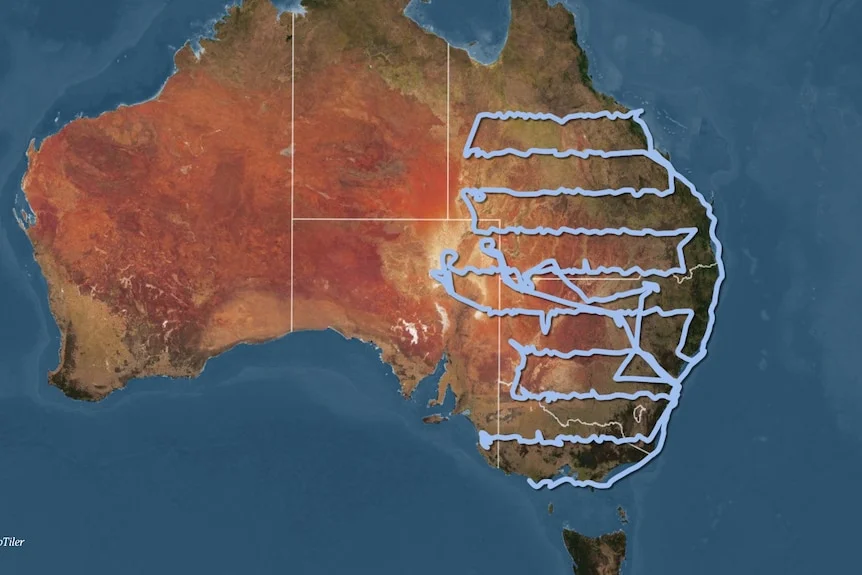 The flight path taken by researchers over several weeks as part of the annual bird survey, covering about 38,000 kilometres. (ABC News: Stephan Hammat)
When the virus arrived on Australian shores in June, the team set up a protocol for reporting any bird deaths they came across. So far, they haven't seen an impact from it.
That doesn't mean the count is clean. Kingsford reports hundreds of dead pelicans inland, around the Kati Thanda-Lake Eyre region. He doesn't think bird flu is responsible. Pelicans in boom-and-bust breeding seasons often lose chicks when colonies reach the end of a boom, and he suspects that's what's happening.
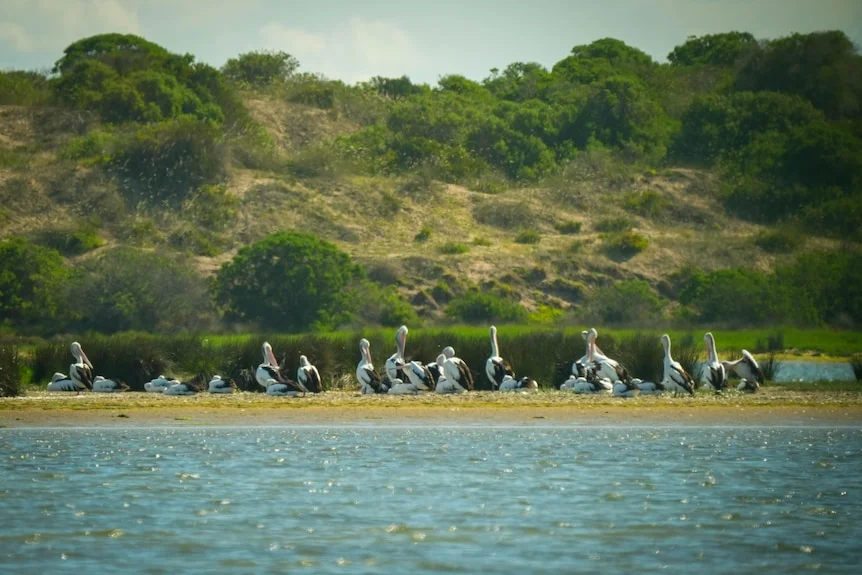 Richard Kingsford says he expects to see more mortalities as bird flu spreads through local colonies. (ABC News: Brant Cumming)
"This year we found that a lot of these rookeries are sort of getting to the end of their boom period and that's when the chicks die," he said. "So we've probably got a few hundred pelicans that have died, nothing to indicate anything like bird flu, because you don't see any sick birds. You also see these pelicans with other birds like straw-necked ibis, and they all seem to be fine. What it is showing us is we've got a good way of measuring whether we've got a bird flu incident."
Contained on the coast, for now
Scientist Vidya Bhardwaj, from the CSIRO's Australian Centre for Disease Preparedness, says the survey's findings line up with what her team is seeing. Outbreaks of H5 bird flu appear to be largely confined to the coastline, and even there, cases have slowed.
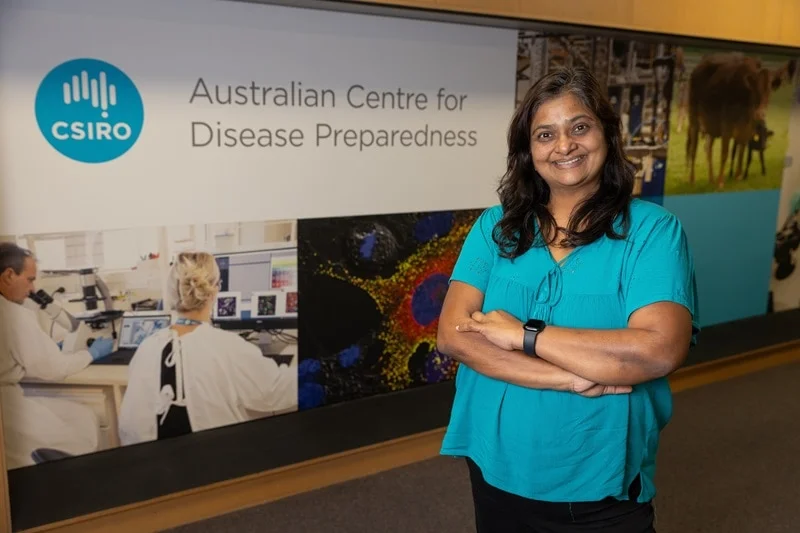 Vidya Bhardwaj said outbreaks of bird flu have largely been confined to coastal areas. (Supplied: CSIRO)
The early predictions were dire, and they haven't come true. That doesn't mean the disease has left. "It's arrived, it's in our wild bird population, so we now have a situation of coastal smouldering avian influenza," Bhardwaj said.
Seasonality is the variable everyone's watching. "What we do know is that avian influenza virus survives for a much shorter period of time in hot conditions than it does in cool wet conditions, so coming into summer you would expect that there is less around," she said. "What it will look like when the season changes again, or even during summer, is really hard to predict."
Kingsford sees a related puzzle in the wetlands themselves. Some sites hold fewer birds than he'd expect, which may simply reflect the water still lying inland after major floods. "There's still quite a lot of birds spread out," he said. "We've had a couple of really big boom years."
Why the quiet may not last
One of the last legs of the survey took the team along South Australia's Coorong, a wetland regarded as internationally important for migratory birds. The surprise there was the absence of the species the site is known for. "It's also interesting to me that we didn't see many migratory species, which the Coorong's well known for," Kingsford said. "We only saw a few hundred, and I think what's happening there is there's a lot of habitat in central Australia, so we've got the waterbirds quite spread out at the moment."
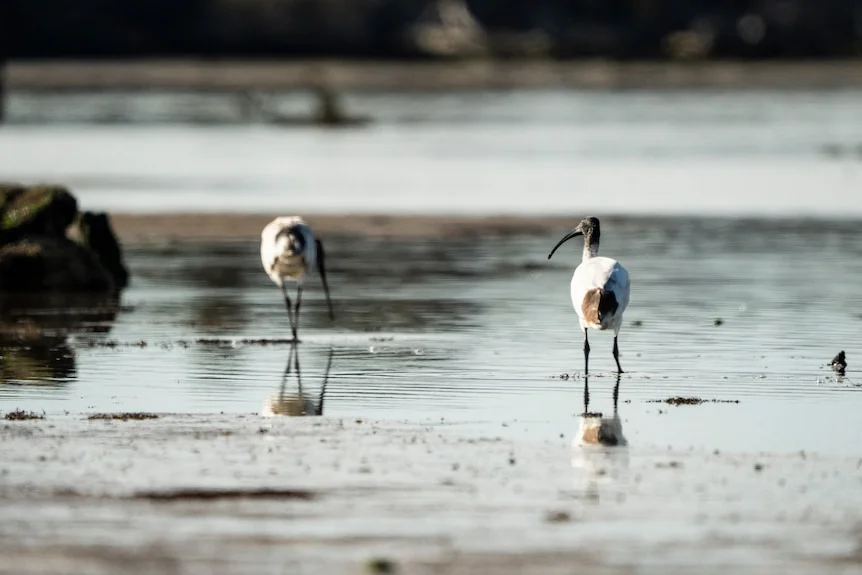 The Coorong wetlands is a haven for birds and marine species. (ABC News: Lincoln Rothall)
Dispersal is a double-edged thing. As inland waters dry out, birds crowd into fewer places, and that concentration creates its own risk if the virus gets in.
Kingsford isn't reassured by the quiet. "All we can go on is what's happened overseas, and it's been devastating there," he said. "Many rookeries have had huge impacts, like 50 per cent loss. Because we haven't seen many this year doesn't mean it's not there."
His expectation is blunt. "It's coming, it will spread, it's inevitable, and I think over this next year or so we'll start to see that, a lot more bird deaths as they spread throughout the waterbird community."