Algae Feed Additive Claims 65% Cut in Cattle Methane Emissions
2026-11-13 20:42
1009 views
Noosaville firm Provectus Algae says its algae-based feed additive could cut cattle methane by about 65%, but the claim still needs independent verification.
# A Noosa algae company says it can cut cow burps by 65 per cent
Australia has about 30 million cattle, and a lot of the methane they produce comes out of their mouths. A Noosaville company now says it has a cheap feed additive that can cut those emissions by roughly 65 per cent. If that holds up at scale, it matters. It's also a claim that's still mostly a target, and you should read it that way.
A Noosaville-based company, Provectus Algae, has built the product. The Queensland government has granted $3.8 million to help it move from lab to market.
## Algae in a shed
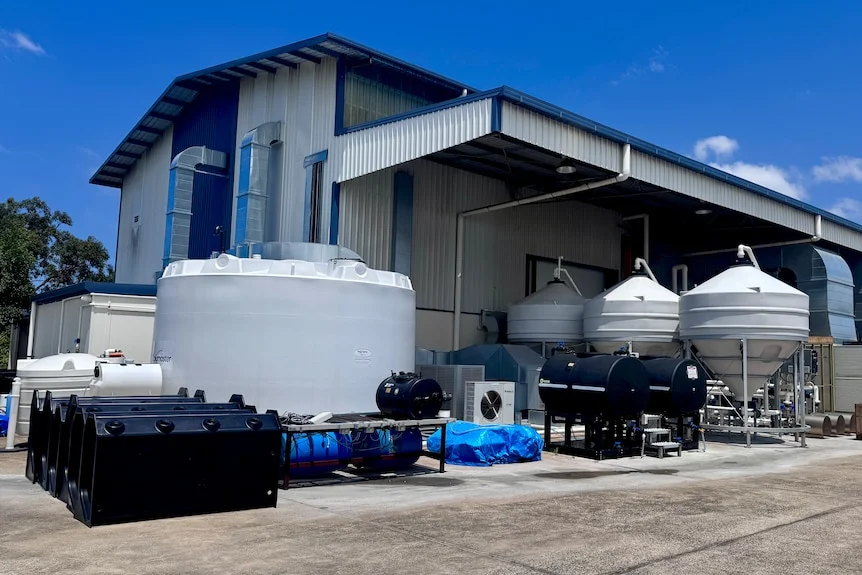
Walk into the company's industrial-estate facility, a few minutes from Noosa's Main Beach, and the first thing you notice is the shed. It's stacked with self-cleaning tanks, and red algae swirls through them under strobing lights. This is where the product is grown.
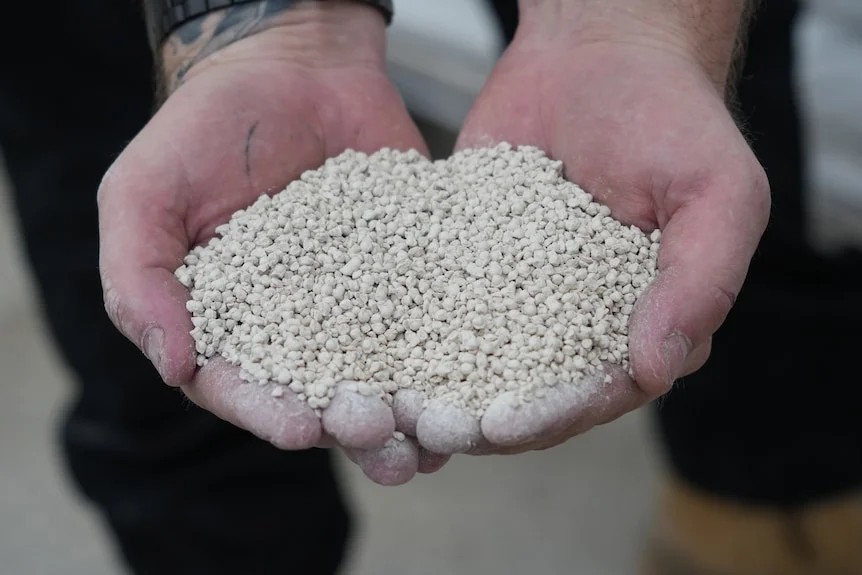
Provectus Algae was founded eight years ago. It describes its core asset as a library of photosynthetic microbes, and it uses them to make granular and liquid cattle feed additives. The intended customers are feedlots, paddocks and dairy farms, which is a wide spread of operations with very different feeding routines.
## Copying a seaweed
The science underneath this goes back to CSIRO's 2011 discovery that native Asparagopsis seaweed could significantly reduce methane from livestock. That finding is why the whole sector has been chasing this for over a decade.
Here's the catch. A 2024 Murdoch University study found cattle avoided feed with higher concentrations of Asparagopsis. It also found evidence of ulceration and inflammation in the cows' stomachs. A seaweed that cattle won't eat, and that may irritate their guts, is a serious problem for anyone trying to sell it by the tonne.
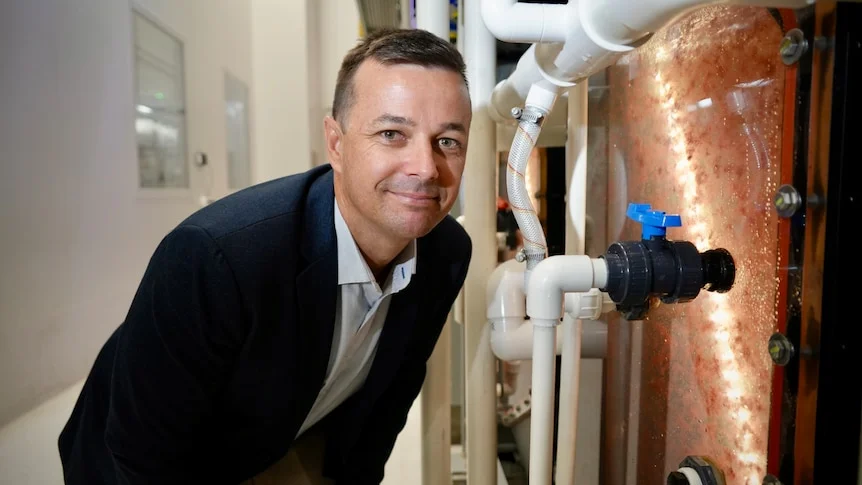
Provectus's answer is to drop the native seaweed altogether. CEO Nusqe Spanton says the company rebuilt the process using other algae and photosynthetic microbes. "It's a bioidentical product to what's found in the Asparagopsis itself," he said. "We've been able to bio-mimic the exact constituents we found in the algae species that was originally developed by the CSIRO."
That's a clever workaround, and it's the part I'd watch most closely. Copying the chemistry is a different thing from proving the copy behaves the same way inside a living animal. Spanton says the livestock happily eat the supplement. He also says the company has run extensive safety testing and found no residue in the animal. Those claims are checkable, and they will need independent verification before the industry takes them at face value.
"We have done extensive safety testing, and we've proven that there is no residue within the animal, and we've proven safety throughout the animal supply chain," Spanton said.
## Why this matters at national scale
Ruminants, which include cows, sheep and goats, are responsible for more than 10 per cent of Australia's total greenhouse gas emissions, according to CSIRO. A reliable feed additive would go straight at a large, hard-to-fix chunk of that number. Few other sectors have a single intervention that promising and that cheap to apply.
The Queensland government is clearly betting on it. Queensland Primary Industries Minister Tony Perrett said the state holds half the national cattle herd, worth more than $14 billion to the Queensland economy. "That's why we're continuing to back smart research, smart people and taking those opportunities into commercialisation," he said.
Victoria, Tasmania, South Australia and Western Australia have also put money into businesses working on livestock emissions. So this isn't one state's experiment. It's a coordinated push, and the money is flowing.
## Still a lot to learn
Here's the thing: the 65 per cent figure is a target, not a published, peer-reviewed result. Spanton says Provectus has run pilot trials with more than 3,000 cattle, including on Mort and Co feedlots on Queensland's Darling Downs. That's a meaningful sample. But the company's stated goal across feedlot, pastoral and dairy use is "around 65 per cent emissions reduction," and until independent researchers publish the numbers, that's the company's claim.
Measuring the outcome is harder than it sounds. Scientists have started fitting cattle with tight-fitting headgear to quantify how much methane they produce, mainly through their burps. That's the kind of data the industry needs to test claims like this one. And it's a reminder of how much the baseline itself has been in flux. A 2025 study found Australia's grain-fed cattle emissions were 56 per cent lower than previously believed, which changes how much any single intervention can deliver.
Spanton says the supplement works by targeting microbes in the animal's gut, and that it leaves the digestive microbes in the rumen alone. "It's extremely effective … it doesn't affect the broader digestibility microbes that are found in the rumen and therefore doesn't impact the ability for that animal to grow or be healthy in its life cycle," he said. If that holds, it solves the problem that sank earlier seaweed approaches. It's a big if, and it's the claim the trials need to confirm.
## Where the approach runs out
Here's where I'd temper the enthusiasm. Richard Eckard, a carbon farming professor at the University of Melbourne, points out that additives work best in feedlots, where cattle eat supplements continuously. Northern grazing is a different world. Properties there are measured in hundreds of square kilometres, and getting a daily dose into every animal is a logistics problem a feedlot never faces.
"If you had to deliver it in the northern grazing industry — where we measure our properties in hundreds of square kilometres — well, it's a different challenge," Eckard said. "It's why we need a mixture of options."
That's the realistic read. A product like this might work very well on feedlots and dairy farms and still leave most of the national herd untouched. The company's 65 per cent is a promising number for a specific slice of the industry. Whether it becomes a national answer depends on trials that haven't finished yet.
The math is the problem
Methane-reducing supplements work on paper. The trouble is that the price has to work too, and Professor Richard Eckard thinks the cattle industry is nowhere close. Unless producers get major productivity gains or additives that cost very little, the return on that investment stays thin.
Eckard puts the threshold bluntly: "We really needed to get it [supplement costs] below 10 cents an animal per day to get the carbon credit value." That's a tight margin. A carbon credit only pays if the feed additive is nearly free at herd scale, and few producers have that kind of room.
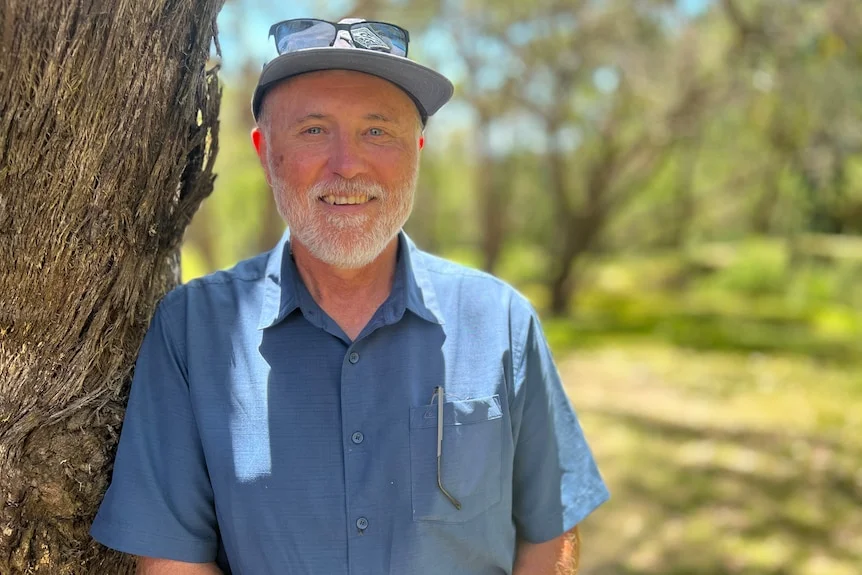
Richard Eckard would like to see the costs of the supplements come down to less than 10 cents per animal. (ABC News: Sean Warren)
Sell the beef, not the carbon
If the carbon math is hard, Eckard's alternative is to skip the middleman. He wants cattle producers to build direct relationships with restaurants and retailers and capture a premium for low-emission food. The buyers are out there, he argues, particularly customers who care about the environmental footprint of what they eat.
It's a reasonable pitch, but it asks a lot of a sector built on commodity sales. Negotiating directly with restaurant groups and supermarket buyers takes time, paperwork and a willingness to market beef like a brand. Plenty of producers will see that as a second job.
A cheaper additive, and a bigger bet
Mr Spanton's company thinks it has the cheaper option. He says his Surf'n'Turf product carries a price advantage, averaging 8 cents per animal per day at a rate of one gram per kilogram of feed. That's under Eckard's 10-cent line, at least on the company's numbers, which haven't been independently verified.
The algae for the supplements is grown inside this Noosaville factory. (ABC Rural: Jennifer Nichols)
Spanton also points to a gap the industry has largely ignored. Cattle genetics have improved considerably, he says, but there has been "limited development in improving feed digestibility." That's the more interesting claim. If animals could extract more from what they eat, the emissions would drop without a supplement at all, and the economics would look very different.
Why the scale matters
Here's the thing: the stakes grow with the herd. Since 1961, the global cattle population has expanded from 942 million head to an estimated 1.5 billion. Every percentage point of reduction across that many animals adds up quickly.
Spanton's bet is that cattle could become "one of the largest emissions-reductions loads out of any industry over the next 10 years," provided the product reaches a wider market. That's a big if. Cheap additives are only half the equation. The other half is whether producers, processors and buyers will pay for the difference, and the evidence so far suggests they'll want proof first.
 ## Algae in a shed
Walk into the company's industrial-estate facility, a few minutes from Noosa's Main Beach, and the first thing you notice is the shed. It's stacked with self-cleaning tanks, and red algae swirls through them under strobing lights. This is where the product is grown.
Provectus Algae was founded eight years ago. It describes its core asset as a library of photosynthetic microbes, and it uses them to make granular and liquid cattle feed additives. The intended customers are feedlots, paddocks and dairy farms, which is a wide spread of operations with very different feeding routines.
 ## Copying a seaweed
The science underneath this goes back to CSIRO's 2011 discovery that native Asparagopsis seaweed could significantly reduce methane from livestock. That finding is why the whole sector has been chasing this for over a decade.
Here's the catch. A 2024 Murdoch University study found cattle avoided feed with higher concentrations of Asparagopsis. It also found evidence of ulceration and inflammation in the cows' stomachs. A seaweed that cattle won't eat, and that may irritate their guts, is a serious problem for anyone trying to sell it by the tonne.
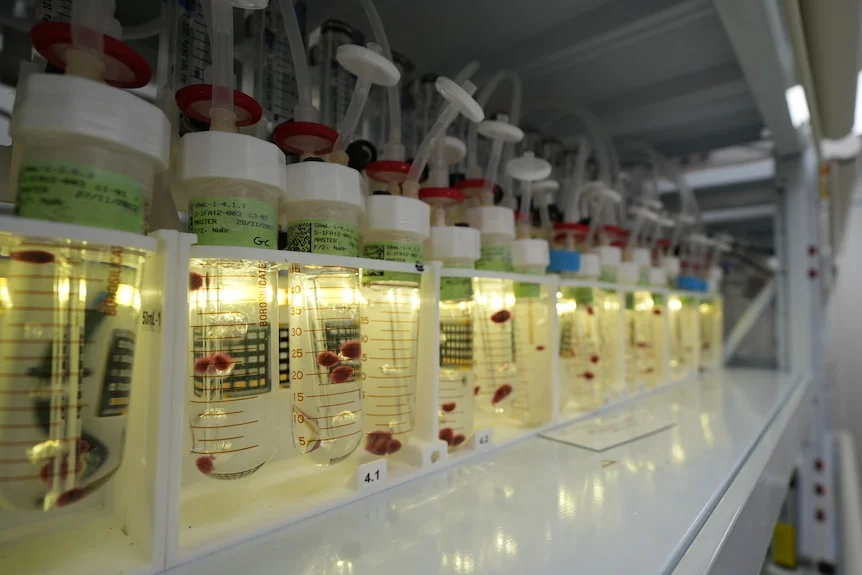 Provectus's answer is to drop the native seaweed altogether. CEO Nusqe Spanton says the company rebuilt the process using other algae and photosynthetic microbes. "It's a bioidentical product to what's found in the Asparagopsis itself," he said. "We've been able to bio-mimic the exact constituents we found in the algae species that was originally developed by the CSIRO."
That's a clever workaround, and it's the part I'd watch most closely. Copying the chemistry is a different thing from proving the copy behaves the same way inside a living animal. Spanton says the livestock happily eat the supplement. He also says the company has run extensive safety testing and found no residue in the animal. Those claims are checkable, and they will need independent verification before the industry takes them at face value.
 "We have done extensive safety testing, and we've proven that there is no residue within the animal, and we've proven safety throughout the animal supply chain," Spanton said.
## Why this matters at national scale
Ruminants, which include cows, sheep and goats, are responsible for more than 10 per cent of Australia's total greenhouse gas emissions, according to CSIRO. A reliable feed additive would go straight at a large, hard-to-fix chunk of that number. Few other sectors have a single intervention that promising and that cheap to apply.
The Queensland government is clearly betting on it. Queensland Primary Industries Minister Tony Perrett said the state holds half the national cattle herd, worth more than $14 billion to the Queensland economy. "That's why we're continuing to back smart research, smart people and taking those opportunities into commercialisation," he said.
Victoria, Tasmania, South Australia and Western Australia have also put money into businesses working on livestock emissions. So this isn't one state's experiment. It's a coordinated push, and the money is flowing.
## Still a lot to learn
Here's the thing: the 65 per cent figure is a target, not a published, peer-reviewed result. Spanton says Provectus has run pilot trials with more than 3,000 cattle, including on Mort and Co feedlots on Queensland's Darling Downs. That's a meaningful sample. But the company's stated goal across feedlot, pastoral and dairy use is "around 65 per cent emissions reduction," and until independent researchers publish the numbers, that's the company's claim.
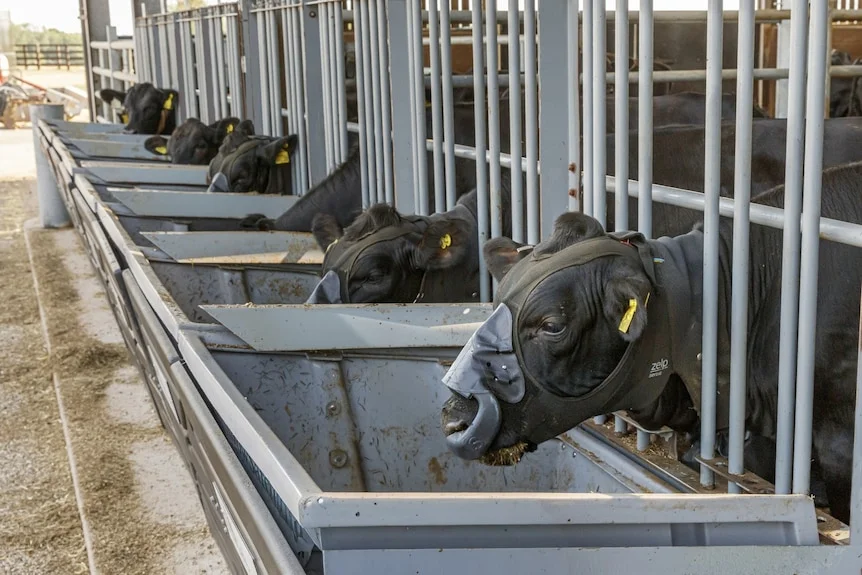 Measuring the outcome is harder than it sounds. Scientists have started fitting cattle with tight-fitting headgear to quantify how much methane they produce, mainly through their burps. That's the kind of data the industry needs to test claims like this one. And it's a reminder of how much the baseline itself has been in flux. A 2025 study found Australia's grain-fed cattle emissions were 56 per cent lower than previously believed, which changes how much any single intervention can deliver.
Spanton says the supplement works by targeting microbes in the animal's gut, and that it leaves the digestive microbes in the rumen alone. "It's extremely effective … it doesn't affect the broader digestibility microbes that are found in the rumen and therefore doesn't impact the ability for that animal to grow or be healthy in its life cycle," he said. If that holds, it solves the problem that sank earlier seaweed approaches. It's a big if, and it's the claim the trials need to confirm.
 ## Where the approach runs out
Here's where I'd temper the enthusiasm. Richard Eckard, a carbon farming professor at the University of Melbourne, points out that additives work best in feedlots, where cattle eat supplements continuously. Northern grazing is a different world. Properties there are measured in hundreds of square kilometres, and getting a daily dose into every animal is a logistics problem a feedlot never faces.
"If you had to deliver it in the northern grazing industry — where we measure our properties in hundreds of square kilometres — well, it's a different challenge," Eckard said. "It's why we need a mixture of options."
That's the realistic read. A product like this might work very well on feedlots and dairy farms and still leave most of the national herd untouched. The company's 65 per cent is a promising number for a specific slice of the industry. Whether it becomes a national answer depends on trials that haven't finished yet.