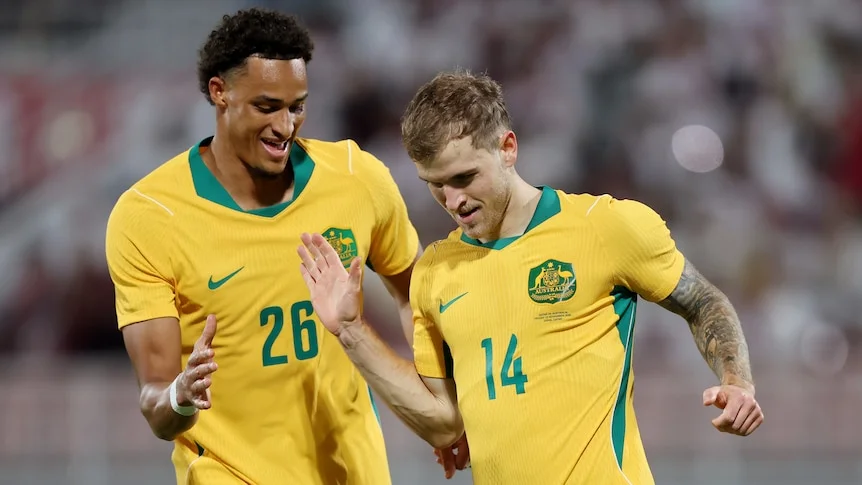
Tony Popovic's Socceroos didn't just beat Qatar on Friday night in Doha. They took the defending Asian Cup champions apart, and by the break the contest was effectively over. A 3-0 win in front of the hosts' own fans is one of the most emphatic results of Popovic's tenure.
Scorelines flatter sometimes, and a few that look lopsided hide a tight game underneath. This one doesn't. The chances, the control and the timing of the goals all tell the same story, which is rare enough that it's worth slowing down and reading the match properly.
A gift, then a rout
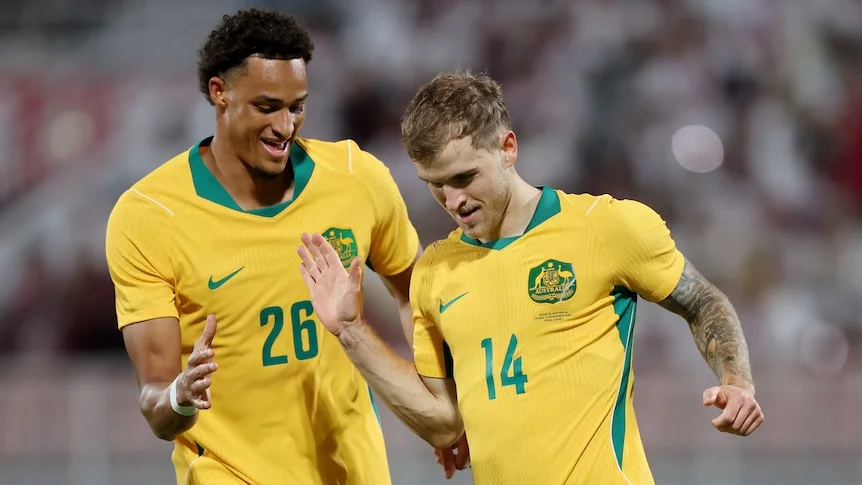
Qatar's new goalkeeper, Mahmoud Abunada, gifted the opener inside five minutes. He tried a short pass to his centre-backs and found Riley McGree instead, and the Middlesbrough playmaker slotted home left-footed into an unguarded net. It was McGree's second international goal, four years after his first. He missed the World Cup through injury, and his return was obvious. He ran the midfield early and narrowly fired over a volley in the 17th minute. Early goals reshape a match before either side has settled into a shape, and this one did exactly that. Keepers new to a side often take risks with the ball at their feet, and a short pass into pressure is the classic way those risks go wrong.
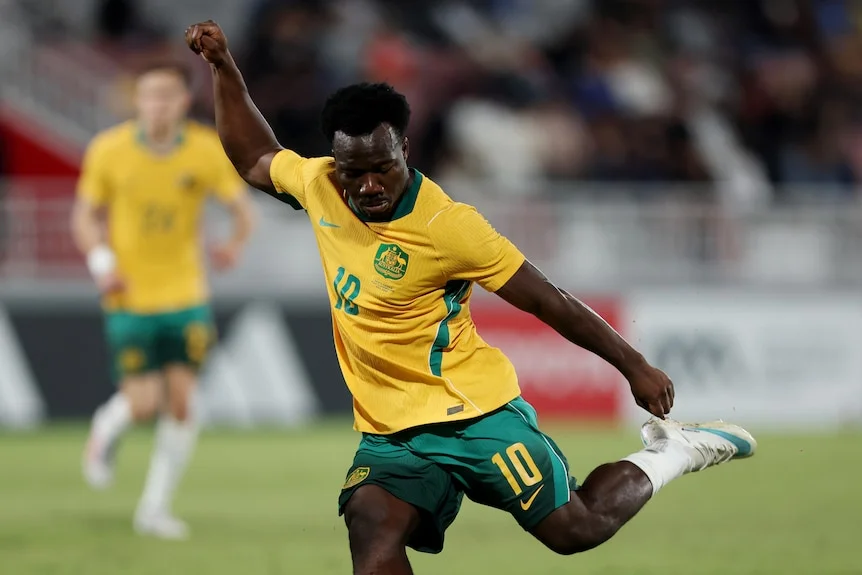
Qatar's shape didn't improve. Another loose clearance from Abunada landed at the feet of Connor Metcalfe, who released Tete Yengi to finish neatly just after the half-hour. Then Nestory Irankunda started tormenting the Qatari defence down the left. Metcalfe won the ball again and freed the Sporting Lisbon star, who smashed home his eighth international goal five minutes before the interval. The pattern is what stands out here. When a side keeps giving the ball away in dangerous areas, that's rarely bad luck. It's usually a sign that confidence is draining out of the group, and it compounds fast.
That was the Socceroos' first three-goal haul in an overseas international in five years, and it's the kind of number that's easy to skim past. Look at what produced it, though: a goalkeeper's misjudgment, a loose clearance, and a winger running at a defence that couldn't cope with him. They could have had six by half-time. That tells you how one-sided the first 45 minutes really were, and it's the detail I'd keep in mind before crediting the scoreline to the team alone.
Rotation, debuts and a flat second half
The second half was a different story. Popovic made wholesale changes, and the football got messy. Kusini Yengi replaced Tete at the break. Eli Adams, Sam Klein, Kasey Bos and Diesel Herrington all earned their Socceroos debuts. Bos's older brother Jordy wasn't on the pitch, so Kasey became a full-fledged Socceroo in his absence. Diesel Herrington came on for the final 10 minutes. A debut in a match already won, (and this is the part most people overlook), is a very different experience from one in a tight game, and for a young group that's a useful kind of exposure.
Popovic admitted the trade-off, and he didn't dress it up. "We lost a bit of cohesion and fluency, but we got a lot of debuts as well, so special moment for them." He looked frustrated on the bench that his side didn't push on for more goals, but the numbers back up the dominance. Australia landed 14 shots on goal to Qatar's three. The hosts didn't fire their first meaningful shot until the 72nd minute. Their only real chance on target came late, and it was a goal ruled offside in the 88th. Those figures matter because they show the control never really disappeared, even when the rhythm did.
Popovic was refreshingly direct about the conditions, too. "We won some balls high up the pitch, which is always encouraging, in difficult conditions. A lot of the boys have come from Europe where it's a lot cooler, so we were tested physically to be that aggressive." The heat matters. It's the kind of thing that rarely shows up in a scoreline but quietly shapes how a second half unfolds. Players who spend most of their season in cooler European leagues have to adjust their intensity, and pressing high in the heat is hard to sustain. The fact that Popovic named it openly tells you he isn't looking for excuses, and that's worth respecting.
What's next
Here's the thing: the schedule just got friendlier. Jordan are next, and the match has moved from Amman to Doha because of security concerns. It's a Tuesday night in Doha, Wednesday morning AEDT. The Socceroos can now prepare without the uncertainty of a trip to Jordan's capital. Venue switches like this usually bring logistical headaches for everyone involved, but for a squad that just finished a game in the heat, a shorter trip is a genuine advantage. If you're following the team, that's one less variable to worry about.
The Asian Cup has also been rescheduled to December 2027 in Saudi Arabia because of the regional conflict. The January trip to the Middle East that many in the squad had penciled in won't happen. Changes like this ripple outward, affecting player availability, club planning and the long-range preparation that national teams rely on. The disruption is largely outside the squad's control, so the practical response is to keep building and adjust as the calendar settles.
That said, this result gives the Socceroos a strong platform. If they can keep the first-half intensity while managing the depth they've built, the Jordan game becomes the next real test of how far this group has come. The question is whether the second-half lapses were a one-off or an early warning sign, and Jordan will be the first real answer.
What this result really tells you
Let's be honest about what a 3-0 win does and doesn't prove. It shows the Socceroos can dominate a side on the front foot, and it shows they can absorb a wholesale rotation without the whole thing collapsing. What it doesn't show is how they handle an opponent that's organised and ready to suffer. Qatar gifted a goal and then lacked the structure to recover, which is a different test from the one Jordan will set.
I'd still call this more significant than it looks. Depth is the thing national-team coaches worry about most, and a group that gives Eli Adams, Sam Klein, Kasey Bos and Diesel Herrington their debuts without losing the thread has done something useful. You don't learn much from a result that holds only when the best XI is on the field. The harder question is whether the team's shape survives a rotation, and the answer here was mostly yes, though the second half was messier than the first.
If you're working in this space, whether as a coach, analyst or fan trying to read the squad, the practical takeaway is narrow. Watch how the debutants are used in Jordan, because those minutes will show whether they belong. And watch the midfield's transitions in the heat, since the Qatar match showed how quickly a press can lose its shape. Promising. Not proven.


