Australia's biggest companies want something Beijing has been slow to hand out: predictability. Executives from BHP, Rio Tinto, ANZ and other major firms meet their Chinese counterparts in Beijing on Friday, and their asks are concrete. They want better access to local markets, assurances of fair competition, and an end to the uncertainty that makes long-term planning so hard. Asks like these recur in bilateral trade talks, and that's partly why the wording matters. When a business council starts talking about confidence rather than specific tariffs, it's usually because the narrower arguments have stopped landing.
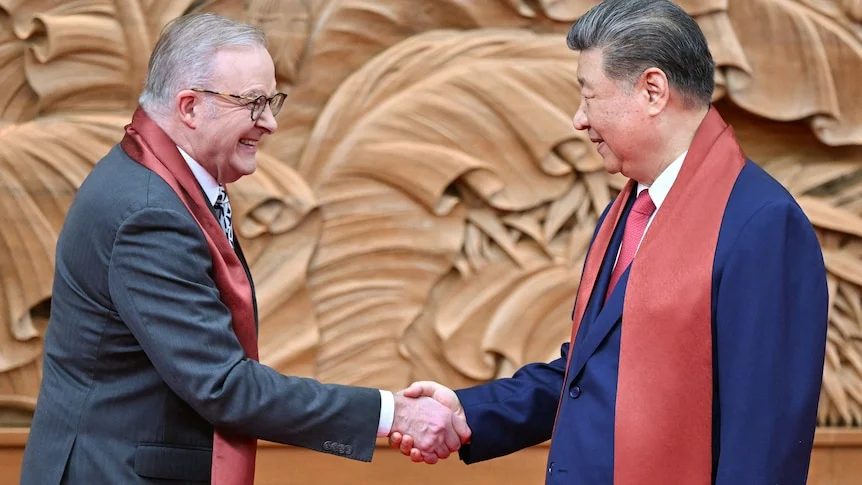
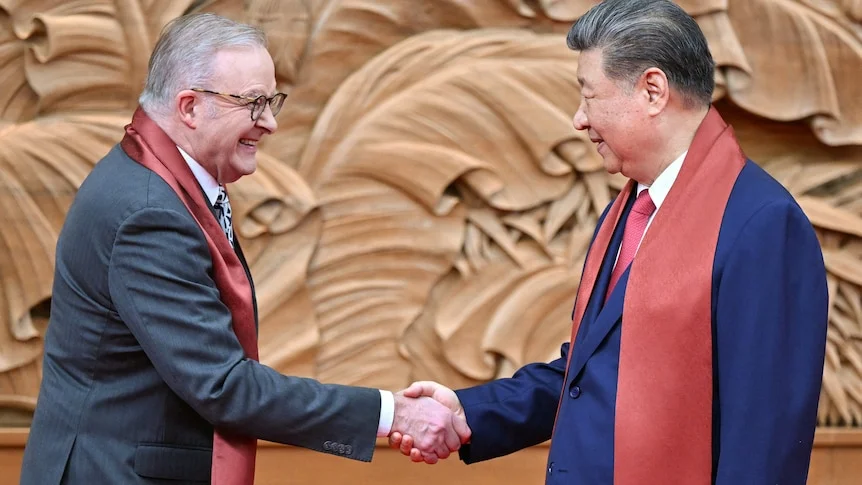
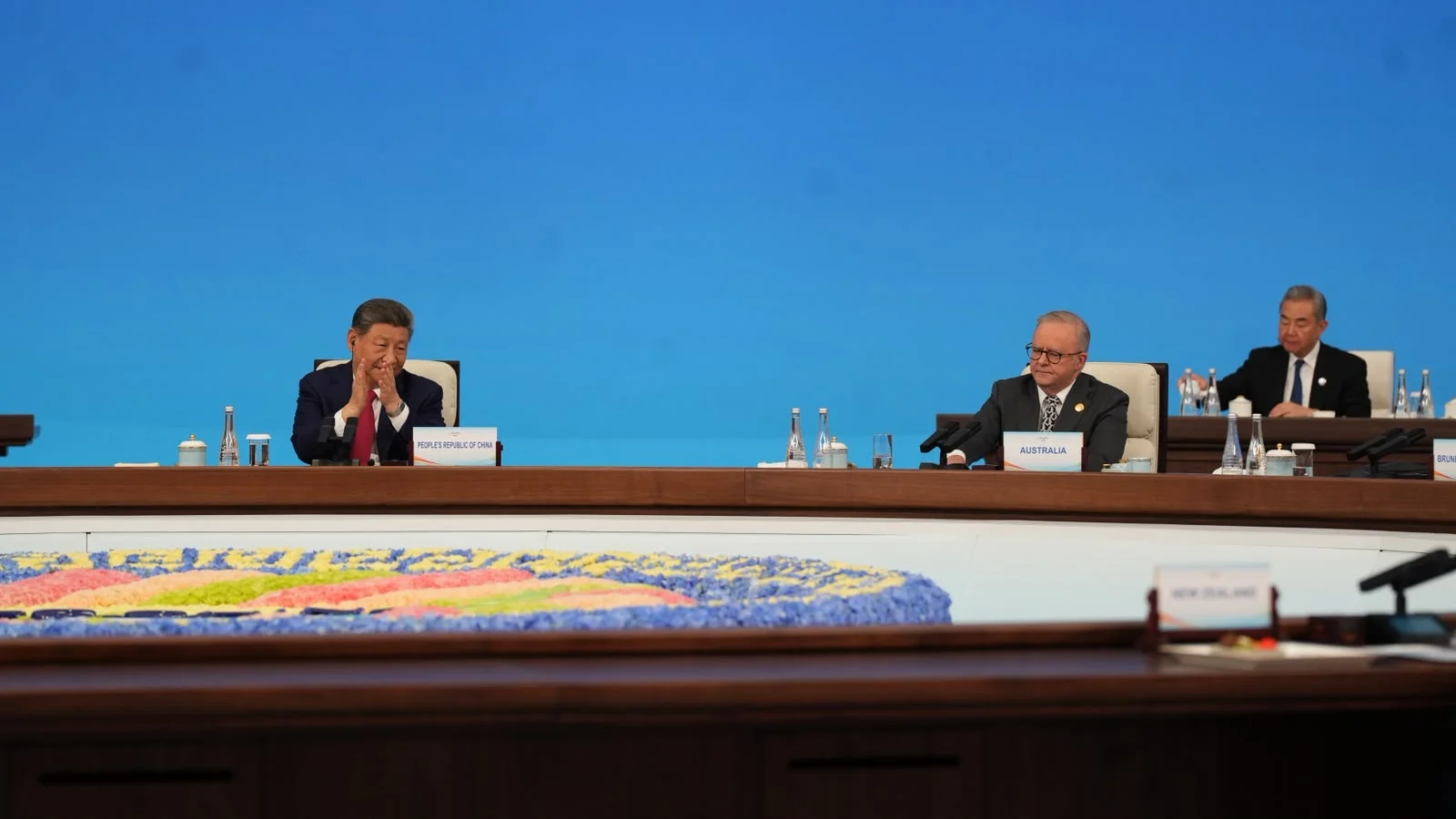
The timing is loaded. Prime Minister Anthony Albanese is in China for the Asia-Pacific Economic Cooperation (APEC) summit in Shenzhen, where he meets President Xi Jinping on Friday. He then heads to Beijing for formal talks with Premier Li Qiang and the Australia-China CEO roundtable. Summit diplomacy and commercial meetings usually run on separate tracks, but here they're stacked back to back. That means every handshake gets read for its commercial implications, whether or not the leaders intended it. It's a lot of weight for one trip to carry.
Beef and rice on the table
The Business Council of Australia (BCA) will push for wider access to China's agricultural markets, with beef and rice exports at the top of the list. The council also wants companies to explore how AI could lift farm productivity, including through farm-level and supply chain data. Here's the thing: agriculture is where Australian exporters feel the friction most directly, and AI cooperation gives both sides something to discuss that isn't a dispute. Farm access is the hard ask. AI is the easy one to say yes to.
Market access for agricultural goods rarely gets settled in a single meeting. Inspection, licensing and import rules tend to be slow to change, and exporters usually plan around them for years rather than weeks. (and this is the part most people overlook) Data-sharing on farms raises its own questions about who owns the information and who gets to use it, and the source material doesn't address those. If you're working in agricultural exports, that's the detail to watch. I'd be surprised if a single Friday produced a breakthrough on either commodity.
Medical tech, qualifications and steel
Beyond farm produce, the delegation will seek the removal of trade barriers facing Australian medical technology companies, including hearing implant maker Cochlear. It also wants better recognition of Australian professional qualifications. Medical devices are a different problem from bulk commodities. They depend on regulatory approvals, and a barrier there can shut a product out entirely rather than just squeezing margins. Qualification recognition is less glamorous, but it decides whether an engineer or clinician can actually work across the border.
Resources are part of the agenda too. BHP and Rio Tinto will join discussions on how the two countries can work together to cut emissions from steel production. It's a practical conversation, and both sides have a real stake in it. Steel is one of the harder industrial sectors to decarbonize, so cooperation here is less about goodwill than about shared exposure. Whether the talks produce anything beyond a working group is the real test.
Confidence over concessions
BCA president Geoff Culbert will use his CEO roundtable speech to argue that geopolitical shifts and changing trade patterns are making long-term investment decisions harder. "Companies make decisions today that will shape their businesses for years and decades to come," he will say. That's the pitch in one line. The cost isn't only a tariff or a rule; it's a planning horizon that keeps shrinking. Investment committees can price a known risk. They struggle with one they can't model.
The deeper point is about trust. "Those decisions depend on having confidence in the markets where we operate, the partners we work with and the rules that govern our investments." Culbert will argue that business confidence relies on "trust and predictability". That's the sharper framing, because it moves the debate away from individual grievances and toward the institutions meant to settle them. Governments can negotiate a tariff relatively quickly. Rebuilding a sense of predictability takes much longer, and it doesn't come with a signing ceremony.
"Australia strongly supports an open trading system and effective international rules, in which openness goes hand in hand with fair competition and a level playing field," he will say. Read it closely and you'll notice what's missing. There's no demand for special treatment, only for rules applied evenly. That's a careful line to draw when the counterparty is a government you're trying to persuade. Careful, but not toothless.
An awkward week for diplomacy
Days before flying to China, Albanese oversaw the signing of a new defence cooperation agreement with the Philippines, covering military ties, maritime surveillance and information sharing. He reiterated Australia's support for Manila, which has repeatedly clashed with Beijing over disputed territorial claims in the South China Sea. He also joined US President Donald Trump, Indian Prime Minister Narendra Modi and Japanese Prime Minister Sanae Takaichi at a Quad summit in the Philippines, where the four leaders announced a new joint exercise in the region next year. Taken one at a time, each move is defensible. Taken together, they read as a clear alignment, and Beijing won't have missed it.
The same week, Australia signed a US-led agreement to protect the technology and supply chains needed to develop advanced AI. Washington is looking to reduce its reliance on China for critical minerals and strengthen its position in the global technology race. That's the context that makes the trade pitch awkward. The business lobby is asking for deeper cooperation with Beijing in the same stretch of days that Canberra is signing security and technology deals designed to reduce dependence on it. Governments and industry don't always pull in the same direction, and this week shows the gap.
Albanese's balancing act is clear. The open question is whether Beijing separates these security moves from the commercial agenda, and I'm skeptical it will do so cleanly. If Friday's talks produce concrete market access for beef and rice, that will tell us more than any joint statement. If they don't, expect the same plea for certainty to return next year.
What this means if you're watching the trade
Trade diplomacy rarely produces headline deals that matter day to day. More often, the real changes show up as quiet shifts in licensing, inspections or recognition rules, and that's why businesses tracking those details tend to notice first. If you're working in exports, medical devices or professional services, watch for those smaller signals rather than the summit communiqués. They'll tell you more about whether the predictability executives want is actually arriving.
My read is that this visit matters more for what it signals than for what it settles. Beijing holds considerable bargaining power over market access and sets the tone of the relationship, and it knows Australia is balancing security partnerships against its commercial ties. That's not unusual for a middle power. But it does make predictability harder to deliver, and companies can plan around a known rule far more easily than around a shifting mood. And yet, that's exactly the gap the BCA is trying to close.


